“I have asked myself many times: Is the Filipino worth suffering, or even dying, for? Is he not a coward who would readily yield to any colonizer, be he foreign or homegrown? Is a Filipino more comfortable under an authoritarian leader because he does not want to be burdened with the freedom of choice? Is he unprepared, or worse, ill-suited for presidential or parliamentary democracy?
I have carefully weighed the virtues and the faults of the Filipino and I have come to the conclusion that he is worth dying for because he is the nation’s greatest untapped resource.” – Ninoy Aquino
Islands in a Friendly Sea: Some Basics of Filipino History and Culture (Free online text suited for middle or high school classroom use, guided reading questions, and suggested activities): Who are the Filipinos? What is their history and culture? How has it been shaped by island geography? By contact with the outside world?
Manila at the Crossroads of World Trade (Free online text suited for middle or high school classroom use, guided reading questions, and suggested activities): For more than three centuries, Manila was one of the crown jewels of the Spanish Empire, sitting at the intersection of global trade between Asia, the Americas, and Europe. How did this global trade shape the Philippines – and how did the Philippines shape global trade?
The Origins of the Philippine-American War (Free online text suited for middle or high school classroom use, guided reading questions, and suggested activities): How did the Filipinos gain independence from Spain, only to have it snatched away by their alleged ally, the United States? How does this experience resonate in both Philippine and U.S. history?
The Brutality of the Philippine-American War (Free online text suited for middle or high school classroom use, guided reading questions, and suggested activities): Why was the Philippine-American War so violent? Did this violence help or hinder the goals of each side? Should there be rules that govern the conduct of war?
The Philippines in the American Empire (Free online text suited for middle or high school classroom use, guided reading questions, and suggested activities): After nearly 400 years, how did independence finally come to the Philippines? Was the United States conquest of the Philippines an anomaly in its history, or was it business as usual?
“The White Man’s Burden”: Kipling’s Hymn to U.S. Imperialism (Free online text suited for middle or high school classroom use, guided reading questions, and suggested activities): Full text of this imperialist poem, as well as an answer in the form of an anti-imperialist parody.
Stereoscopic Visions of War and Empire (Free online text suited for middle or high school classroom use, guided reading questions, and suggested activities): This exhibit juxtaposes the visual message presented by the stereoscopic images with excerpts from the letters written by U.S. soldiers that were first published in local newspapers and later collected in the Anti-Imperialist League’s pamphlet, allowing us to get a glimpse of the Philippine-American War as it was presented to Americans at home, reading the news or entertaining friends in their parlors.
In The Trenches: Harper’s Weekly Covers the Philippine-American War (Free online text suited for middle or high school classroom use, guided reading questions, and suggested activities): How did the American media cover the war in the Philippines? An excerpt from “In The Trenches” by John F. Bass, originally published in Harper’s Weekly.
Ninoy and Marcos – “A Pact with the Devil is No Pact at All.” (Free online text suited for middle or high school classroom use, guided reading questions, and suggested activities): Benigno “Ninoy” Aquino, Cory Aquino, and the People Power Revolution toppled the kleptocratic Marcos regime through nonviolence, answering with their lives the question, “Is the Filipino worth dying for?”
A balangay is traditional Filipino ship, made of wooden planks and pins. It is used for everything from fishing to hauling cargo, travel and conducting war, and it was likely the boat that carried the original settlers of the Philippines to the islands in ancient times.
The balangay is a boat used by native Filipinos for at least 2,000 years. The balangay could cross open ocean – with navigation techniques involving the sun, the stars, the wind, cloud formations, wave patterns, and bird migrations. The word barangay – a variant – is also the word used to describe the basic unit of Filipino political organization, with a meaning similar to clan, before the arrival of the Spanish. Members of a barangay – typically 30 to 100 families – owed their allegiance to a datu, or chief, who ruled in conjunction with other datus. So, poetically you could think of your community as the people who were in the same boat as you.
While this system fell away under Spanish rule, the word barangay is still used to describe a neighborhood in the Philippines, an evocative double meaning in a nation so oriented to the sea.
There are a number of distinctions between the modern barangay or Barrio, and the city-states and independent principalities encountered by the Spanish when they first arrived in 1521 and established relatively permanent settlements in 1574. The most glaring difference would be that the modern entity represents a geographical entity, the pre-colonial barangays represented loyalty to a particular head (datu). Even during the early days of Spanish rule, it was not unusual for people living beside each other to actually belong to different barangays.
The barangay of precolonial times was either independent, or belonged to what was only a loose confederation of several barangays, over which the rulers picked among themselves who would be foremost – known as the Pangulo or Rajah. In most cases, his function was to make decisions which would involve multiple barangays, such as disputes between members of two different barangays. Internally, each datu retained his jurisdiction.
The barangay hall is typically a combination of city hall and community center.
Who are the Filipinos?
Consider the map of the Philippines – how does the country’s unique geography lend itself to the diversity of its population?
This ten pound pure gold halter is one of the most spectacular artifacts ever found in the Philippines. It is believed by some to be an Upavita, a ceremonial sacred thread worn members of the Brahmin class of India after a purification ritual – its existence demonstrates the influence of Hinduism and Indian culture in the early Philippines. (Ayala Museum, Makati, Philippines, 2018.)
There is no easy way to describe Filipino culture – no one settled definition – because the Philippines are a particularly diverse nation spread across some 7,000 islands, with hundreds of distinct languages and dialects, thousands of years worth of history, trade, and colonization serving to add color and flavor to what seems like a simple question.
Prior to the advent of European colonialism in the 1500s CE, much Southeast Asia including the Philippines was under the influence of greater India. India was a wealthy society with well-developed technology and religions. Indians spread throughout southeast Asia as professionals, traders, priests and warriors, bringing with them a written language (Sanskrit) and religion (Hinduism or Buddhism).
Detail of the sacred thread, woven entirely from gold.
Numerous Indianized principalities and empires flourished for centuries in areas that would become modern Thailand, Indonesia, Malaysia, Singapore, Philippines, Cambodia and Vietnam. Artwork, philosophy, models for royalty and class structure, as well as written languages in these lands were all influenced by India, similar to the way that Greek culture was a guiding influence on later European societies. However, each of these countries adapted, blended, and assimilated this Indian influence in its own unique way, giving rise to the great diversity of cultures seen even just in the islands that make up the modern Philippines.
Locations of pre-colonial Filipino Polities and Kingdoms (900 CE to 1565 CE).
By 1000 BCE, the inhabitants of the Philippine archipelago had developed into four distinct kinds of peoples: tribal groups, such as the Aetas, Hanunoo, Ilongots and the Mangyan who depended on hunter-gathering and were concentrated in forests; warrior societies, such as the Isneg and Kalinga who practiced social ranking and ritualized warfare and roamed the plains; the petty plutocracy of the Ifugao Cordillera Highlanders, who occupied the mountain ranges of Luzon; and the harbor principalities of the estuarine civilizations that grew along rivers and seashores while participating in trans-island maritime trade. It was also during the first millennium BC that early metallurgy was said to have reached the archipelagos of maritime Southeast Asia via trade with India.
Piloncitos, small bead-like gold bits, each about the size of a corn kernel, are considered to be the earliest coin used for trade starting around the 9th Century CE by ancient Filipinos. This one is marked with Baybayin, and a prehispanic Filipino alphabet.
What is the Boxer Codex, and what can it tell us about the Philippines?
Describe the general social structure of the prehispanic Philippines. In what ways is it similar to or different from the social structure in your own society?
Consider your status in your own society – to which corresponding class would you belong in ancient Filipino society? Justify your answer. Is this different from the class you WISH you belonged to?
Can identify any foreign influence assimilated into the social structure of the Filipinos?
An illustration from the Boxer Codex depicting a Spanish ship greeted by natives of the Mariana Islands, near the Philippines, naked and seemingly bearing gifts. The Boxer Codex is one of the earliest attempts to describe Filipino daily life in detail.
The Philippines were ruled as a colony of Spain for 333 years. This colonial experience transformed the culture and social structure of the islands dramatically, as Spaniards converted Filipinos to Christianity, reorganized barangays into barrios that suited Spanish political needs, and reorganized farming and land use according to their own economic needs. The diverse languages and traditions of prehispanic Filipinos did not disappear completely, by any means, and much can be learned by talking to and studying the way of life practiced in various parts of the modern Philippines.
However, another important way that historians and anthropologists can gain greater insight into what the Philippines were like before the Spanish arrived is via the Boxer Codex, an illustrated manuscript commissioned by the Spanish around 1590. The Boxer Codex depicts the Tagalogs, Visayans, Zambals, Cagayanes or possibly Ibanags and Negritos of the Philippines in vivid color. The technique of the paintings, as well as the use of Chinese paper, ink, and paints, suggests that the unknown artist may have been Chinese. Since Spanish colonial governors were required to submit written reports on the territories they governed, it is likely that the manuscript was written under the orders of the governor. While it is written from an outsider’s perspective and contains many cultural biases that the Spanish carried with them, it is still an invaluable tool: this richly illustrated document provides a window into Filipino society at a time when the Spanish themselves were trying to gain a clear picture of it.
Paramount Leader of the confederacy of barangay states. In a confederacy forged by alliances among polities, the datu would convene to choose a paramount chief from among themselves; their communal decision would be based on a datu’s prowess in battle, leadership, and network of allegiances.
Datus were maginoo with personal followings (dulohan or barangay). His responsibilities included: governing his people, leading them in war, protecting them from enemies and settling disputes. He received agricultural produce and services from his people, and distributed irrigated land among his barangay with a right of usufruct.
Maginoo comprised the ruling class of Tagalogs. Ginoo was both honorific for both men and women.Panginoon were maginoo with many slaves and other valuable property like houses and boats . Lineage was emphasized over wealth; the nouveau riche were derogatorily referred to as maygintawo (fellow with a lot of riches).
Members included: those who could claim noble lineage, members of the datu’s family.
Powerful governor of a province within the caliphate or dynasties of Islamic regions. Their position was inherited by a direct descent in a royal bloodline who could claim the allegiances of the datu. Sultans took on foreign relations with other states, and could declare war or allow subordinate datus to declare war if need be. The sultan had his court, a prime minister (gugu), an heir to the throne (Rajah Muda or crown prince), a third-ranking dignitary (Rajah Laut, or sea lord) and advisers (pandita).
The timawa class were free commoners of Luzon and the Visayas who could own their own land and who did not have to pay a regular tribute to a maginoo, though they would, from time to time, be obliged to work on a datu’s land and help in community projects and events. They were free to change their allegiance to another datu if they married into another community or if they decided to move.
In Luzon, their main responsibility to the datu was agricultural labor, but they could also work in fisheries, accompany expeditions, and row boats. They could also perform irregular services, like support feasts or build houses
In Visayas, they paid no tribute and rendered no agricultural labor. They were seafaring warriors who bound themselves to a datu.
Members included: illegitimate children of maginoo and slaves and former alipin who paid off their debts
Members of the Tagalog warrior class known as maharlika had the same rights and responsibilities as the timawa, but in times of war they were bound to serve their datu in battle. They had to arm themselves at their own expense, but they did get to keep the loot they won – or stole, depending on which side of the transaction you want to look at. Although they were partly related to the nobility, the maharlikas were technically less free than the timawas because they could not leave a datu’s service without first hosting a large public feast and paying the datu between 6 and 18 pesos in gold – a large sum in those days.
Today, the word alipin means slave and that’s how the Spaniards translated it, too, but the alipins were not really slaves in the Western sense of the word. They were not bought and sold in markets with chains around their necks. A better description would be to call them debtors. Slaves who lived in their own houses apart from their creditor. If the alipin’s debt came from insolvency or legal action, the alipin and his debtor agreed on a period of indenture and an equivalent monetary value in exchange for it. The alipin namamahay was allowed to farm a portion of barangay land, but he was required to provide a measure of threshed rice or a jar of rice wine for his master’s feasts. He came whenever his master called to harvest crops, build houses, row boats, or carry cargo.Members included: those who have inherited debts from namamahay parents, timawa who went into debt, and former alipin saguiguilid who married.
Alipin Saguiguilid
Slaves who lived in their creditor’s house and were entirely dependent on him for food and shelter. Male alipin sagigilid who married were often raised to namamahay status, because it was more economical for his master (as opposed to supporting him and his new family under the same roof). However, female alipin sagigilid were rarely permitted to marry.Members included: children born in debtor’s house and children of parents who were too poor to raise them.
The Laguna Copperplate
What is the Laguna Copperplate? How does it further illuminate our understanding of early Filipino social structure?
Do you have documents that perform similar functions in your own society? What are they?
The Laguna Copperplate, a legal document inscribed on a copper plate in 900 AD, is the earliest known written document found in the Philippines. The document states that it releases its bearers, the children of Namwaran, from a debt in gold amounting to 1 kati and 8 suwarnas (865 grams; 27.8 troy ounces).
The Laguna Copperplate Inscription was found in 1989 near the mouth of the Lumbang River near Laguna de Bay, by a man who was dredging sand to turn into concrete. Suspecting that the artifact might have some value, the man sold it to an antique dealer who, having found no buyers, eventually sold it to the National Museum of the Philippines, where it was assigned to Alfredo E. Evangelista, head of its anthropology department.
Kasumuran; His Honor the Leader of Pailah, representing Ganasakti; (and) His Honor the Leader
7
han binwangan barjadi bishruta tathapi sadanda sanak kaparawis ulih sang pamegat de-
of Binwangan, representing Bisruta. And, with his whole family, on orders of the Chief of Dewata
8
wata [ba]rjadi sang pamegat medang dari bhaktinda di parhulun sang pamegat. ya makanya sadanya anak
representing the Chief of Mdang, because of his loyalty as a subject (slave?) of the Chief, therefore all the descendants
9
chuchu dang hwan namwaran shuddha ya kaparawis di hutangda dang hwan namwaran di sang pamegat dewata. ini gerang
of his Honor Namwaran have been cleared of the whole debt that His Honor owed the Chief of Dewata. This (document) is (issued) in case
10
syat syapanta ha pashchat ding ari kamudyan ada gerang urang barujara welung lappas hutangda dang hwa …
there is someone, whosoever, some time in the future, who will state that the debt is not yet acquitted of His Honor…
* Line 10 of the LCI ends mid-sentence.
A year later, linguist Antoon Postma noted that the inscription was similar to the ancient Indonesian script of Kawi. Postma translated the script and found the document dated itself to the Saka year 822, an old Hindu calendar date which corresponds to 900 AD, making the Laguna Copperplate the earliest example of writing ever found in the Philippines. The document pre-dated the arrival of Ferdinand Magellan in 1521 and is from about the same time as the mention of the first known mention of Philippines in world history, in the official Chinese Song dynastyHistory of Song for the year 972.
Place names mentioned in the Laguna Copperplate Inscription.
The text of the Laguna Copperplate offers us a window into Tondo culture, an ancient Filipino barangay that thrived along the Pasig River, not far from modern Metro Manila. Because it is written in Kawi, an Indonesian script, and uses several Sanskrit loan-words, it demonstrates just how connected the Philippines were with other ancient societies in Southeast Asia.
A turo turo is a special kind of Filipino restaurant. Food is prepared in advance, and customers point, point – turo, turo in Tagalog – to the dishes they want to order. In a turo turo, one can find many of the Philippines’ most popular foods – and a great primer on its history. (Pasig City, Philippines, 2018.)Available in the turo turo: Adobo is a popular dish in Philippine cuisine that usually involves pork or chicken marinated in vinegar, soy sauce, garlic, and black peppercorns. It has sometimes been considered as the unofficial national dish in the Philippines. Early Filipinos often cooked by immersion in vinegar and salt to preserve the food longer in the island heat.
New Voices, New Flavors
What outside cultures have contributed to the notion of what a Filipino is? Describe ways in which these newcomers have shaped the Philippines.
Archaeologists have found evidence for trade with China dating back nearly 2000 years. The first high volume trade began in the 10th Century CE. The Chinese brought ceramics (what we call china), tea, and silk, while the Filipinos offered raw materials like wood, wax, pearls, and tortoise shells. This trade happened regularly, often taking place on the beach. (Diorama in the Ayala Museum, Makati, Philippines, 2018.)
After Spanish conquest, the Chinese population in Manila rose dramatically. These Chinese were merchants facilitating trade between Spain and China, but their relationship with Spanish authorities was often characterized by mistrust and violence, as in 1603 when tensions spilled over into an uprising – that left some 20,000 Chinese dead. (Diorama in the Ayala Museum, Makati, Philippines, 2018.)
Trade and interactions with China have also shaped the culture of the Philippines since ancient times. Starting in the 900s CE, trade with China become more regular, leading to increased access to Chinese goods as well as intermarriage between Chinese merchants and local Filipino women. This exchange would culminate in the Manila galleon route during the Spanish colonial period. The arrival of the Spaniards to the Philippines attracted new waves of immigrants from China, and maritime trade flourished during the Spanish period. The Spanish recruited thousands of Chinese migrant workers called sangleys to build the colonial infrastructure in the islands. Many Chinese immigrants converted to Christianity, intermarried with the locals, and adopted Hispanized names and customs and became assimilated.
Available in the turo turo: Lumpia are made from meat and vegetables, rolled in a crepe-like shell and usually fried. They were brought to the Philippines by merchants from China’s Fujian province and have become a favorite Filipino snack.
Trade brought Arab and Malay merchants to the Philippines, especially in the southern islands of Mindanao and Palawan. These traders brought with them their religion – Islam, which continues to be a crucial part of Filipino identity in these islands, where as much as 10% of the population is Muslim. In fact, it is possible that if the Spanish had arrived much later, Islam could have become the dominant religion of the Philippines; while the independent-minded barangays were conquered one by one by the Spanish, the Muslim sultanates of that existed upon their arrival were united by a cohesive religious identity that contributed to an increased ability to resist Spanish attempts to dominate these islands.
Arab traders have been visiting Philippines for nearly 2000 years. After the advent of Islam, in 1380, Karim ul’ Makhdum, the first Muslim missionary to reach the Sulu Archipelago, brought Islam to what is now the Philippines, first arriving in Jolo. Subsequent visits of Arab Muslim missionaries strengthened the Muslim faith in the Philippines, concentrating in the south and reaching as far north as Manila. (Diorama in the Ayala Museum, Makati, Philippines, 2018.)Available in the turo, turo: Satti is skewered, barbecued meat carried throughout the islands of Southeast Asia by Muslim traders.
The arrival of Portuguese explorer Ferdinand Magellan in 1521 began a period of European colonization. During the period of Spanish colonialism the Philippines was part of the Viceroyalty of New Spain, which was governed and controlled from Mexico City. Early Spanish settlers were mostly explorers, soldiers, government officials and religious missionaries born in Spain and Mexico who worked to convert the Philippines into a country that is today 83% Catholic.
The death of Ferdinand Magellan while engaged in combat with the warriors of Lapu-Lapu became a potent symbol for later Filipino nationalists chaffing under the rule of the Spanish. (Diorama in the Ayala Museum, Makati, Philippines, 2018.)A lush carving depicting the Virgin Mary – an important symbol for Filipino Catholics – adorns the 400 year old door of San Agustin Church. The first San Agustin Church was the first religious structure constructed by the Spaniards on the island of Luzon. Made of bamboo and nipa, it was completed in 1571, but destroyed by fire in December 1574 during the attempted invasion of Manila by the forces of the Chinese pirate Limahong. A second wooden structure built on the same site. was destroyed in February 1583, by a fire that started when a candle ignited drapery on the funeral bier during services for Spanish Governor-General Gonzalo Ronquillo de Peñalosa. The Spanish rebuilt the church using stone beginning in 1586. (Intramuros, Manila, Philippines, 2018.)
The Peninsulares (governors born in Spain), mostly of Castilian ancestry, settled in the islands to govern their territory. Most settlers married the daughters of rajahs, datus and sultans to reinforce the colonization of the islands. The Ginoo and Maharlika castes (royals and nobles) in the Philippines prior to the arrival of the Spanish formed the privileged Principalía(nobility) during the Spanish period.
Available in the turo turo: Longganisa is a (usually, but not always) sweet sausage of Spanish origin eaten widely across the Philippines, with lots of varieties suited to local tastes across difference islands. Here, it is served with eggs and rice for breakfast, but it be eaten at any meal. In addition, as part of the Colombian Exchange, Spanish colonizers brought with them produce from the Americas like chili peppers, tomatoes, corn, potatoes, and the method of sautéing with garlic and onions.Introduced from Spain, Lechón is a whole roasted pig, prepared throughout the year for any special occasion, during festivals, and the holidays. After seasoning, the pig is cooked by skewering the entire animal, entrails removed, on a large rotisserie stick and cooking for several hours in a pit filled with charcoal. The process of cooking and basting usually results in making the pork skin crisp and is a distinctive feature of the dish.
In modern times, the Philippines was an American colony and protectorate, meaning that English became the language of business and education, and the economy and culture of the Philippines was influenced heavily by this interaction.
The jeepney is the most popular form of public transportation in the Philippines and a relic of U.S. occupation. Surplus Jeeps left behind by the U.S. military upon Philippine independence were transformed – their bodies were extended to increase passenger capacity and decorated in vibrant colors with chrome-plated ornaments on the sides and hood. Thus was born a unique form of Filipino transportation. (Pasig City, Philippines, 2018.)Not available in the turo turo: The Americans inspired an abiding love of fried chicken and a distinctive, sweet style of spaghetti. While you might be able to get each of those at the turo turo, Jollibee is a homegrown Filipino fast food restaurant with more locations across the country than McDonalds – they seem to have the market cornered.
Activities
Seek out some Filipino recipes. There are also plenty of cooking tutorial videos online. Visit an Asian grocery store, purchase the necessary ingredients, and actually make a Filipino dish for dinner. And don’t forget dessert – halo halo is one of my favorites (only the Filipinos would think to put raw beans in an icy desert).
There is a long tradition of resistance to colonial rule in the Philippines. Juan Sumuory is celebrated in the Gallery of Heroes. (Manila, Philippines, 2018.)
Couple of this with the country’s strong Catholicism – with its tradition of sainthood and martyrdom – and you have nation that is very aware of those who have sacrificed to advance the cause of the Filipino. Manila’s Rizal Park features the Gallery of Heroes, a row of bust sculpture monuments of historical Philippine heroes. These include: Andres Bonifacio, Juan Sumuroy, Aman Dangat, Marcelo H. Del Pilar, Gregorio Aglipay, Sultan Kudarat, Juan Luna, Melchora Aquino, Rajah Sulayman, and Gabriela Silang. Choose one of these personalities to commemorate in your own classroom. Write a brief description of their accomplishments to accompany a piece of artwork that celebrates their life for those who aren’t aware.
Today, the Philippines is increasingly urbanized. Manila, the capital, is one of the most densely populated cities on the planet. (Manila, Philippines, 2018.)
THIS LESSON WAS INDEPENDENTLY FINANCED BY OPENENDEDSOCIALSTUDIES.ORG.
If you value the free resources we offer, please consider making a modest contribution to keep this site going and growing.
Looking for an engaging way to teach mythology in your classroom? Go beyond Greece and Rome, and introduce your students the folklore of ancient Mexico with Comix Azteca Volume One:
Old Mother Coatlicue gives birth to Huitzilopochtli, the iridescent god of war and sun – scandalizing her adult children and setting off a war that will change the world forever.
Adapted from the tradition Nahuatl folk tale and retold for modern audiences with glorious pop art from cartoonist Phil Skaggs and a script by historian and Openendedsocialstudies.org founder Thomas Kenning. This edition contains a supplemental essay and selected artwork from the original Mexica sources.
Electronic copies now on sale for the teacher-friendly price of just $1.99. Physical copies available (in black and white) at discounted rates. Inquire here.
What spurred Spain to fund Columbus’s initial expedition?
Why was the silver mined in Potosi of special interest to the Spanish?
Trade between Filipinos and Chinese predates the arrival of the Spanish by centuries. (From a diorama in the Ayala Museum, Makati, Philippines, 2018.)
Schoolchildren learn that Columbus sailed under the flag of Spain, and that his venture was funded on the audacious notion that a lucrative trade route with the far east might be established with an easy trip west. Columbus grossly misjudged the diameter of the Earth, it turns out, though his mistake became one of the most consequential in all of world history, bringing the Eastern and Western Hemispheres into direct contact for the first time, opening the Americas for European conquest and colonization, and inaugurating a period of social, economic, and environmental exchange through which we are still living in the early the early 21st century.
But the Spanish wanted more. They never gave up on that tantalizing promise of a western trade route with Asia, especially after the initial plunder of the Aztec and the Inca in the early 1500s.
The Spanish continued to extract raw materials from indigenous labor their American colonies, most notably silver from the great mine at Potosi, in modern Bolivia. Silver mines were opened here in 1545 and soon accounted for fully half of the silver produced in the world on an annual basis. On its own, the silver mined at Potosi was of little use to Spanish. The rich don’t love money, but what it can buy for them. In this case, much of the silver mined at Potosi made its way to Ming China – via the Manila Galleon.
Cerro Rico in Potosi, Bolivia. This mountain produced an estimated 60% of all silver mined in the world during the second half of the 16th century.
The Manila Galleon
The death of Ferdinand Magellan while engaged in combat with the warriors of Lapu-Lapu became a potent symbol for later Filipino nationalists chaffing under the rule of the Spanish. (From a diorama in the Ayala Museum, Makati, Philippines, 2018.)
What challenges and what discoveries on behalf of the Spanish led to the opening of the Manila Galleon route?
Did the wealth generated by this trade route benefit all parties equally? Why or why not? Consider the Spanish, the Chinese, and Filipinos in your answer, describing the role of each.
Consider modern trade in the same way – does it benefit all parties equally?
In 1521, just after the conquest of the Aztec in Mexico, and just before the conquest of the Inca in Peru, a Spanish expedition led by Ferdinand Magellan sailed west across the Pacific using the westward trade winds. The expedition arrived in the Philippines, finding there a diverse assortment of tribal groups, Muslim sultanates, and most enticing to the Spanish, a small community of Chinese merchants. Magellan promptly claimed the archipelago for Spain.
Although he died there after involving himself in a local conflict, one of Magellan’s ships made it back to Spain by continuing westward around the tip of Africa. In the decades that followed, other Spanish sailors figured out how to sail east – rising eastward winds at the 38th parallel north, off the coast of Japan – back over the Pacific toward Mexico, a journey that under the best of conditions took four months, but sometimes as long as six. This is an incredibly long time to go without taking on fresh water or food.
The goods arrived in Acapulco and were transported by land across Mexico to the port of Veracruz on the Gulf of Mexico, where they were loaded onto the Spanish treasure fleet bound for Spain. From the early days of exploration, the Spanish knew that the American continent was much narrower across the Panamanian isthmus than across Mexico. They tried to establish a regular land crossing there, but the thick jungle and malaria made it impractical.
This route was a vital alternative to the even riskier trip west across the Indian Ocean, and around the Cape of Good Hope, which was reserved to Portugal according to the Treaty of Tordesillas and fraught with European privateers who might commandeer the Spaniard’s valuable cargo.
View of Manila, c. 1665, complete with galleons in the bay. Notice the fortified, walled Spanish city – Intramuros – in the center, near the Pasig River. On peninsula in the foreground is Cavite, a shipyard and military outpost that continues to serve the Philippine navy today.
As it was, the city of Manila, representing wealth and a formidable European foothold in Asia, became a regional hub of trade and a target for foreign powers. At various times, has Manila come under attack by the Chinese, the Dutch, the English, the Americans, and the Japanese. In 1574, a fleet of Chinese pirates led by Limahong attacked the city and destroyed it before the Spaniards drove them away. The colony was rebuilt by the survivors. These attacks prompted the construction of a walled, stone city – today known as Intramuros – to anchor and secure the eastern end of Spain’s trade route.
Fort Santiago is a citadel first built by Spanish conquistador, Miguel López de Legazpi for the new established city of Manila in the Philippines. The defense fortress is part of the structures of the walled city of Manila referred to as Intramuros. (Manila, Philippines, 2018.)
The first Manila Galleon made the round trip between Acapulco and Manila in 1565, with galleons making the same circuit nearly every year until Mexican Independence in the early 1800s. This trade route, whose main hub was Manila, marked a new chapter in globalization, linking the labor and products of Asia, the Americas, and Europe. While this is a remarkable achievement, it is important to remember that it came about through tremendous hardship, brutality, and exploitation at almost every turn.
A reconstructed galleon, typical of the sort that would have plied the Pacific route between Manila and Acapulco.
Potosi silver – mined, refined, and transported by native slaves under horrendous conditions – was taken by llama and mule train to the Pacific coast. From there, the silver was transported by ship up the coast to the port of Acapulco (in present-day Mexico), and from there on to Manila in the Philippines. This silver was in high demand by the Chinese, who based their monetary system on this precious metal.
Wary of outsiders, the Chinese spurned European attempts to establish trading posts in their home territory. As a result, the Asian end of the galleon trade was supplied by merchants largely from port areas of Fujian in southern China, who traveled with the blessing of the Chinese Emperor to Manila to sell the Spaniards spices, porcelain, ivory, lacquerware, processed silk cloth, and other valuable commodities. These are the same products – so valuable in Europe – that in ancient times fueled the Silk Road; the same ones that nearly a century earlier tempted Columbus and other men hungry for profit.
In Manila, Filipino laborers load an Acapulco-bound galleon under supervision from Spanish managers, who reaped a disproportionate percentage of the profits. (From a diorama in the Ayala Museum, Makati, Philippines, 2018.)
As a result, every available corner of the galleon was dedicated to carrying its profitable cargo – reports even suggest that cisterns meant to carry fresh water were sometimes given over to commercial product – and hygiene was poor. Historian Jan DeVries found that some 2 million men made trading voyages to Asia between 1580 and 1795, but only 920,412 survived: an overall survival rate of just 46%. On the Manila Galleon route, a large number of these men were Filipino, who worked under these harsh conditions for pay that you and I would find appalling – but which represented to them a tremendous windfall, the likes of which were otherwise hard to come by under the poverty of Spanish rule.
This cross-section of a Spanish galleon hints at the tightly-packed conditions endured by the largely Filipino crews that plied the Manila-Acapulco route.
“In Manila, life was leisurely, even beautiful,” writes David Z. Morris, describing the height of the galleon trade as experienced by the Spanish elite. “The work of administering the galleons took up only two or three months of a year, with the rest of the colonists’ time given purely to lavish parties, carriage rides, and social intrigue. The Spanish were singularly indolent occupiers, developing no aspect of the local economy except the galleon trade.”
The elegant courtyards of Intramuros in Manila bring to mind nothing short of Madrid or Venice – cities of wealth and European culture. Such was the world of the Spanish colonizer as a result of the lucrative galleon trade, but inaccessible to the vast majority of Filipinos. (Manila, Philippines, 2018.)
By contrast, little of this wealth made its way into the hands of Filipinos. The Spanish cultivated a deliberate policy of exclusion toward their colonized subjects – prohibiting their education in the Spanish language as means to hold Filipinos from professional jobs and more cosmopolitan views of the world, encouraging Filipino submission through the careful application and withholding of Catholic teachings, and establishing large Spanish-owned estates in the countryside, reducing the Filipino to little more than an unskilled laborer and a tenant in his own homeland, even as its resources were enriched the Spanish conquerors.
From time to time during more than 300 years of Spanish rule, Filipinos openly rebelled against this injustice. Manila proved to be too lucrative a prize, however, and the Spanish would not let it go so easily, even after Spain’s American colonies achieved independence in the early 1800s. During these centuries, tens of thousands of Filipinos went abroad – settling at the other end of the galleon route, in Acapulco, in Mexico City, in California, seeking greater opportunity outside of the repressive structures that the Spanish had erected to maintain their domination over Manila.
The San Diego
Why is the discovery and recovery of the San Diego valuable to historians?
Formerly known as San Antonio, the San Diego was a trading ship built in Cebu by Filipino workers under the supervision of European boat-builders. It was docked at the port of Cavite to undergo reconditioning and repair, but at the end of October 1600, under threat of an impending Dutch attack on Manila, it was hastily converted into a warship and renamed.
An Illustration of the sinking of the Spanish flagship San Diego after a battle with the Dutch ship Eendracht in Manila Bay in 1600.
On December 14, 1600, the fully laden San Diego was engaged by the Dutch warship Mauritius under the command of Admiral Olivier van Noort a short distance away from Fortune Island, Nasugbu, Philippines. Since San Diego couldn’t handle the extra weight of her cannons, which led to a permanent list and put the cannon portholes below sea level, she was sunk without firing a single shot in response. The Dutch were later reported firing upon and hurling lances at the survivors attempting to climb aboard the Mauritius.
Nearly 400 years later, in 1992, the wreck was discovered by an underwater archaeologist. A total of 34,407 artifacts were recovered from the shipwreck, including more than five hundred blue-and-white Chinese ceramics in the form of plates, dishes, bottles, kendis, and boxes which may be ascribed to the Wan Li Period of the Ming Dynasty; more than seven hundred and fifty Chinese, Thai, Burmese, and Spanish or Mexican stoneware jars; over seventy Philippine-made earthenware potteries influenced by European stylistic forms and types; parts of Japanese samurai swords; fourteen bronze cannons of different types and sizes; parts of European muskets; stone and lead cannonballs; metal navigational instruments and implements; silver coins from the mint at Potosi; two iron anchors; animal bones and teeth (pig and chicken); and seed and shell remains (prunes, chestnuts, and coconut), all of which shed invaluable light on the physical reality of a Manila Galleon.
Recovered from the San Diego was this part of a larger, mass produced set of Chinese porcelain with a deer motif – each hand painted, varying organically, but following the same design. (Manila, Philippines, 2018.)
Another fine example of Chinese porcelain recovered from the San Diego. (Manila, Philippines, 2018.)
This Mexican made vessel is decorated with Mediterranean influenced designs. It was aboard the San Diego when it sunk. (Manila, Philippines, 2018.)
Also aboard the San Diego were these silver coins were mined and minted in Potosi, in modern day Bolivia. (Manila, Philippines, 2018.)
Activities
Design a chart that lists the items in the room around you by their locations of manufacture. Check labels on the items themselves or, when all else fails, ask Google.
Speculate/Research: Choose one of the items that you use every day. Who physically made this item – were they rich or poor, young or old, male or female? Under what conditions do they live and work? Was this item cheap or expensive – why? Who got most of the money that you or your parents paid – the worker or the corporation whose logo appears on the item? Consider yourself, the worker, and the corporation – who are the economic winners and losers in this system? How would your life and the lives of Filipino workers be different if this trade connection did not exist?
Research: What are the primary exports of your country to the Philippines and the rest of the world? What are the Philippines’s primary exports to your country? What is the estimated value of trade in both directions? What kind of modern cultural exchange might accompany this economic exchange?
Use www.marinetraffic.com/ to examine cargo shipping around the globe. What patterns do you notice? Where are the ships most densely clustered? Find a large port near your hometown – where are these ships coming from and going to? Can you determine roughly how long it takes for a ship to travel between the Philippines and the US? Choose several ships and check back in on them over the coming days or weeks – do you notice a route or a pattern for this specific ship, how long it takes to complete this pattern, and so on?
Compare and contrast trade along the Manila Galleon route with modern trade networks. How have changes in technology changed both how goods are traded – and what is traded? Does more or less international trade happen now? Does more or less cultural exchange happen now? Is trade a force for good or ill in the world?
For Discussion: What kind of resources are involved in the manufacture and transportation of new goods? Are there more responsible ways to consume? Ways to avoid consumption all together?
The bangka outrigger boat is ubiquitous in the modern Philippines, used for purposes as varied as trade, fishing, and ferrying. (Taal Lake, Philippines, 2018.)
THIS LESSON WAS INDEPENDENTLY FINANCED BY OPENENDEDSOCIALSTUDIES.ORG.
If you value the free resources we offer, please consider making a modest contribution to keep this site going and growing.
On the night of March 9, 1945 the United States Army Air Forces (USAAF) conducted a devastating firebombing raid on Tokyo, the Japanese capital city. This attack was code-named Operation Meetinghouse by the USAAF and is known as the Great Tokyo Air Raid in Japan. During the raid, bombs dropped from 279 Boeing B-29 Superfortress heavy bombers burned out much of eastern Tokyo. More than 88,000 and possibly over 100,000 Japanese, mostly civilians, were killed and one million left homeless, making it the single most destructive air attack of World War II. The Japanese air and civil defenses proved inadequate, and only 14 American aircraft and 96 airmen were lost.
A road passing through a part of Tokyo which was destroyed in the March 10, 1945 air raid.
In many parts of the world, World War II is remembered as a patriotic event – a tie that binds nations together, bringing out a peoples’ best qualities such as heroism, sacrifice, and determination. Such is the case in Russia, where it is remembered literally as the Great Patriotic War. In the United States, the conflict is sometimes termed “the good war,” fought by “the greatest generation.”
But World War II is also notable its sheer ferocity. Brutality became a science on all sides, systematized and streamlined for maximum effect, cranked out on an industrial scale. Perhaps no nation committed so fully to this pursuit than the war’s eventual victor, the United States. With its clockwork air war, refined via the experimental process and statistical analysis, the United States exhibited a chilling commitment to total war against the civilian populations of its enemies.
There is case to be made that this was war – that if the United States had not been so aggressive against Japan and Germany, those nations might have unleashed similar barbarity on the American people. The ends may justify the means…
But it is also worth considering a question posed by Robert McNamara, one of the architects of the bombing campaign against Japan. “What makes it immoral if you lose and not immoral if you win?” he asked.
Charred remains of Japanese civilians after the firebombing of Tokyo on the night of March 9-10, 1945.
The U.S. government rightfully condemns the atrocities committed by the Japanese against the civilian populations of China or the Philippines, but it is loathe to grapple with the morality its own actions during the war. This is largely because in the 21st century, the U.S. military continues to rely on many of the same techniques that helped to defeat Japan and Germany so many years ago – that is, the domination of the enemy and any attached civilization populations from the air, be it with incendiary bombs, Agent Orange, napalm, so-called smart missiles, or remotely controlled drones.
To recant on the morality of area bombing of Japan would be to call all of these subsequent strategies into question.
But a free society should never fear honest questions about its conduct – unless it fears the answers.
How would you describe the planning and preparation that went into the deployment of incendiary bombs against Japan?
What is the difference between precision bombing and area bombing? How well did precision bombing seem to work in practice? In your opinion, knowing that this will greatly increase the civilian death tool, is this justification to switch to a policy of area bombing?
In June 1944 the USAAF’s XX Bomber Command began a campaign against Japan using B-29 Superfortress bombers flying from airfields in China. Tokyo was beyond the range of Superfortresses operating from China, and was not attacked. This changed in October 1944, when the B-29s of the XXI Bomber Command began moving into airfields in the Mariana Islands. These islands were close enough to Japan for the B-29s to conduct a sustained bombing campaign against Tokyo and most other Japanese cities. The first Superfortress flight over Tokyo took place on November 1, when a reconnaissance aircraft photographed industrial facilities in city.
A B-29 dropping conventional bombs over Japan. Note that the bombs are being scattered by the wind, a common occurrence which made precision bombing difficult.
The attack on Tokyo was an intensification of the air raids on Japan which had commenced in June 1944. Prior to this operation, the USAAF had focused on a precision bombing campaign against Japanese industrial facilities. Precision bombing refers to the attempted aerial bombing of a target with some degree of accuracy, with the aim of maximizing target damage while limiting collateral damage – destroying a single building in a built up area while causing minimal damage to the surrounding neighborhood.
Because of factors like altitude, wind, and limitations in military technology, these attacks were generally unsuccessful, which contributed to the decision to shift to area bombing – the indiscriminate bombing of city blocks or even whole cities – in this case, using firebombs. The operation during the early hours of March 10 was the first major firebombing raid against a Japanese city, and the USAAF units employed significantly different tactics than those used in precision raids including bombing by night. The extensive destruction caused by the raid led these tactics to become standard for the USAAF’s B-29s until the end of the war.
USAAF planners began assessing the feasibility of a firebombing campaign against Japanese cities in 1943. Japan’s main industrial facilities were vulnerable to such attacks as they were concentrated in several large cities, and a high proportion of production took place in homes and small factories in urban areas. The planners estimated that incendiary bomb attacks on Japan’s six largest cities could cause physical damage to almost 40 percent of industrial facilities and result in the loss of 7.6 million man-months of labor. It was also estimated that these attacks would kill over 500,000 people, render about 7.75 million homeless and force almost 3.5 million to be evacuated.
The plans for the strategic bombing offensive against Japan developed in 1943 specified that it would transition from a focus on the precision bombing of industrial targets to area bombing from around halfway in the campaign, which was forecast to be in March 1945. The British and American bombing campaign against Germany also included frequent area bombing of cities, which resulted in the deaths of hundreds of thousands of civilians and massive firestorms in cities such as Hamburg and Dresden.
Two M69 incendiaries in the Edo-Tokyo Museum, 2018. These would have been dropped as part of a larger cluster. (Tokyo, Japan, 2018.)
In preparation for firebombing raids, the USAAF tested the effectiveness of incendiary bombs on the adjoining German and Japanese-style domestic set-piece building complexes at the Dugway Proving Ground during 1943. These trials demonstrated that M69 incendiaries were particularly effective at starting uncontrollable fires. These weapons were dropped from B-29s in clusters, and used napalm as their incendiary filler. After the bomb struck the ground, a fuse ignited a charge which first sprayed napalm from the weapon, and then ignited it.
Several raids were conducted to test the effectiveness of firebombing against Japanese cities. On 3 January, 97 Superfortresses were dispatched on a firebombing raid against Nagoya. This attack started some fires, which were soon brought under control by Japanese firefighters. The success in countering the raid led the Japanese to become over-confident about their ability to protect cities against incendiary raids. The next firebombing raid was directed against Kobe on February 4, and bombs dropped from 69 B-29s started fires which destroyed or damaged 1,039 buildings.
On February 19 the Twentieth Air Force issued a new targeting directive for XXI Bomber Command. While the Japanese aviation industry remained the primary target, the directive placed a stronger emphasis on firebombing raids against Japanese cities. The directive also called for a large-scale trial incendiary raid as soon as possible. This attack was made against Tokyo on 25 February. A total of 231 B-29s were dispatched, of which 172 arrived over the city; this was XXI Bomber Command’s largest raid up to that time. The attack was conducted in daylight, with the bombers flying in formation at high altitudes. It caused extensive damage, with almost 28,000 buildings being destroyed. This was the most destructive raid to have been conducted against Japan, and LeMay and the Twentieth Air Force judged that it demonstrated that large-scale firebombing raids were an effective tactic.
The failure of a precision bombing attack on an aircraft factory in Tokyo on March 4 marked the end of the period in which XXI Bomber Command primarily conducted such raids. Civilian casualties during these operations had been relatively low; for instance, all the raids against Tokyo prior to March 10 caused 1,292 deaths in the city.
B) The Attack
Describe the technical aspects of the U.S. attack on Tokyo. How much of the attack was improvised, and how much of it was carefully orchestrated?
On March 8 LeMay issued orders for a major firebombing attack on Tokyo the next night. The raid was to target a rectangular area north-eastern Tokyo designated Zone I by the USAAF which measured approximately 4 miles (6.4 km) by 3 miles (4.8 km). It was mainly residential and, with a population of around 1.1 million, was one of the most densely populated urban areas in the world. Zone I contained few militarily significant industrial facilities, though there were a large number of small factories which supplied Japan’s war industries. The area was highly vulnerable to firebombing, as most buildings were constructed from wood and bamboo and were closely spaced. The orders for the raid issued to the B-29 crews stated that the main purpose of the attack was to destroy the many small factories located within the target area, but also noted that it was intended to cause civilian casualties as a means of disrupting production at major industrial facilities.
The B-29s in the squadrons which were scheduled to arrive over Tokyo first were armed with M47 bombs; these weapons used napalm and were capable of starting fires which required mechanized firefighting equipment to control. The bombers in the other units were loaded with clusters of M69s. The planes were each loaded with between five and seven tons of bombs.
The attack on Tokyo commenced at 12:08 am local time on March 10. Pathfinder bombers simultaneously approached the target area at right angles to each other. Their M47 bombs rapidly started fires in an X shape, which was used to direct the attacks for the remainder of the force. Each of XXI Bomber Command’s wings and their subordinate groups had been briefed to attack different areas within the X shape to ensure that the raid caused widespread damage. As the fires expanded, the American bombers spread out to attack unaffected parts of the target area. Power’s B-29 circled Tokyo for 90 minutes, with a team of cartographers who were assigned to him mapping the spread of the fires.
Tokyo burns under B-29 firebomb assault. This photo is from the May 26, 1945 attack.
The raid lasted for approximately two hours and forty minutes. Visibility over Tokyo decreased over the course of the raid due to the extensive smoke over the city. This led some American aircraft to bomb parts of Tokyo well outside the target area. The heat from the fires also resulted in the final waves of aircraft experiencing heavy turbulence. Some American airmen also needed to use oxygen masks when the odor of burning flesh entered their aircraft.
A total of 279 B-29s attacked Tokyo. As expected by LeMay, the defense of Tokyo was not effective. Many American units encountered considerable antiaircraft fire, but it was generally either aimed at altitudes above or below the bombers and reduced in intensity over time as many gun positions were overrun by fires. Nevertheless, the Japanese gunners shot down 12 B-29s.
C) On the ground
What was the effect of the attack?
Should civilians be considered as fair targets in time of war?
Widespread fires rapidly developed across north-eastern Tokyo. Within 30 minutes of the start of the raid the situation was beyond the fire department’s control. An hour into the raid the fire department abandoned its efforts to stop the conflagration. Instead, the firemen focused on guiding people to safety and rescuing those trapped in burning buildings. Over 125 firemen and 500 civil guards who had been assigned to help them were killed, and 96 fire engines destroyed.
Driven by the strong wind, the large numbers of small fires started by the American incendiaries rapidly merged into major blazes. These formed firestorms which quickly advanced in a north-westerly direction and destroyed or damaged almost all the buildings in their path. By an hour after the start of the attack most of eastern Tokyo had either been destroyed or was being affected by fires.
This Tokyo residential section was virtually destroyed.
Civilians who stayed at their homes or attempted to fight the fire had virtually no chance of survival. Historian Richard B. Frank has written that “the key to survival was to grasp quickly that the situation was hopeless and flee.” Soon after the start of the raid news broadcasts began advising civilians to evacuate as quickly as possible, but not all did so immediately.
Thousands of the evacuating civilians were killed. Families often sought to remain with their local neighborhood associations, but it was easy to become separated in the conditions. Few families managed to stay together throughout the night. Escape frequently proved impossible, with roads being rapidly cut by the fires. In many cases entire families were killed.
Many of those who attempted to evacuate to the large parks which had been created as refuges against fires following the 1923 Great Kantō earthquake were killed when the conflagration moved across these open spaces. Others sheltered in solid buildings, such as schools or theatres, and in canals. These were not proof against the firestorm, with smoke inhalation and heat killing large numbers of people in schools. Many of the people who attempted to shelter in canals were killed by smoke or when the passing firestorm sucked oxygen out of the area. However, these bodies of water provided safety to thousands of others. The fire finally burnt itself out during mid-morning on March 10.
D) Casualties
Why is it hard to estimate the total loss of life during the Tokyo attack of March 9-10?
American coverage of the bombing of Tokyo – during the war and ever since – typically features photos like the one immediately above. Why wouldn’t war time leaders want to show Americans photos like the one immediately below?
Look in any American textbook you can find – are there any photos like the one below? Should students be spared seeing the human cost of their country’s wars?
The large scale population movements out of and into Tokyo in the period before the raid, deaths of entire communities and destruction of records mean that it is not possible to know exactly how many died. Most of the bodies which were recovered were buried in mass graves during the days after the raid without being identified. Many bodies of people who had died while attempting to shelter in rivers were swept into the sea and never recovered.
The charred body of a woman who was carrying a child on her back.
Estimates of the number of people killed in the bombing of Tokyo on 10 March differ. Following the raid 79,466 bodies were recovered and recorded. Many other bodies were not recovered, however, and the city’s director of health estimated that 83,600 people were killed and another 40,918 wounded. The Tokyo fire department put the casualties at 97,000 killed and 125,000 wounded, and the Tokyo Metropolitan Police Department believed that 124,711 people had been killed or wounded. Following the war, the United States Strategic Bombing Survey estimated that 87,793 people had been killed and 40,918 injured. The Survey also stated that the majority of the casualties were women, children and elderly people.
American casualties were 96 airmen killed or missing, and 6 wounded or injured.
A map showing the areas of Tokyo which were destroyed during World War II. The area burnt out during the raid on March 9-10 is marked in black.
The raid also caused widespread destruction. Police records show that 267,171 buildings were destroyed, and 1,008,005 survivors were rendered homeless. This represents a quarter of all buildings in Tokyo at the time. Most buildings in the Asakusa, Fukagawa, Honjo, Joto and Shitaya wards were destroyed, and seven other districts of the city experienced the loss of around half their buildings. Parts of another 14 wards suffered damage. Overall, 15.8 square miles (41 km2) of Tokyo was burnt out. The number of people killed and area destroyed was the largest of any single air raid of World War II, including the atomic bombings of Hiroshima and Nagasaki.
While today, those atomic bombings are widely recognized to be uniquely devastating acts – inaccurately remembered as knock-out blows that ended the war, and worthy subject of another lesson – it is important to think of them in the context of the larger fire bombing campaign against Japanese cities. By the time Hiroshima was bombed on August 6, 1945, the Americans had been destroying whole Japanese cities – and their civilian inhabitants – on a regular basis for nearly six months.
Wartime U.S. propaganda often emphasized the otherness of the Japanese, portraying them as less than human.
E) Reactions
In your opinion, was the attack on Tokyo a success?
Imagine you are the President of the United States during World War II – how many Japanese deaths are acceptable to save one American life?
How would you respond to McNamara’s question?
LeMay considered the operation to have been a significant success on the basis of reports made by the airmen involved and the extensive damage shown in photographs taken by reconnaissance aircraft on March 10. The aircrew who conducted the attack were also pleased with its results. The raid was followed by similar attacks against Nagoya on the night of March 11/12, Osaka in the early hours of March 14, Kobe on March 17/18, and Nagoya again on March 18/19. An unsuccessful night precision raid was also conducted against an aircraft engine factory in Nagoya on March 23/24. The firebombing attacks ended only because XXI Bomber Command’s stocks of incendiaries were exhausted.
Further incendiary attacks were conducted against Tokyo, with the final taking place on the night of May 25/26. By this time, 50.8 percent of the city had been destroyed and more than 4 million people left homeless. Further heavy bomber raids against Tokyo were judged to not be worthwhile, and it was removed from XXI Bomber Command’s target list. By the end of the war, 75 percent of the sorties conducted by XXI Bomber Command had been part of firebombing operations. Few concerns were raised in the United States during the war about the morality of the 10 March attack on Tokyo or the other firebombing raids directed against Japanese cities.
The Dwelling of Remembrance memorial in Yokoamicho Park, Tokyo. (Tokyo, Japan, 2018.)
Following the war the bodies which had been buried in mass graves were exhumed and cremated. The ashes were interred at a charnel house in Yokoamicho Park which had originally been established to hold the remains of 58,000 victims of the 1923 earthquake. A Buddhist service has been conducted to mark the anniversary of the raid on 10 March each year since 1951. A number of small neighbourhood memorials were established across the affected area in the years after the raid.
Few other memorials were erected to commemorate the attack in the decades after the war. Efforts began in the 1970s to construct an official Tokyo Peace Museum to mark the raid, but the Tokyo Metropolitan Assembly cancelled the project in 1999. Instead, the Dwelling of Remembrance memorial to civilians killed in the raid was built in Yokoamicho Park. This memorial was dedicated in March 2001. The citizens who had been most active in campaigning for the Tokyo Peace Museum established the privately-funded Center of the Tokyo Raids and War Damage, which opened in 2002.
One man who helped to plan the attack on Tokyo was Robert McNamara, an American whose job it was to maximize the destructiveness of U.S. air raids on Japan.
“We burned to death 100,000 Japanese civilians in Tokyo — men, women and children,” he recalled later in life. “LeMay said, ‘If we’d lost the war, we’d all have been prosecuted as war criminals.’ And I think he’s right. He — and I’d say I — were behaving as war criminals.”
“What makes it immoral if you lose and not immoral if you win?” he asked.
As noted in his New York Timesobituary, McNamara, who could effectively organize the complex attack described above found this latter question impossible to answer.
Activities
In a small group, plan your own strategic bombing strike against an enemy city. Your goal is to win the war. Assign each of the following targets a priority rating of one through ten, one being an unacceptable target for attack, to be avoided, and ten being the highest priority for destruction. You may use numbers more than once, but be sure to explain your rationale for assigning each number.
A steel mill
A government office
A military base
A military hospital
A factory canning food
An elementary school
A high school
A railroad yard
A dam
Workers’ housing near a factory
OWI Leaflet #2106 – a warning dropped over Japanese cities on August 1, 1945 in the run up to the atomic bombing of Hiroshima.
The U.S. military preceded many of its bombing raids by raining cautionary leaflets over Japanese cities. Its Japanese text carried the following warning: “Read this carefully as it may save your life or the life of a relative or friend. In the next few days, some or all of the cities named on the reverse side will be destroyed by American bombs. These cities contain military installations and workshops or factories which produce military goods. We are determined to destroy all of the tools of the military clique which they are using to prolong this useless war. But, unfortunately, bombs have no eyes. So, in accordance with America’s humanitarian policies, the American Air Force, which does not wish to injure innocent people, now gives you warning to evacuate the cities named and save your lives. America is not fighting the Japanese people but is fighting the military clique which has enslaved the Japanese people. The peace which America will bring will free the people from the oppression of the military clique and mean the emergence of a new and better Japan. You can restore peace by demanding new and good leaders who will end the war. We cannot promise that only these cities will be among those attacked but some or all of them will be, so heed this warning and evacuate these cities immediately.” Imagine that you are resident of Tokyo and you find this message in your backyard. Do you believe it? What options for action do you reasonably have? What do you do? Write a short story following this scenario.
THIS LESSON WAS INDEPENDENTLY FINANCED BY OPENENDEDSOCIALSTUDIES.ORG.
If you value the free resources we offer, please consider making a modest contribution to keep this site going and growing.
Tokyo has rebounded. Japan is now one of the world’s most prosperous economies, achieving through peace and commerce what it could not through war and conquest. (Shibuya, Japan, 2018.)
You can actually visit parts of the world featured in this lesson:
Solemn Feats of the Atomic Tourist – A travel journal documenting a two week educational trip to Kyoto, Hiroshima, and Nagasaki, made in an effort to better understand the legacy of the atomic bombing of Japan, originally published as a zine in 2012.
Why did transition of socialism to capitalism have such a dramatic impact on the material culture of Russia?
Consider the vending machines which utilize a communal glass instead of cans or bottles. What does this suggest about Soviet culture? About the Soviet use of resources?
MOSCOW, RUSSIA – Somewhere out beyond Moscow’s Third Ring Road, a group of enthusiastic amateur archivists has undertaken a truly heroic project – to collect all of the loose odds and ends of the Soviet Union’s twentieth century material culture. They have rented an old warehouse complex south of Kuzminki Park, packed it beyond capacity with everything from kitchen appliances to Soviet-era arcade games, and called it the Museum of Industrial Culture.
The men behind the project are gregarious old putterers – fix-it men with an especially keen eye for design and detail. They greet me warmly and charge nothing for entry – this is an especially grand act of love, a hobby that has outgrown the shed out back – though they will gladly accept donations. During my visit, these friendlier old tinkerers are engaged in various restoration and conservation projects – getting that old Soviet dirt bike running, feeding the guard dogs some kind of ad hoc mash, sorting through new acquisitions.
What appears to be an expansive mess on first glance is actually carefully organized. There’s a clean and simple logic that becomes mostly apparent. All of the old Soviet cars, trucks, and buses are out back – along with several partial jet fuselages, one passenger, one fighter. There is a case full of old food packaging along that narrow aisle, and another whole section with toys in various shades of condition from well-loved to just sad. Some of the arcade games still turn on, and visitors are encouraged to play.
This Soviet target shooting game worked on the same principal as your TV remote. By modern standards, it is not a thrilling game – but it must have been a revelation to a little Russian boy in the 1980s.
I do not have the touch for the shooting game, much to the curator’s amusement. In my defense, I am neither a hunter of animals or a gamer of games. This large cabinet – dating from the 1980s – works on infrared technology, like an old television remote installed in the barrel of Red Ryder bb gun. There isn’t really a screen or graphics as anyone from the twenty-first century would understand them. Instead, the gun triggers incandescent light bulbs that toggle on and off as you “shoot” them.
It’s very analog, and I think I may have blown a fuse because everything on the machine suddenly goes dark. I back away with a smile and a “Spasibo.”
You can learn more about Soviet-era arcade games here.
Lined up in the shade outside is a row of Soviet-style vending machines – which dispense beverages into the buyer’s own personal cup. If you’re thirsty and you didn’t bring a cup, you can use the communal one that is chained to the machine. That’s a fantastic vector for disease and also a great way to conserve precious resources like aluminum, glass, and plastic.
There’s nothing too obscure for these guys – there are various specimens of many styles of the metal grating that still guard windows on the Soviet-era apartment buildings throughout the city. They’ve got 1980s computer equipment and old maps showing train routes throughout the USSR. They even have those coin operated mechanical animals that sit outside supermarkets. Whole bins of specialized Soviet screws and fasteners.
Nothing here is sorted chronologically, and there is almost no signage. I bet these men could tell me stories about every item in their collection, but I don’t speak Russian and they don’t seem to speak English. All of that context would be fascinating – it is a conversation I’d love to be a part of and a book I’d die to read… But just handling these things – getting right up beside them, squinting to decide whether that weird device is a 1960s vacuum cleaner or a men’s electric razor? Smelling the leaky oil from that Dnepr M-72 motorcycle’s crankcase – these men are cataloging the loose ruins of an entire society…
They are archaeologists working in the recent past, collecting the things that the rest of the world has called obsolete. What most Russians have discarded and replaced, they have rescued and preserved.
This is a barely-living history, full of the granular details that no one bothers to note – because they’re so mundane, so omnipresent that no one in the future could possibly find them interesting, right? I mean everyone uses a typewriter for important papers, and we all consult the phone book from time to time, when we’re not too busy reading the newspaper…
Those things once seemed like they were so obvious, so unimprovable that they would just be around forever. Today, your smartphone or your car seem that way… But one day, your great-grandkids or some future archaeologist will be confounded by the material traces of your life.
The old saying is, “The clothes make the man.”
You could also say, “All of the clothes, all of the cars, the toys, the tools – these make the society.”
This is the Museum of Industrial Culture in Moscow, Russia.
It is the work of a few impassioned collectors – men working to preserve the material culture of the Soviet Union.
Material culture is a term used to describe the physical objects that make up everyday life. Material culture is what packs this unassuming warehouse.
The Soviet Union dissolved in 1991, and with it all of the state-run industries that held a monopoly on the ordinary consumer products that make up this museum’s collection.
In the new, post-Soviet 90s, those state-run industries suddenly faced competition from the capitalist companies of the West. In an effort to shift Russia’s economy from socialism to capitalism, these industries were quickly auctioned off, making certain insiders quite wealthy. This process was painful for many average Russians, however, who lost jobs, benefits, and their lifestyle during this dramatic period. Practically overnight, the government got out of manufacturing.
In terms of these products that fill these shelves: who wanted a Lada when suddenly you could buy a VW? Or that crummy arcade game when there was Nintendo? There was no longer a great demand for goods largely considered inferior to their Western counterparts.
The Soviet system of government was gone, for better or worse, and so too was the material culture that had defined Russian life for generations.
Most every item in this museum was discontinued – a mass extinction of mass production.
In the twenty-first century, the economy has gradually recovered. With prosperity, Russians have cast off their aging Soviet possessions, consigning them to landfills, to memory…
And to this museum – a work-in-progress which seeks to turn that material culture into a proper history of the Soviet experience.
Listen to a 99% Invisible podcast – Unsung Icons of Soviet Design – discussing some of the items featured in this museum.
Activities
What do your shoes say about you? What about your car? Your cell phone? Create a virtual Museum of Industrial Culture documenting the material culture of your classroom, bedroom, or home. Write informational signs describing the items featured in your museum – including the brands, marketing campaigns, and social meaning each item confers on its owner.
Create a students’ paradise in your own classroom. When you walked in today, your classroom was likely organized according to a capitalist model, in which each individual student controls his or her own school supplies. Create an inventory of all of the supplies brought to class today – the sum total of all of the pencils, pens, erasers, calculators, notebooks, etc… If these supplies were divided evenly between all classmates, how many of each would an individual student receive? Which classmates are better off under this new distribution of supplies? Which are worse off? Which system is more fair? Which system would lead to a more productive classroom?
Imagine that you have been commissioned by the Museum of Industrial Culture to write English-language signs explaining the function and history of the items in their collection. Use the Internet to research Soviet products that might be found in the Museum of Industrial Culture. Find pictures to accompany the text and create a virtual traveling exhibition in your classroom.
THIS LESSON WAS MADE POSSIBLE THROUGH GENEROUS SUPPORT AND COOPERATION FROM ROSSOTRUDNICHESTVO.
The main building of Moscow State University, one Moscow’s Seven Sisters – stunning Soviet-era skyscrapers built in part with the slave labor of German POWs – was built in an attempt to modernize the capital, transforming it into a world class city with its own distinctly Russian style of architecture. They are not so easy to cast aside, even if you wanted to. (Moscow, Russia, 2018.)
You can actually visit parts of the world featured in this lesson:
A Guided Tour of Moscow is a curated photo essay for use in middle and high school social studies classrooms.The essay offers a brief, completely non-comprehensive overview of Russian history and culture circa 2017 and is meant to present these topics in an unconventional way – that is, as if the student were travelling through, wandering, and exploring Moscow on their own. Explore Red Square and Gorky Park, commute through the Moscow Metro, and participate in the 2017 Victory Day celebrations commemorating the end of World War II.
Somewhere out beyond Moscow’s Third Ring Road, a group of enthusiastic amateur archivists has undertaken a truly heroic project – to collect all of the loose odds and ends of Russia’s Twentieth Century material culture. They have rented an old warehouse complex south of Kuzminki Park, packed it beyond capacity with everything from kitchen appliances to Soviet-era arcade games, and called it the Museum of Industrial Culture.
The men behind the project seem to be gregarious old putterers – fix-it men with eye for design and detail. They greeted me warmly and charge nothing for entry, though they will gladly accept donations. During my visit, they were engaged in various restoration and conservation projects – getting that old Soviet dirt bike running, feeding the guard dogs some kind of ad hoc mash, sorting some new addition to the collection.
What appears to be a mess on first glance is actually carefully organized by a logic that becomes mostly apparent to any visitor careful enough to notice. All of the old Soviet cars, trucks, and buses are out back – along with several partial jet fuselages, one passenger, one fighter. There is a case full of old food packaging and another with toys. Some of the arcade games turn on, and visitors are encouraged to play.
I did not have the touch for the shooting game, much to the curator’s amusement.
Lined up in the shade outside is a row of Soviet-style vending machines – which dispense beverages into the buyer’s own personal cup. If you’re thirsty and you didn’t bring a cup, you can use the communal one that is chained to the machine.
There’s nothing too obscure for these guys – there are various styles of the metal grating that guard windows on the Soviet apartment buildings throughout the city. They’ve got 1980s computer equipment and old maps showing train routes throughout the USSR. They even have those coin operated mechanical animals that sit outside supermarkets. Whole bins of screws and fasteners.
Nothing here is sorted chronologically, and there is almost no signage. I bet these men could tell me stories about every item in their collection, but I don’t speak Russian and they don’t seem to speak English. All of that context would be fascinating – it is a conversation I’d love to be a part of and a book I’d die to read… But just handling these things – getting right up beside them, squinting to recognize that weird decide as a 1960s vacuum cleaner or is it a men’s electric razor? Smelling the leaky oil from that motorcycle’s crankcase or hearing that old arcade game roar to life – these men are engaged in something bigger than a hobby…
They are archaeologists working in the recent past, collecting the things that the rest off the world has called obsolete. What most Russians have discarded and replaced, they have rescued and preserved.
This is a barely living history, full of the granular details that no one bothers to note – because they’re so mundane, so omnipresent that no one in the future will find them interesting, right? I mean everyone uses a typewriter for important papers, and we all consult the phone book from time to time, when we’re not too busy reading the newspaper…
Those things once seemed like they were so obvious, so unimprovable that they would just be around forever – like your smartphone or your car do today… But one day, your great-grandkids or some future archaeologist will be confounded by the material traces of your life, too.
The Museum of Industrial Culture is a great pairing with my afternoon visit to the more conventional, state-sanctioned Moscow Museum of Archaeology. This museum sits several stories underground, near the Kremlin, where excavations at the start of the twenty-first century uncovered the ruins of a seventh century bridge – that spanned a river that has since been confined to an underground channel and completely forgotten by modern Muscovites.
This museum has the glass cases and captions – as well as state-of-the-art VR goggles – of a more conventional institution. A city like Moscow – that is more than 800 years old – turns up its fair share of random debris during everyday construction projects, and much that of that randomness has made its way here. Literal pots full of gold coins hint at moments of tumult and uncertainty from centuries past – why else would somewhere bury a basket of more than 3000 coins and never come back for it?
Equally evocative are the bits of cloth – a woolen belt or a pair of socks, the scraps of a leather shoe that was uncomfortable the day it was made. There are bits of colorful glass jewelry – tacky by modern standards, but good god, those Technicolor greens and yellows must have dazzled in a world dominated by dust, mud, and snow, like Russia had to have been 500 years ago.
These two museums have a lot in common, and leave me reflecting on my own too brief experience in this ancient city. It is my last day in Moscow, and I have barely heard the opening lines in the epic poem that is Russia….
What do I leave behind? It’s not a medieval comb or a rotary telephone from the Soviet-era – it is more lessons, more ideas, more points of view that I have only begun to recognize, let alone learn…
In Moscow, the sun rises at 4:30 this time of year. It doesn’t set until nearly. 9 pm. That`s a lot of daylight, and I have made it my business to use every minute of it to explore, sometimes to the detriment of keeping up with this blog.
This morning`s run took me to Moscow’s most elite address – Novodevichy Cemetery, a stunning ramshackle necropolis that holds more than century’s worth of famous Russians.
Most famous among Novodevichy’s luminaries are none of than Boris Yeltsin and Nikita Khrushchev. Stalin’s wife is also buried here, alongside hundreds of Russian poets, actors, musicians, soldiers, and cosmonauts. In the Soviet era, the only honor higher than burial here was to be interred in the walls of the Kremlin itself…
The whole necropolis feels a little bit like a costume party in a really big, slightly overgrown backyard… Except everyone came dressed as an abstract, stone version of themselves. Soviet life emphasized the elevation of the common man, but there is nothing common about these monuments, which seem to be in an arms race to outdo each other… Luckily, this arm race is different from the Cold War – no one gets hurt because they’re already dead…
I feel like this is one of the most intimate windows into the hope, dreams, and values of Russia’s most accomplished elite. The soldier’s monuments ripple with military imagery – helicopters, derrigibles, and even ICBMs carved in lurid detail into the granite. One mathematician’s grave is covered with formulas, both solved and incomplete. Some guy has a tombstone that depicts both a Viking ship riding a choppy wave and a flying saucer over the cratered surface of some far off world. Yeltin’s grave is a giant stone depiction of a rippling Russian flag that looks a bit like a cake that someone dropped a bowling ball into. There is even a guy who is depicted in stone with a frilly collar and a monkey on his shoulder… This graveyard hints at so many untold stories of Soviet life and aspirations… Today I am left wondering, but I vow to understand…
After a fantastic lunch and even better conversation with my friend Viktor, I visited the massive GUM department store. The building dates to the late Nineteenth Century, just like the cemetery. It is a stunning old building on Red Square that in Soviet times was distinguished not only by its size and location but by the fact that it rarely experienced shortages of consumer goods. As a result, lines of eager customers from all over Moscow would sometimes stretch well into the square outside.
The history and architecture make GUM well worth the visit, but I have to say that the whole place is full of people with too much money and not enough imagination… I’m just not all that impressed by international luxury brands.
In the end, though there’s not much difference between GUM and Novodevichy Cemetery, is there?
Both are parade grounds for different kinds of vanity… But I’ll give the folks buried at Novodevichy the benefit of the doubt… The sometimes excessive opulence of their tombs was likely chosen for them by others; the shoppers at GUM don’t have that excuse!
Victory Day is the annual commemoration of the Great Patriotic War, what we in the West call World War II. The holiday is something like Memorial Day, Veteran’s Day, the Fourth of July, and Thanksgiving, all rolled into one. There isn’t much anything like it, exactly, in the United States.
My friend Allen and I led the charge among the group we are traveling with to get up and out of the hotel early today. We wanted to bear witness to the annual military parade – a fixture during Soviet times, revived in the last decade by Vladimir Putin.
Our fixer, Viktor, a wonderful man if I have ever met one, tried mightily to make this happen for us. He got us to the right Metro stop in Pushkin Square, a mere block from where the tanks, missiles, and drones traditionally roll by. Unfortunately, this year, with no notice, the parade route was shortened and modified, and no onlookers were allowed on the street in this part of the city.
We found ourselves shunted between crowd control barriers and a fleet of loaded dump trucks (insurance against a European style vehicle attack), but unable to see anything. We could hear the rumble of distant military hardware. Finally, at the end of the parade, some 75 aircraft flew over in various configurations – helicopters, bombers, fighters, the latter of which carried two of Rusia’s newest tactical nuclear warheads… These can fired at hypersonic speeds, theoretically making them invulnerable to any current US missile defense schemes.
It is a chilling thing the way these fighters appear overhead in the gaps between the Moscow’s low rise architecture and its leafy green trees. They are virtually silent until you see them, then they roar overhead about out of sight again with barely enough time to register their shape. And these were flying at a fraction of their capacity, far slower than attack speed.
They dropped no bombs and fired no missiles – they did nothing but expel jaunty streams of smoke colored in the configuration of the Russian flag. But they lowered upon me a feeling of dread. Not because they were Russian, but because they carry with them weaponized terror.
My heart was racing, and I couldn’t help but think of all of the people in the world – in Syria, in Afghanistan, in Vietnam, Laos, Korea, Germany, England, Japan – in every country that has ever been subjected to aerial bombardment on any scale… If those planes were coming for my city, my home… All hope would be lost, and I would be helpless. At the mercy of their cold, raptor attack.
We humans can make awful things.
I had a lot of time to reflect upon this, behind that dump truck barrier. The next phase of Victory Day is the march of the Immortal Regiment. This is a massive outpouring of commemoration – Russians print pictures of family members who served in the Great Patriotic War and parade these by the tens of thousands through Red Square. Some wear period clothing, including the uniforms of their ancestors. Wartime music fills the air, spilling from cranked PAs or more humble men and boys who play their accordions. Some members of the crowd sing along and others dance. A sort of buckwheat porridge with only trace amounts of meat – a meager, if tasty peasant’s food associated in the minds of Russians with war time hardship – is cooked on massive military grade barbecues, distributed for free, and eaten with enthusiasm by nearly everyone.
The march of the Immortal Regiment is the main event for many Russians. Its origins are in the grassroots – it started a decade ago as an unofficial event, but is now facilitated and subsidized by the government. Putin even leads the march carrying a photo of his father who was wounded in the war.
We baked for four or five hours in the sun as the authorities held us out of Red Square. As with the sudden change in plans that meant we couldnt see the military parade, there was no immediate explanation for why the march of the Immortal Regiment was delayed for so long, I’m not sure any explanation will ever be forthcoming – the government does not owe you, and you don’t really have the right to question.
As with so many things in Russian history, the people will take what they given, and they will be thankful for it.
We are all Russians today.
The entry into Red Square is triumphal – a release from all of the tension, discomfort, and uncertainty of the scorching, stalled parade, the whole thing a brilliant simulacrum of the Russian war experience itself. This is Red Square the way it is meant to be seen – in the midst of a grand procession, the people energized and jubalant. First you must suffer to then taste the sweetness of its embrace.
Somewhere near Lenin`s mausoleum, we found ourselves tripped up once more. It seemed like another barricade had been set to block our progress, as a massive crowd of people planted themselves in the middle of the otherwise open square. We carefully navigated our way around the mass, noting that in actuality, the mass of people was supporting a gigantic banner invoking the gone heroes of the Soviet Union… I snapped a few photos and went on my way, thinking that he day was more or less done.
Later, back at the hotel, watching the day’s highlights on TV, I found out that Vladimir Putin himself was one of the people carrying the banner. I can say honestly that my eyes have seen him, even if my brain didn’t recognize him…
The night ended on the roof of the 29 story Crown Plaza hotel, opened specially for my group and several other participants in the Immortal Regiment parade… At 10 pm, from 360 degrees all around Moscow, the largest fireworks display I have ever seen was unreeled – an homage to the artillery barrage that announced the surrender of the Nazis some 73 years ago.
Truly, this is Russia at its most bombastic self – a country that demands respect that it feels it rarely gets.
How we choose to tell our stories sometimes matters more than the story itself.
If there is a theme for today, that is it.
Spent the morning at RT studios. In case you haven’t caught it somewhere on the high end of your satellite TV package, RT is a Russian news service that broadcasts in the English language. If you ever want to know how Russia is talking about Syria, Trump, or any of the other Russia-proximate stories that seem to dominate the American news cycle these days, RT is the place to find out. It isn’t a propaganda vehicle, per se. And yet, most of their coverage has a way of looking slightly off model to the American viewer.
But in truth, I think that is just how things look from this side of the planet.
Everyone we meet is very earnest – idealistic, even. They are excited about reporting the news. But the media’s relationship to power in this country is very different from America. Whereas there is an expectation in the US that the media should adopt a skeptical, even adversarial posture relative to the government, there is no strong tradition of this in Russia. None.
Not in czarist times. Not in Soviet. Maybe briefly in 90s, but all that got them was chaos, corruption, and unpredictability. And that is a high price to pay for an independent media.
Maybe Russians are naive for believing what they see on TV. Or maybe they are more sophisticated than the average American for taking it with a grain of salt.
So RT is telling a Russian story. But that doesn’t necessarily mean it is propaganda. Or maybe it is propaganda, but that doesn’t mean that it is not also true.
The same could be said for the story told in the Victory Museum, which we visit after a fine lunch in restaurant devoted to Soviet-era nostalgia. Just as certain Americans remember the racially polarized, repressive 50s with fondness, despite those negatives, there is a big market here for golden warm memories of years past…
The Victory Museum outlines the broad strokes of Russia’s World War II experience – its struggle for survival against the Nazis, to whom it nearly succumbed. Most of the world had their money on the Nazis. It looked like Russia’s number was up. But through superhuman sacrifice – to the tune of more than 20 million lives – the Russians prevailed, breaking the back of the German army before a single boot hit the sand at Normandy.
Is the version of events portrayed in the museum self-serving? Sure. It leaves out many of the more egregious Soviet actions – the retribution against Nazi collaborators, for example… The ways in which the very telegraphed Nazi attack still managed to catch Stalin off guard…
But to be fair, most American stories about the war ignore the Russians more or less entirely. The invasion of Normandy is D-Day, which decided the war in Europe. We sort of saved the Russians, to hear it laid out in most history books or Hollywood films.
So we all tell stories.

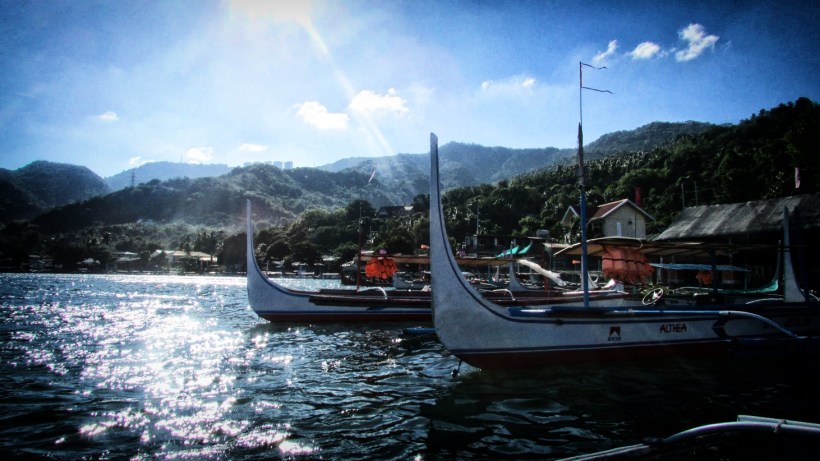
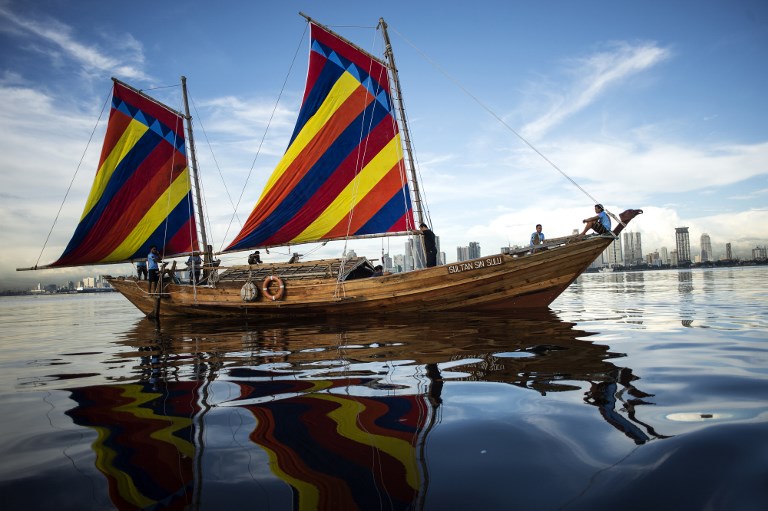
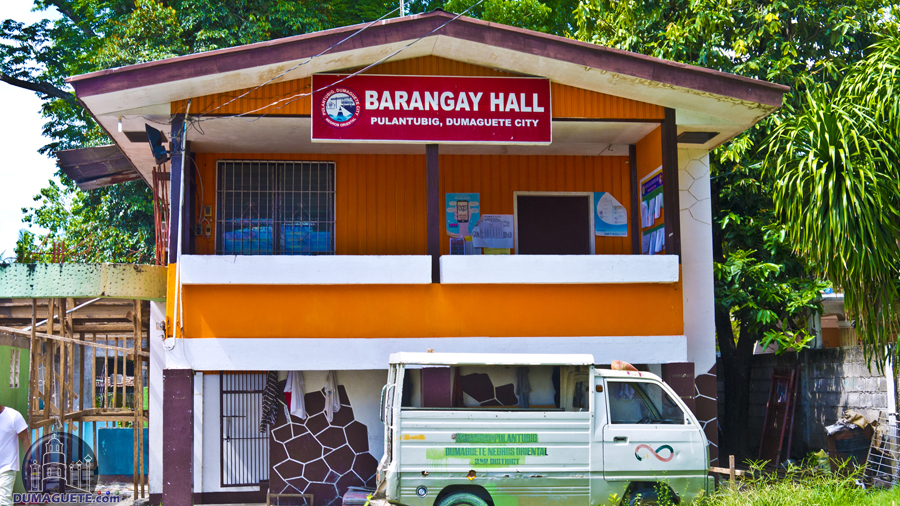
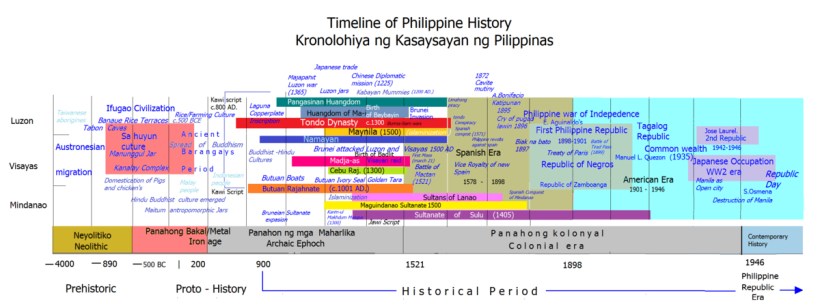 Who are the Filipinos?

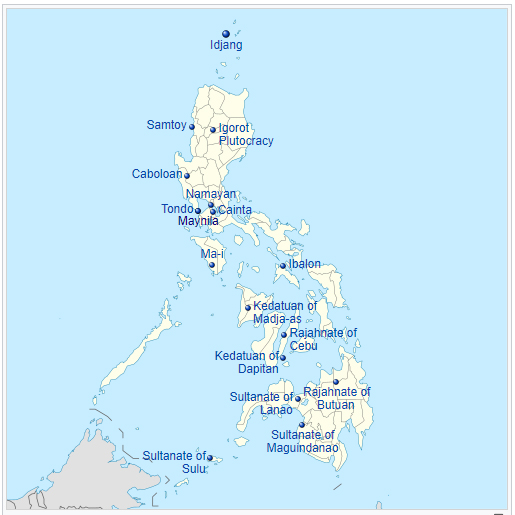


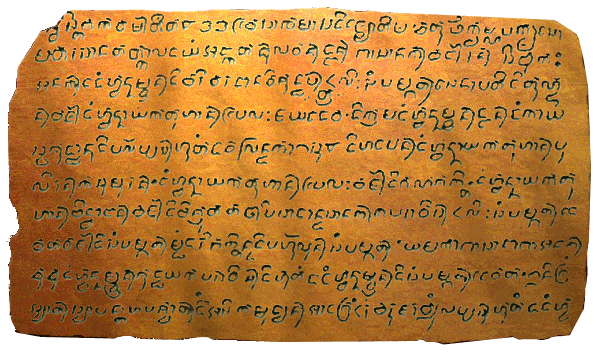
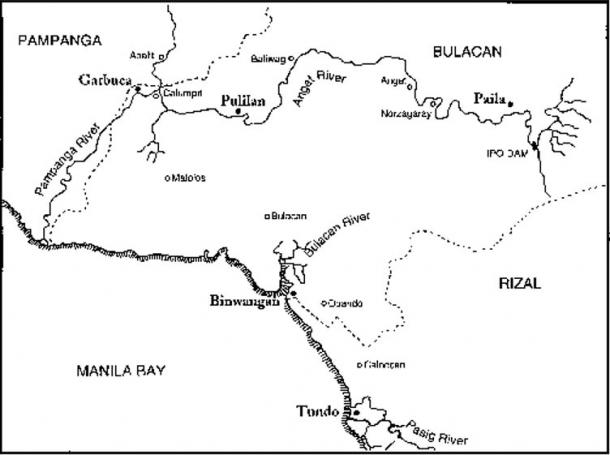
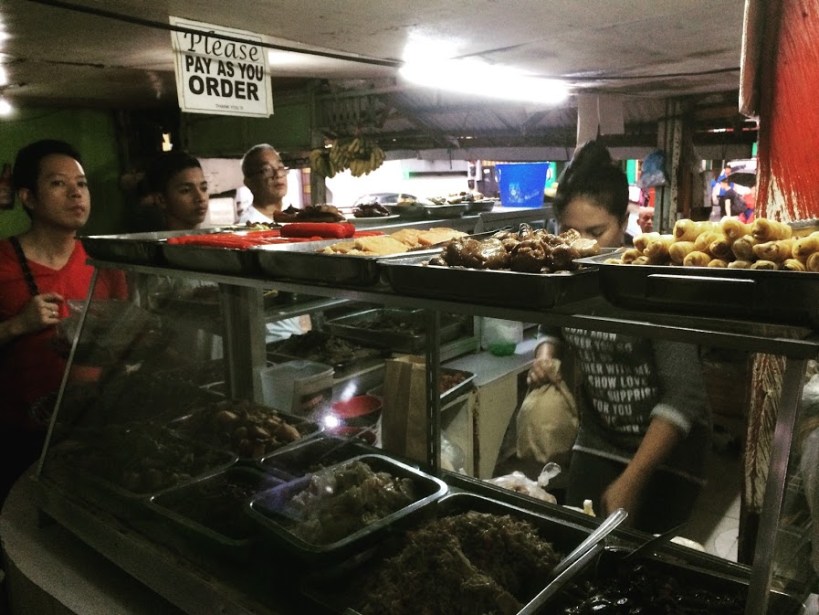


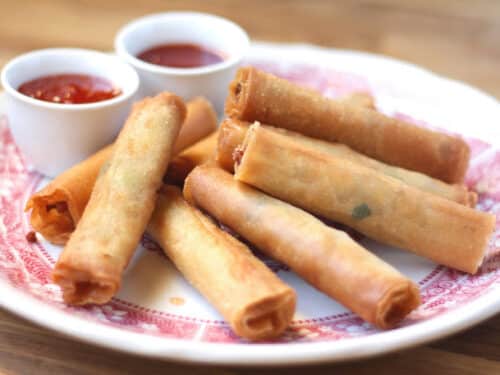
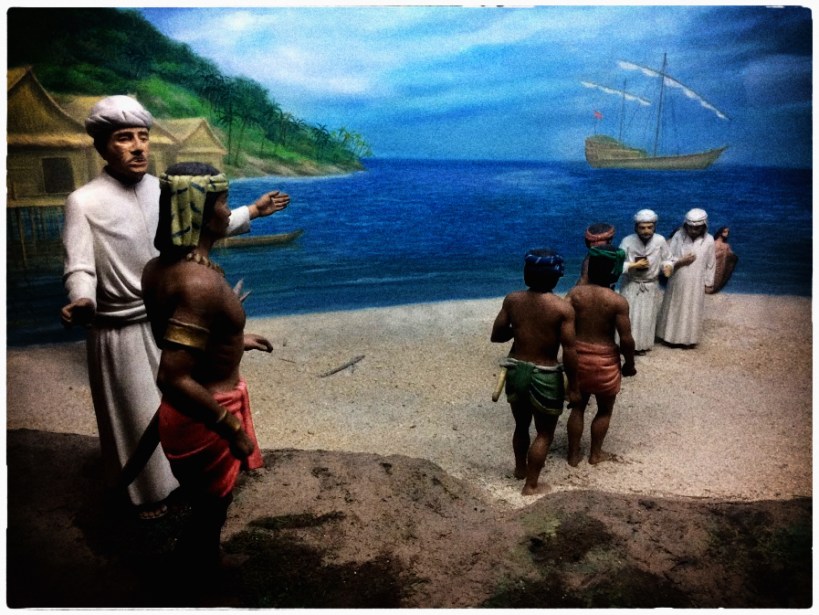


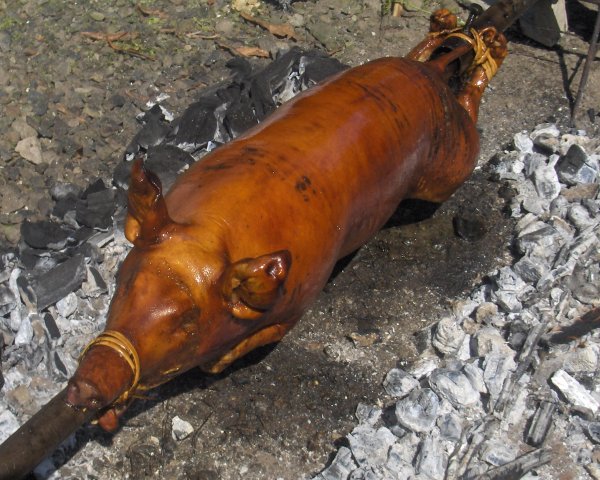


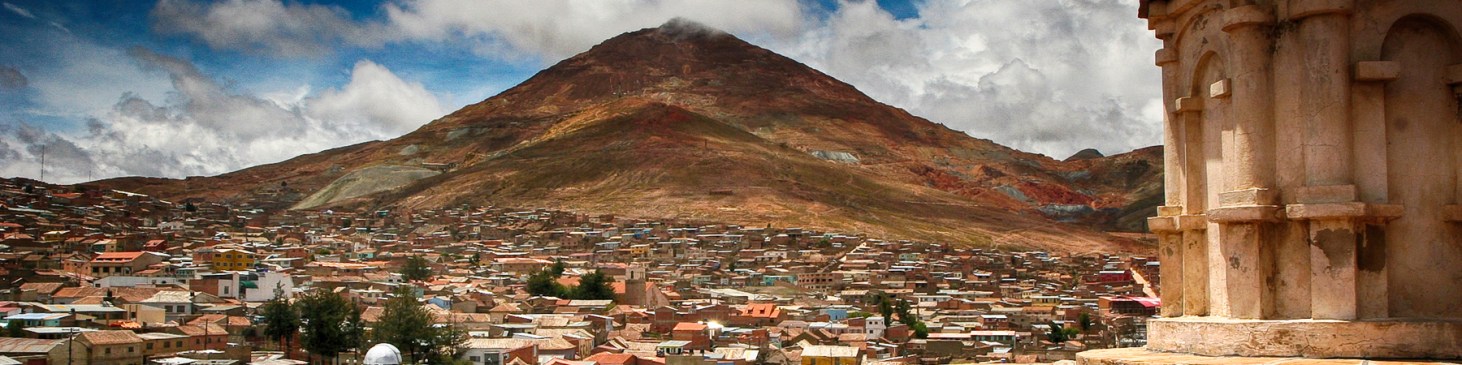


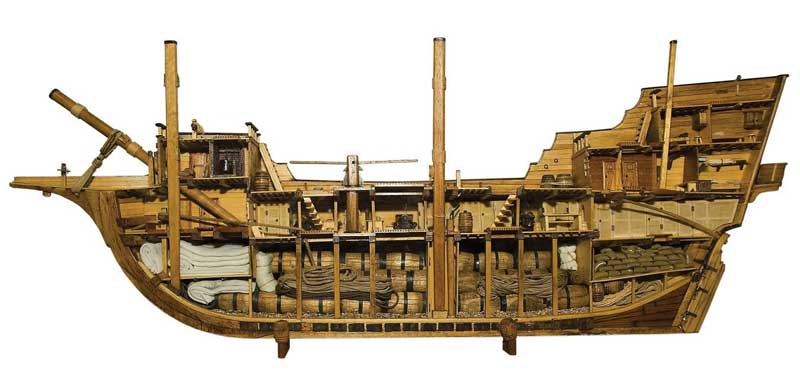


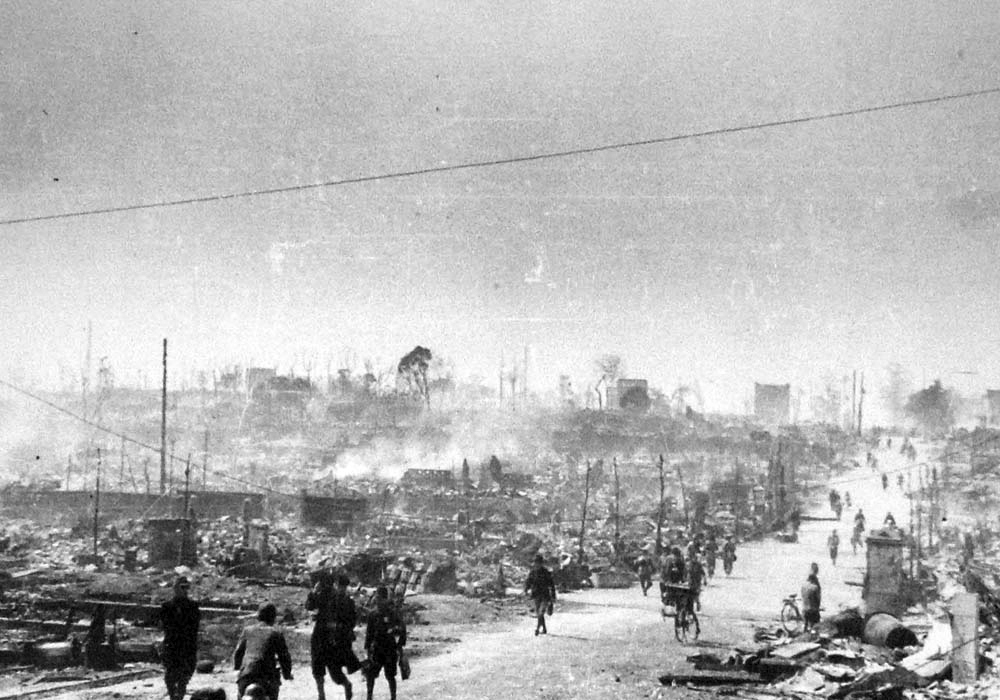


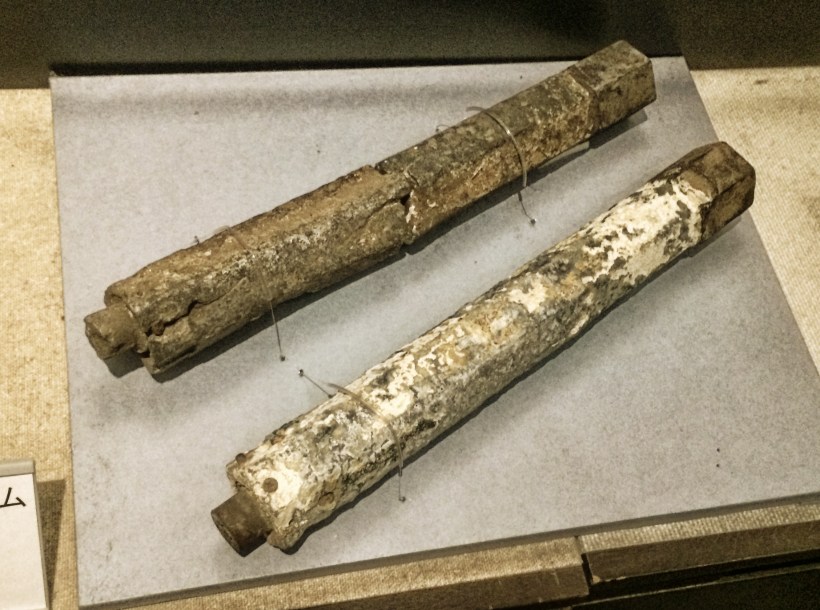
 In preparation for firebombing raids, the USAAF tested the effectiveness of incendiary bombs on the adjoining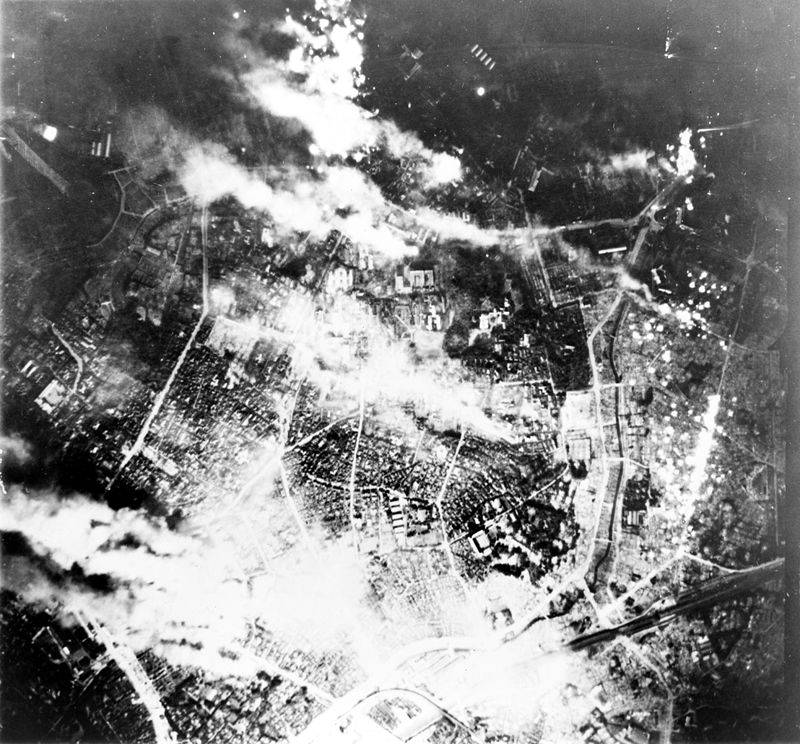
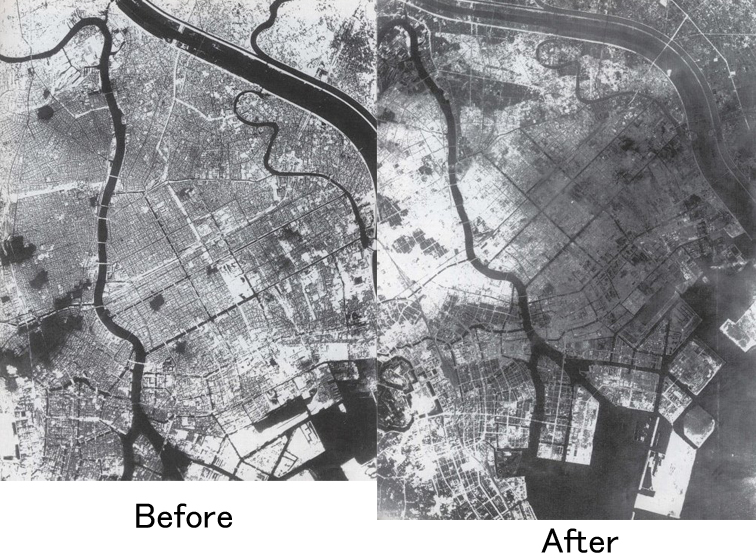


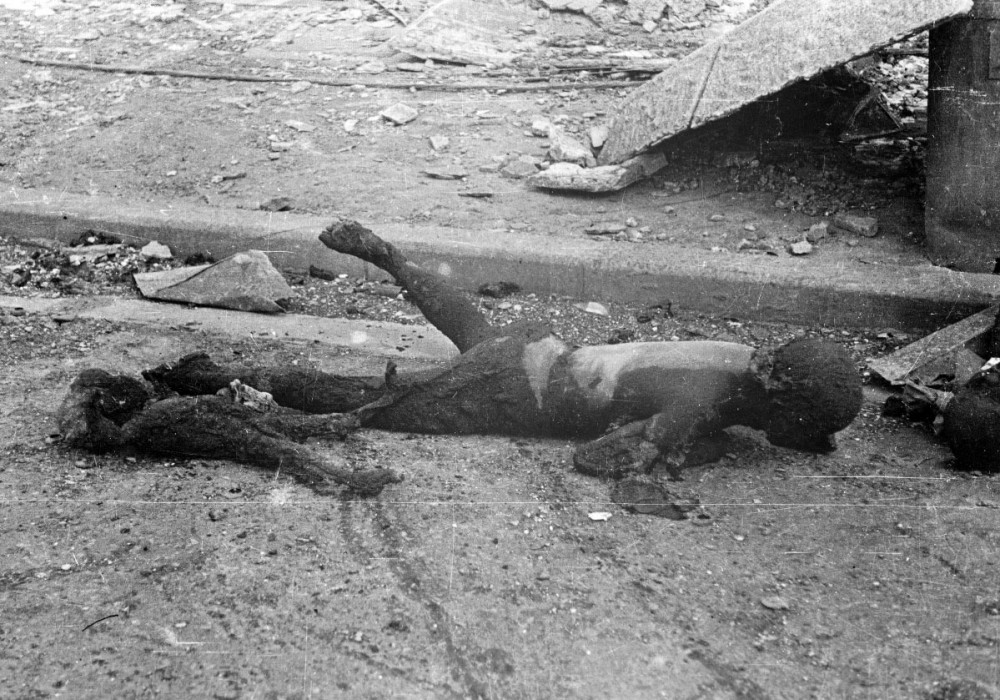


 The Soviet Union dissolved in 1991, and with it all of the state-run industries that held a monopoly on the ordinary consumer products that make up this museum’s collection.


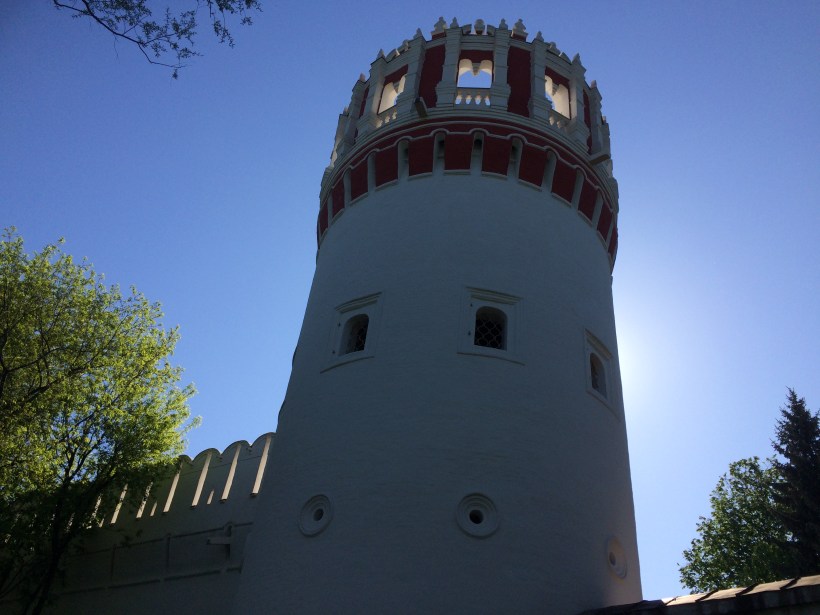


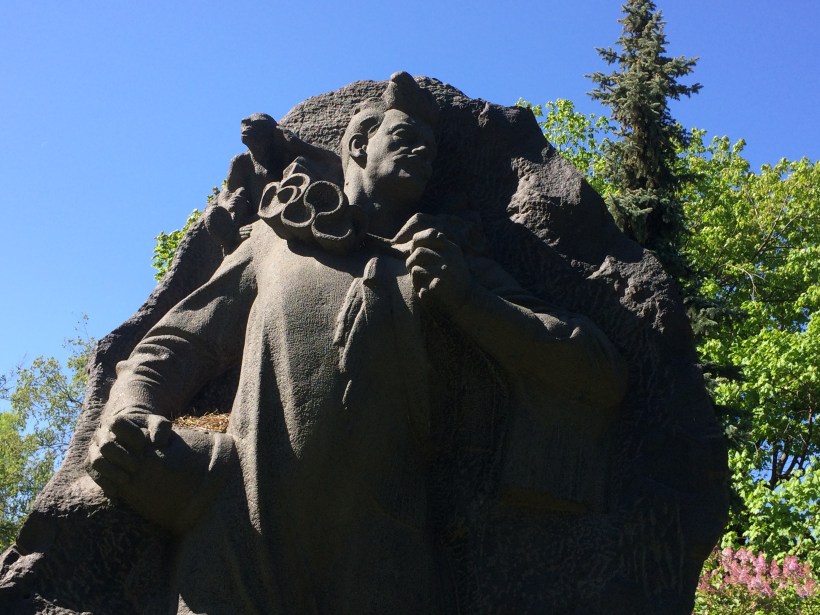


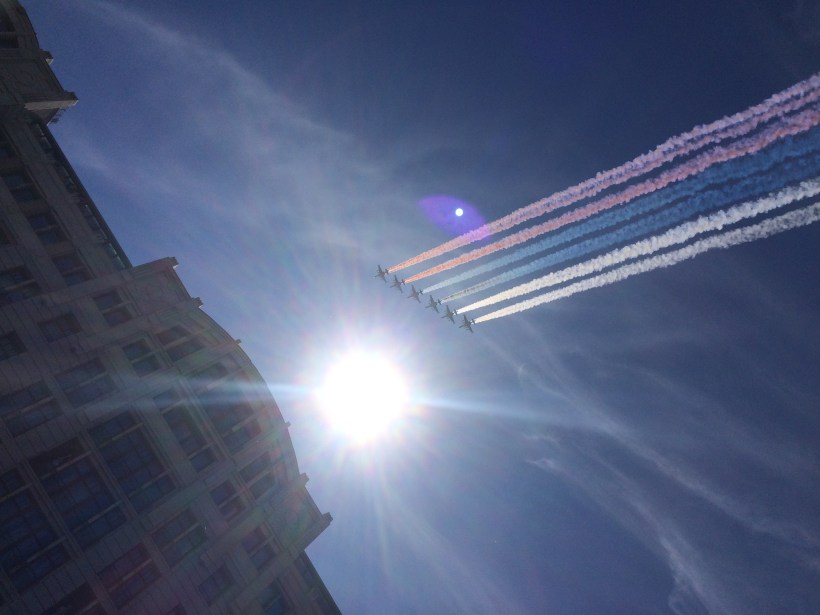
 We found ourselves shunted between crowd control barriers and a fleet of loaded dump trucks (insurance against a European style vehicle attack), but unable to see anything. We could hear the rumble of distant military hardware. Finally, at the end of the parade, some 75 aircraft flew over in various configurations – helicopters, bombers, fighters, the latter of which carried two of Rusia’s newest tactical nuclear warheads… These can fired at hypersonic speeds, theoretically making them invulnerable to any current US missile defense schemes.


 open ended social studies
You must be logged in to post a comment.