Openendedsocialstudies has just launched a brand new unit for teaching middle or high school classrooms about the ancient Maya. Find free readings, guided questions, and lesson plan ideas on the following subjects:
The Ancient Maya in Time and Space – How did the Maya interact with their environment? How did the Maya conceive of themselves and the universe around them? In European influenced societies, geography, ecology, time, and spirituality are all relatively distinct spheres – not so for the ancient Maya, whose since of time, space, and religion were closely linked.
Ancient Maya Society – How was the ancient Maya society structured? How did they govern and feed themselves?
The Maya City – The most durable testament to the grandeur of the ancient Maya are their grand construction projects. How were these cities made, and what makes them so awe-inspiring?
The Written Language of the Maya – Language shapes thoughts, knowledge, and feelings as well as human imagination, so it permeates all aspects of culture – the complexity of the Mayan language is key for understanding the richness of this people.
One great way for students to develop a deeper understanding of a concept is to have them teach others.
Choose any section from this unit and develop a lesson – in the form of a presentation, a storybook, or a worksheet – that teaches younger students about the Maya. Make sure the material is age appropriate in content and approach, and create some simple questions to check your audience’s understanding.
Find more free lessons on the Maya at Openendsocialstudies.org.
There are also plenty of free lessons featuring other peoples from world history.
Captain James Parker arrived in the Massachusetts Bay Colony in 1634. Before I discovered that he was my ancestor, I assumed that my family had been in the United States no longer than a century or so.
History isn’t only what you read in books or see on YouTube. It’s not just big men, and they’re not all from Europe, even if mine were…
History isn’t just famous people. It’s your family, too. In that spirit, this assignment asks you to document your own family history – what kind of interesting stories lie back a generation or more in your family tree?
Often times, young people don’t ask because they assume their elders are boring – that’s just dad, just grandma, and they’ve never done anything interesting. And their elders don’t share out of modesty, or because they assume that young people aren’t interested anyway.
When my own grandfather died, it was with tons of stories – of his young years as an orphan, as one of the first Americans into Nagasaki after the bomb, as a police officer during the 1960s in the racially divided and restive city of Gary, Indiana… And now I think of all of the tragic hours that we spent sitting in the same room, some football game that didn’t really matter blasting, drowning out any potential for conversation… When I was young, I didn’t think to ask, he didn’t think to share – and now that he is gone, all I know of any of this is the barest of sketches.
The goal here is to give you a reason to document your family before it is too late… To put it in the form of a book or something else (not an over-sized poster destined for the recycling bin) that can be tucked into a drawer or a closet – until you’re old enough to care yourself…
Your family history book will include three key components:
Family Tree – stretching back in history as far as you can go, including birth and death dates. This information should be presented graphically. Along one axis of your page, include a timeline marking out key events in US history as they roughly align with your family’s. That will look something like this.
Biographical Summary – Compose a brief biographical blurb for each person including information like: profession, military service, interesting facts, etc. These can be as short as a few complete sentences. Include pictures (or your own drawings) if available.
Biography – Choose someone other than a member of your nuclear family on which to write a more detailed biography, preferably a few pages in length. (12 point font, double spaced, Times New Roman)
Sources for this project can include:
Family members (duh)
-Documents and artifacts held in your family’s possession
–ancestry.com (This costs money, but with your parents’ help you can sign up for a free trial. Just make sure you cancel your membership before the end of the trial or you’ll be charged.)
You should include a works cited page in your book.
Alternatively, you may create a website that meets all of the criteria outlined above. This need not be publicly searchable on the web.
Suggested questions if you’re having trouble interviewing someone and can’t quite get started… You should listen more than you speak, but here are some questions to get the ball rolling… Be authentic and natural, and the stories will come:
Who has been the most important person in your life? Can you tell me about him or her?
What was the happiest moment of your life? The saddest?
Who has been the biggest influence on your life? What lessons did that person teach you?
Who has been the kindest to you in your life?
What are the most important lessons you’ve learned in life?
What is your earliest memory?
What is your favorite memory of me?
Are there any funny stories your family tells about you that come to mind?
Are there any funny stories or memories or characters from your life that you want to tell me about?
What are you proudest of?
When in life have you felt most alone?
If you could hold on to one memory from your life forever, what would that be?
How has your life been different than what you’d imagined?
How would you like to be remembered?
Do you have any regrets?
What are your hopes for what the future holds for me? For my children?
If this was to be our very last conversation, is there anything you’d want to say to me?
For your great great grandchildren listening to this years from now: is there any wisdom you’d want to pass on to them? What would you want them to know?
Is there anything that you’ve never told me but want to tell me now?
Ms. Rita Ulrich, a Fulbright-Hays fellow, traveled to Bulgaria and Greece in 2017 to better understand the ongoing refugee crisis in Europe. She recently contributed her lessons – detailed text appropriate for the middle or high school classroom, complete with creative activities and guided reading questions. It’s everything you need to humanize this unfolding human tragedy for your students.
Refugees and Human Rights in Bulgaria (Free online text suited for middle or high school classroom use, guided reading questions, and suggested activities): What are refugees, why are they in European countries like Bulgaria, and how is the United Nations involved?
The Psychology of a Refugee Crisis (Free online text suited for middle or high school classroom use, guided reading questions, and suggested activities): What psychological dangers do refugees face throughout their journey and during their time searching for safety and a new home?
Open Ended Social Studies collects and presents original and dynamic classroom materials focusing on parts of the world neglected by traditional world history textbooks in the United States. The middle and high school lessons hosted here aim to foster critical and historical thinking, greater cultural awareness, and a sense of wonder about the world and our place in it. Open Ended Social Studies is free, always growing, and collaborative – please check back and contribute often.
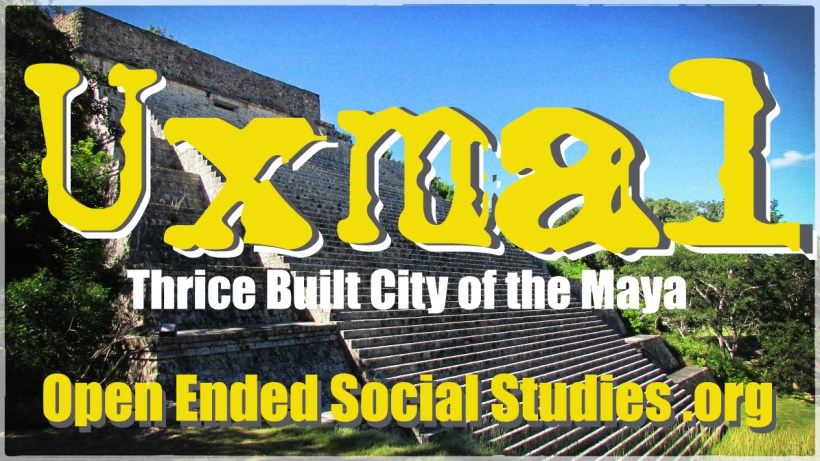
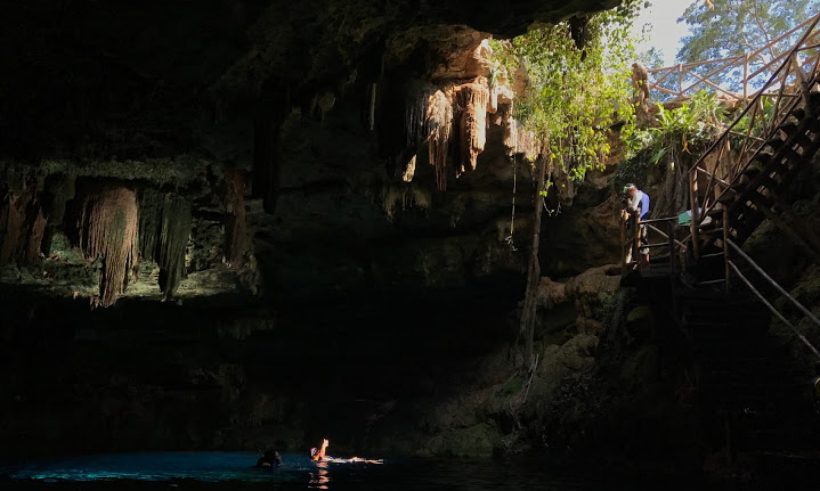
Check out this new Openendedsocialstudies documentary short, shot on location at Uxmal, a Maya ruin in Mexico’s Yucatan Peninsula. This tour of the city is a great introduction to Maya culture and can be enjoyed by the casual viewer, the history buff, or in the classroom, in conjunction with our brand new (and totally free) unit on the ancient Maya.







 open ended social studies
You must be logged in to post a comment.