Where do you fit into Earth’s Ecosystems? (Even the Ones You’ve Never Seen with Your Own Two Eyes)

Let us go into the Sea of Cortez, realizing that we become forever a part of it; that our rubber boots slogging through a flat of eel-grass, that the rocks we turn over in a tide pool, make us truly and permanently a factor in the ecology of the region. We shall take something away from it, but we shall leave something too. And if we seem a small factor in a huge pattern, nevertheless it is of relative importance. We take a tiny colony of soft corals from a rock in a little water world. And that isn’t terribly important to the tide pool. Fifty miles away […] shrimp boats are dredging with overlapping scoops, bringing up tons of shrimps, rapidly destroying the species so that it may never come back, and with the species destroying the ecological balance of the whole region. That isn’t very important in the world. And thousands of miles away the great bombs are falling and the stars are not moved thereby. None of it is important or all of it is.” – John Steinbeck
This lesson was reported from:

In 1940, the author John Steinbeck joined an expedition to the
Sea of Cortez, also known as the Gulf of California, with his friend, the marine biologist Ed Ricketts. Their purpose was scientific – they wished to document and understand the ecology of the Sea of Cortez. They traveled with a small crew aboard a 75-foot boat named the Western Flyer, collecting scientific samples and data of the fauna they encountered, all with the goal of writing a scientific guidebook – one part species catalog, one part travel adventure – entitled Sea of Cortez: A Leisurely Journal of Travel and Research. (1941)
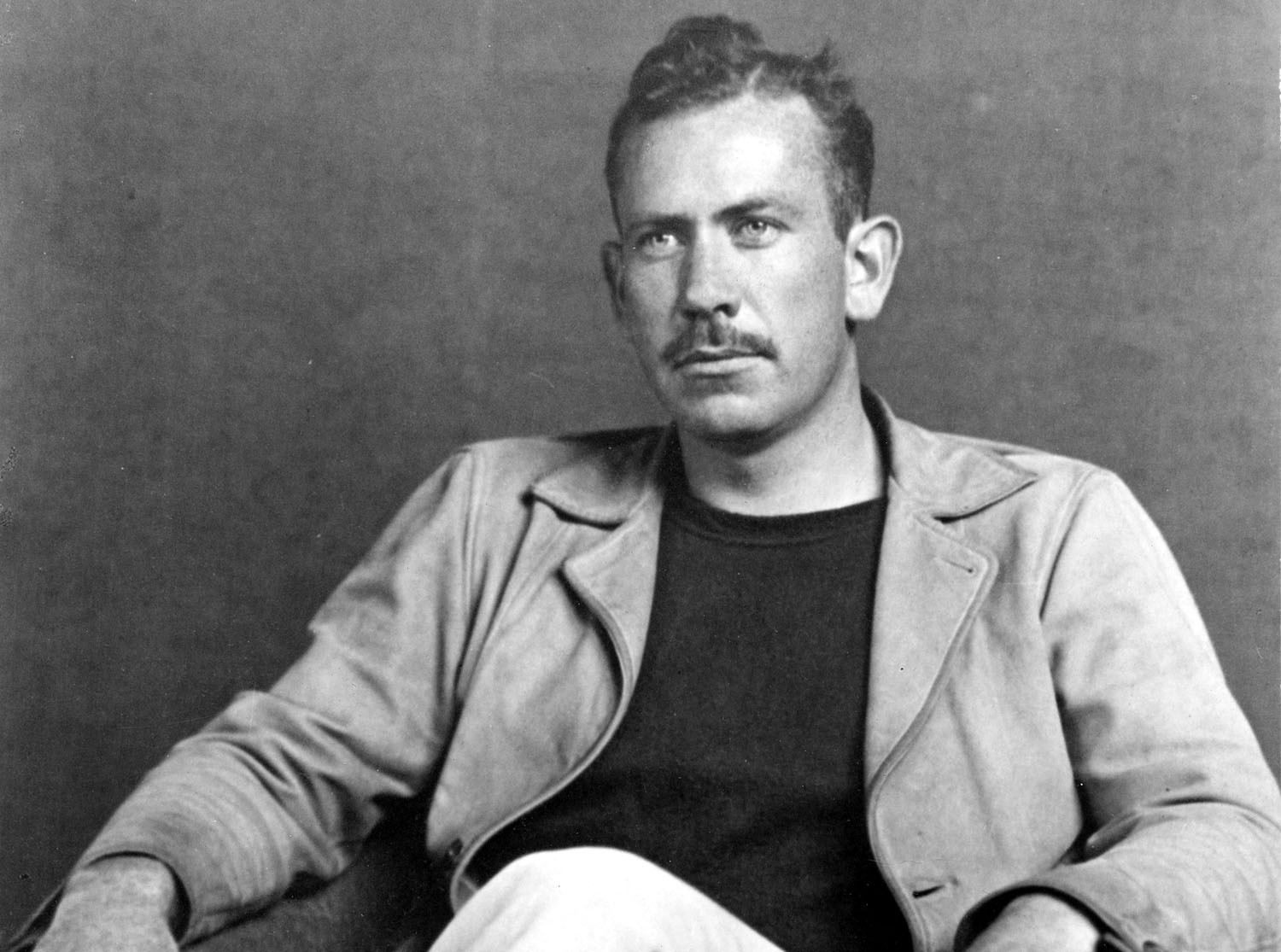

John Ernst Steinbeck Jr. (February 27, 1902 – December 20, 1968) was an American author. He won the 1962 Nobel Prize in Literature “for his realistic and imaginative writings, combining as they do sympathetic humor and keen social perception.” He has been called “a giant of American letters,” and many of his works – Of Mice and Men, The Grapes of Wrath, The Pearl – are considered classics of Western literature. (Wikipedia)

First edition of The Log from the Sea of Cortez by John Steinbeck, 1951.

The book describes the complex ecosystem of the Sea of Cortez, its islands, and shorelines. An ecosystem is a community of living organisms interacting with the nonliving components of their environment. Steinbeck describes the wildlife – in particular, the marine invertebrates – in colorful detail, but Sea of Cortez is perhaps most notable for placing humans and human activity firmly into his poetic take on ecology. After all, humans inhabit the Sea of Cortez, they fish in it, they mine the surrounding mountains, their carbon emissions and plastic waste from thousands of miles away effect it – humans should not be considered apart from its ecology.

Humans engage in complex interactions with ecosystems – both those in their immediate surroundings, where they live and work, and those on the other side of the planet, in areas that supply commercial goods that they consume or that are effected by greenhouse emissions. (Isla Espíritu Santo, Mexico, 2019.)
(Enlarge and open in a new window.)

In fact, human activities are a significant factor in almost all of Earth’s ecosystems. The cumulative effects of their impact are large even enough to influence the planet’s climate, or patterns of weather over long periods of time.

Ecosystems provide a variety of goods and services upon which people depend. Ecosystem goods include food (fishing, for example), construction material (lumber from forests, sand, stone from quarries, metals from mines, plastics from petroleum pumped from deep under the Earth), and medicinal plants (aspirin, quinine, marijuana). Ecosystem goods also include less tangible items like tourism and outdoor recreation, staples of the economy in many communities around the globe.

Ecosystem services, on the other hand, are the many and varied benefits that humans gain from the natural environment and from properly-functioning ecosystems.  These include clean air and water (thanks to plants which capture CO2 and aquifers which filter rain water) and crop pollination (by insects and birds). Even things like beauty, inspiration, and opportunities for scientific research, which help humans to better understand our world.

In addition to providing a home (habitat) for a great variety of other species, mangrove swamps protect coastal areas from erosion, storm surge (especially during hurricanes), and tsunamis – a great example of ecosystem services in action. (Florida Everglades at low tide, 2018.)

While ecosystem goods have traditionally been recognized as the basis for things of economic value – they are property and goods that one can own – ecosystem services tend to be taken for granted – available to all,
whether one “owns” the forest or not. Ecosystem services are what an economist might call a public good – something shared more or less equally by everyone for free. Since they do not cost money, our capitalist system has traditionally placed little value on protecting them – even though they are vital to life as we know it.

In Sea of Cortez, Steinbeck connects the dots between ecosystem goods, ecosystem services, and human activity. While he was not the first to connect humans to the ecosystems they inhabit and exploit, his writing on the subject is both eloquent and persuasive. Early in the book, he writes:

“Let us go into the Sea of Cortez, realizing that we become forever a part of it; that our rubber boots slogging through a flat of eel-grass, that the rocks we turn over in a tide pool, make us truly and permanently a factor in the ecology of the region. We shall take something away from it, but we shall leave something too. And if we seem a small factor in a huge pattern, nevertheless it is of relative importance. We take a tiny colony of soft corals from a rock in a little water world. And that isn’t terribly important to the tide pool. Fifty miles away […] shrimp boats are dredging with overlapping scoops, bringing up tons of shrimps, rapidly destroying the species so that it may never come back, and with the species destroying the ecological balance of the whole region. That isn’t very important in the world. And thousands of miles away the great bombs are falling and the stars are not moved thereby. None of it is important or all of it is.”

The Earth can seem huge on a cross country drive that takes days, but it is actually finite. Its natural resources are vulnerable and limited. As human population and per capita consumption grow, so do the demands imposed on ecosystems and the effects of the human ecological footprint – that is, the impact of humanity on the global ecosystem in terms of carbon released, energy used, water consumed, and waste created.

Ecosystem services are not only limited but also that they are threatened by human activities. Problems for all ecosystems include: environmental pollution, climate change, and biodiversity loss. For terrestrial ecosystems, additional threats include air pollution (chemicals released by manufacturing and power generation, emission of greenhouse gases), soil degradation (erosion from farming, salinization from irrigation, conversion of ecosystems for human construction projects), and deforestation (especially in tropical and coastal regions). For marine ecosystems threats include unsustainable exploitation of marine resources (overfishing of certain species), marine pollution (from deep sea oil drilling or spills), microplastics pollution (plastic takes thousands of years to biodegrade and too often ends up floating in the ocean), water pollution (from urban runoff and industrial manufacturing), and building on coastal areas.

Scientists have been conducting research for decades to help us better understand long-term ecosystem health and its role in enabling human habitation and economic activity. In a capitalistic democracy like the United States – where the priorities of both corporations and government are responsive to the will of the majority of people – it is important for all citizens to understand the findings of these scientists. Each of us must begin to recognize the way our habits of consumption impact on the ecosystems in our region, as well as – in a globalized economy threatened by climate change – ecosystems on the other side of the planet.

Downtown La Paz is beautiful, just like the downtown of your city, but human development shapes ecosystems as well. Earth, rock, and sand are paved over, waves and tidal action are broken, buildings and pavement reflect or trap heat and rain, runoff from roads after a rain can carry oil, plastic wastes, and other pollutants into otherwise clean waters. (La Paz, Mexico, 2019.)

Humans have the unique ability to shape our environment. This is one thing that distinguishes us from our fellow animals and plants.

Alongside this ability to shape, we also have the ability to ask and answer complex questions through careful observation of the world around us – this is what we can science. Elsewhere in Sea of Cortez, John Steinbeck said, “It is not enough to say that we cannot know or judge because all the information is not in. The process of gathering knowledge does not lead to knowing. A child’s world spreads only a little beyond his understanding while that of a great scientist thrusts outward immeasurably. An answer is invariably the parent of a great family of new questions. So we draw worlds and fit them like tracings against the world about us, and crumple them when they do not fit and draw new ones.” 

As we begin to better understand the world around us, we find ourselves confronted with the uncomfortable truth that some of our activities as a species have damaged – and continue to damage – the ecosystems on which all life depends.

Modern technology has only enhanced these abilities to shape and to understand – just as it has enhanced our responsibility to create a sustainable future for our species and all others on this planet.

A handful of sand from the bottom of Candelero Bay on Isla Espíritu Santo reveals an entire ecosystem of marine worms living underfoot and, for most people, out of mind. (Isla Espíritu Santo, Mexico, 2019.)

For Writing or Discussion

1. What is an ecosystem? What goods and services do humans extract from them? What negative impacts do human activities have on them?

2. Describe an ecosystem in or near your hometown – name species of plants and animals, describe the average temperature, rainfall, etc in winter and summer. How have humans shaped this ecosystem and for what reasons?

3. In your own words, what does Steinbeck mean when he says “None of it is important or all of it is?” Do you agree with this sentiment?

4. Amongst life on Earth, human beings possess a unique level of self-awareness, as well as an unparalleled ability to shape every ecosystem on the planet for better or worse. Does that power come with any responsibility? Defend your answer.

Calculate Your Ecological Footprint

  1. Trace your impact outward into the environment — list and categorize all of the (a) trash (paper, plastic, metal, recyclable or not), (b) carbon emissions (from electricity use, transportation, ordering things off of Amazon, etc), and (c) food/water (including showers, toilet flushes, and the sprinkler on your lawn) you consumed today. Be thorough and precise.
  2. Quantify each of these impacts — weigh them, measure them, use information from the internet to estimate them. There are many tools online that can help you to calculate these numbers. Represent this information in charts or diagrams.
  3. Incorporating information compiled in steps one and two, create a world map infographic or poster showing the origin points and impact points of your ecological footprint. Also, plot and illustrate the ways in which those points will effect you. For example: Where does your food come from? How is it transported to you? Is it refrigerated on the way? What is the carbon impact of these activities? What kind of biomagnification (plastics, pesticides, antibiotics, etc) is present in your diet? Was the tuna you may have eaten farmed or caught wild? Where? Is the current population of that fish in the wild sustainable? How many MPG does your car get? How far do you live from school? How long did your mom idle in carline? What temperature is the AC in your how many square foot house? Where do the plastics you trash end up? Where does the water in your toilet go after you flush? What effect does carbon have on the ice caps? Sea level? Acidification of the ocean? Where does your waste water go? What does your clean water come from? How will rising sea levels due to increased greenhouse activity impact your hometown? etc
  4. In a reflective essay: Which of these impacts can you reduce through personal choices? What challenges or barriers to change will you encounter? Which of these impacts can only be reduced through government or corporate action?

Take It Further

Identify three concrete steps you will take to reduce your ecological footprint. This online quiz may help you. Describe exactly how you plan to take these steps. Resolve to carry them out for the next month.

. Describe exactly how you plan to take these steps. Resolve to carry them out for the next month.

THIS LESSON WAS DEVELOPED WITH SUPPORT FROM ECOLOGY PROJECT INTERNATIONAL.

If you value the free resources we offer, please consider making a modest contribution to keep this site going and growing.

John Steinbeck visited Isla Espíritu Santo, an island in the Gulf of California, off the Mexican state of Baja California Sur. Wikipedia describes ecosystems in the surrounding reefs as being home to parrotfish, angelfish, trumpetfish, Moorish idols, and rainbow wrasse, with many other species passing nearby including sharks, rays, turtles, dolphins, and whales. Birds who call the island home include brown pelicans, great blue herons, snowy egrets, turkey vultures, and hummingbirds. A large sea lion colony resides nearby. By the 1990s pressure to develop on Isla Espiritu Santo was intense: a real estate developer wanted to create a resort casino on the island. Tim Means, a conservationist based in nearby La Paz, formed a coalition of activists who were able to purchase part of the island from the ejido (farming commune) that wished to sell it to the developer. One third of the funds came from Mexican funders, another third from American funders via the Nature Conservancy, and the rest through an anonymous gift to the World Wildlife Fund. Today,Isla Espíritu Santo is protected as part of the Área de Protección de Flora y Fauna – Islas del Golfo de California. (Isla Espíritu Santo, Mexico, 2019.)

Lobbying for the Compromise of 1850

This lesson can be used with The United States: An Open Ended History, a free online textbook.  Adapted in part from open sources.

“the Fugitive Slave Law of 1850 penalized officials who did not arrest an alleged runaway slave, and made them liable to a fine of $1,000 (about $29,000 in present-day value). Law-enforcement officials everywhere were required to arrest people suspected of being a runaway slave on as little as a claimant‘s sworn testimony of ownership. The suspected slave could not ask for a jury trial or testify on his or her own behalf.[6] In addition, any person aiding a runaway slave by providing food or shelter was subject to six months’ imprisonment and a $1,000 fine. Officers who captured a fugitive slave were entitled to a bonus or promotion for their work.

Slave owners needed only to supply an affidavit to a Federal marshal to capture an escaped slave. Since a suspected slave was not eligible for a trial, the law resulted in the kidnapping and conscription of free blacks into slavery, as suspected fugitive slaves had no rights in court and could not defend themselves against accusations.”


You’ve probably grown up seeing political ads on TV.  Most of these are sponsored by PACs or Political Action Committees – groups that aren’t candidates in an election, but wish to influence the outcome with money spent on advertisements.

Imagine that TV and PACs existed in 1850.  Create a television spot either opposing or supporting the Compromise of 1850.  In your ad, be sure to explain the components of the compromise.  Also mention the alternatives – do you have a better plan, or are there alternatives worse than the unpalatable elements found in the compromise.  Be creative, but in order to get 100% on this assignment, in addition to taking an editorial point of view, you will need to include lots of rich historical details, such as who in Congress supports this compromise, who opposes it, and why.TV ads should be one to two minutes in length. They may be filmed and uploaded to YouTube or performed in class. 

For writing (Approximately 250 words): In politics, is it better to compromise to solve disputes, even if that compromise is ugly, or is it better to “stay the course” – sticking to your beliefs about what is right, no matter what, even if it means greater conflict and division?  Make sure that your answer uses historical examples such as the Compromise of 1850.

The Real Oregon Trail

This lesson can be used with The United States: An Open Ended History, a free online textbook.  Adapted in part from open sources.
The Oregon Trail.

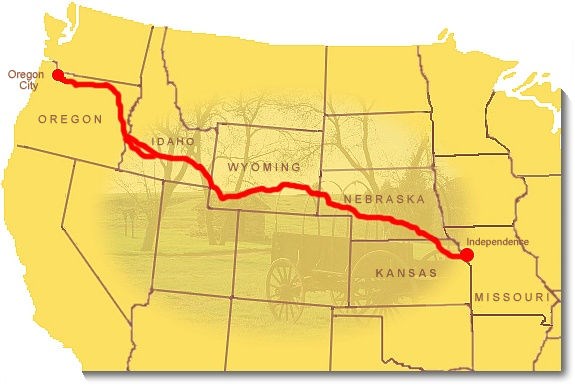
The Oregon Trail was a 2,170-mile, historic East–West, large-wheeled wagon route and emigrant trail in the United States that connected the Missouri River to valleys in Oregon.From the early to mid-1830s (and particularly through the years 1846–69) the Oregon Trail and its many offshoots were used by about 400,000 settlers, farmers, miners, ranchers, and business owners and their families. 

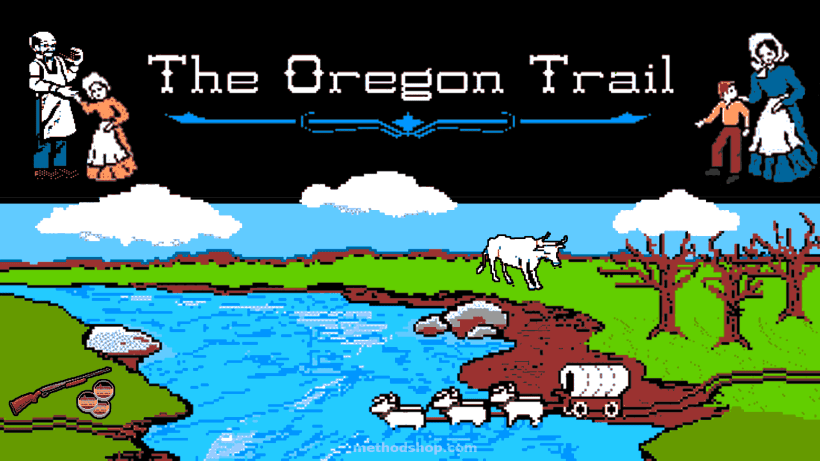
The Oregon Trail is a computer game developed by the Minnesota Educational Computing Consortium and first released in 1985. It was designed to teach students about the realities of 19th-century pioneer life on the Oregon Trail.  In the game, the player assumes the role of a wagon leader guiding a party of settlers from Independence, Missouri, to Oregon‘s Willamette Valley via a covered wagon in 1848.

Play several rounds of the game, embedded below.  While you play, devise a research question about the real life Oregon Trail. For example, what was the leading cause of death for pioneers traveling west?  Are there many grave markers left along the old route of the trail, and if so, what do they say? What was hunting like in the 1800s, and what impact did it have on animals like American Bison?  What were covered wagons really like, and did settlers actually carry spare parts for them?

Create an infographic with facts, figures, images, and at least three paragraphs worth of information on the realities of some aspect of the game.  Be sure to include information about your sources at the bottom of your infographic.  You can see an example of a student infographic here and here.

An Oregon Trail infographic produced, typographical errors and all, by an 8th grade student.

Who should replace Andrew Jackson on the $20 bill?

This lesson can be used with The United States: An Open Ended History, a free online textbook.  Adapted in part from open sources.

All of these fighters have monuments – why not someone else?

Imagine that our class is a committee appointed by Congress to select one reformer from the Antebellum (pre-Civil War) era to replace nasty old Andrew Jackson on the $20 bill and to simultaneously celebrate the US’s rich history of forward-thinking individuals.  You should base your decision on your knowledge of what these people accomplished in their lifetimes, as well as the lasting impact they have had on our overall society.  You will need to research what these people did using your textbook or the Internet.  You may use whatever criteria for inclusion that you choose, however, you may not just say you’re voting for some guy because he’s rich or fat or some such reason that lacks historical substance.  (Remember this is a history class.)

Abolitionists

William Lloyd Garrison

Frederick Douglass

Nat Turner

Harriet Beecher Stowe

Harriet Tubman

Women’s Rights

Sarah Grimke

Elizabeth Cady Stanton

Susan B. Anthony

Other Reformers

Dorothea Dix

Horace Mann

Sequoyah

Carrie Nation

Henry David Thoreau

Spiritual Leaders and Communalists

Charles G. Finney

John Humphrey Noyes

Robert Owen

You will compose a persuasive essay – including a brief biographical overview, an explanation of the reformer’s accomplishments/lasting legacy, a direct quote from your reformer’s writings (if available), and a clear argument for why this person deserves to be the face of the 20 dollar bill.  You should also create a physical life-size mock up of your new 20 dollar bill (it can be creative, colorful, and impressionistic).  Make sure you cite your sources!

A Eulogy for Andrew Jackson

This lesson can be used with The United States: An Open Ended History, a free online textbook.  Adapted in part from open sources.

smithsonian2Pretend that it is June 8, 1845 – former President Andrew Jackson (1829-1837) has just kicked the old hickory bucket.  You’ve been tasked with writing a eulogy – a funeral speech – for Andrew Jackson.  Nowadays, speakers tend to be pretty polite in eulogies, but back then, people weren’t afraid to speak ill of the dead.  Even Andrew Jackson’s pet parrot, Polly, had to be ejected from his funeral for swearing.  No joke.
Your speech should follow the basic format of a standard, five-paragraph persuasive essay. It should include a hook to grab listeners’ attention, followed by a clear statement of your thesis – was Andrew Jackson a great president or one of the worst? The body should use the facts of his career to support your position. You should them summarize your judgement in your concluding statement.

Make sure to address the significance of (1) annexation of Florida from Spain, (2) the Trail of Tears, (3) the Nullification Crisis in South Carolina, and (4) one other life event of your choosing.  Your job is to explain these key accomplishments of his career – and why they are/were controversial.  You must then summarize your position – is this man one of our greatest presidents, worthy of bronze statues and twenty dollar bills, or one of our worst, worthy of quiet obscurity?

As a starting point for your research, you can use:

  1. Andrew Jackson, For and Against the Common Man

The end result should be a short (3-5 minute) funeral oration addressing the above topics using specific facts and figures to advance your argument – to be recited aloud to stirring effect!  Feel free to include period appropriate curse words to make your point, as a tribute to his parrot.

Build Your Own American System

This lesson can be used with The United States: An Open Ended History, a free online textbook.  Adapted in part from open sources.

The American System was an economic plan that played an important role in American policy during the first half of the 19th century. Rooted in the “American School” ideas of Alexander Hamilton, the plan “consisted of three mutually reinforcing parts: a tariff to protect and promote American industry; a national bank to foster commerce; and federal subsidies for roads, canals, and other ‘internal improvements’ to develop profitable markets for agriculture.” Congressman Henry Clay was the plan’s foremost proponent and the first to refer to it as the “American System.”

state outlines Fresh United States America USA Free Maps Blank In Us Map State
Right click to download.

Use this map to plan infrastructure improvements to 19th Century United States.  Link different regions to improve economic connections between different regions – remember, you have to sell your plan to Congress, so you need to make it profitable to as many states as possible in order to secure their votes.

Label:

  • the borders of the United States circa 1840
  • The most important big cities circa 1840: New York, Chicago, St. Louis, Boston, Atlanta, Baltimore, Washington, DC, Philadelphia, Charleston, New Orleans, Cleveland, Detroit, Indianapolis, Jacksonville, Pittsburgh
  • The rivers: Mississippi, Ohio, Missouri, Potomac
  • The mountain ranges
  • The Great Lakes (by name)
  • Proposals for the routes of at least three canals linking various regions (naming at least one commodity that will travel in each direction – find out what resources/products come from the cities you’re linking)
  • Proposals for the routes of at least three railroads linking various regions (name the commodities)
  • Proposals for the routes of three toll roads (name the commodities)
products before the civil war

The Bottom Line

  1. Compare and Contrast: Consider factors like cost, weather, topography, efficiency — what are the relative advantages and disadvantages of toll roads, railroads, and canals?
  2. Why is it important for the government to invest in these kinds of infrastructure?  In what ways does it impact your daily life?
  3. We often refer to the United States as a capitalistic country, successful because the government’s lack of intervention in the economy.  Does the existence of the American System support or refute this label?

Comparing Slavery and Factory Life

This lesson can be used with The United States: An Open Ended History, a free online textbook.  Adapted in part from open sources.

The negro slaves of the South are the happiest, and in some sense, the freest people in the world. The children and the aged and infirm work not at all, and yet have all the comforts and necessaries of life provided for them. They enjoy liberty, because they are oppressed neither by care or labor. The women do little hard work, and are protected from the despotism of their husbands by their masters. The negro men and stout boys work, on the average, in good weather, no more than nine hours a day. The balance of their time is spent in perfect abandon. Besides, they have their Sabbaths and holidays. White men, with so much of license and abandon, would die of ennui; but negroes luxuriate in corporeal and mental repose. With their faces upturned to the sun, they can sleep at any hour; and quiet sleep is the greatest of human enjoyments. “Blessed be the man who invented sleep.” ‘Tis happiness in itself—and results from contentment in the present, and confident assurance of the future. We do not know whether free laborers ever sleep. They are fools to do so; for, whilst they sleep, the wily and watchful capitalist is devising means to ensnare and exploit them. The free laborer must work or starve. He is more of a slave than the negro, because he works longer and harder for less allowance than the slave, and has no holiday, because the cares of life with him begin when its labors end. He has no liberty and not a single right. . . .   -George Fitzhugh, 1857

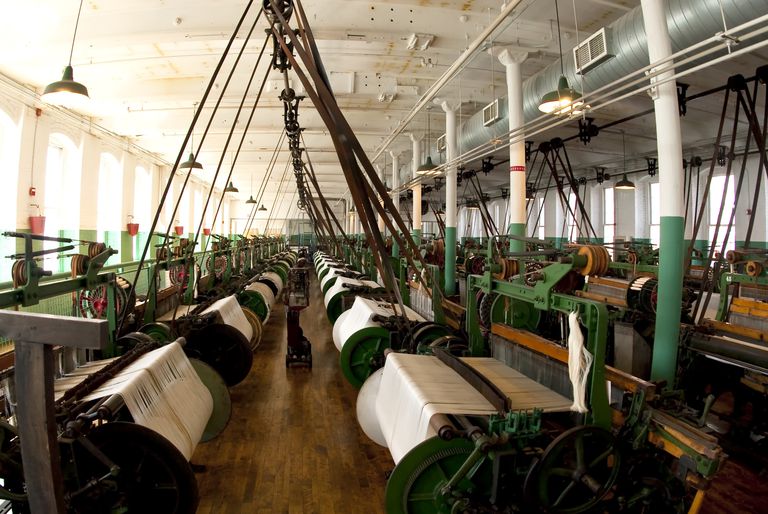
Lewiston Mill Regulations, 1867, and Rules of Plantation Management, 1853.

Use the documents contained in the link above to develop a 5-6 sentence answer for each question below.  Each answer requires direct quotes or examples from the documents to support it.  

  1. Compare and contrast the way time is organized on the plantation with the way time is organized in the factory.
  2. Describe a regular day in the life in both the factory and on the plantation.
  3. What do the rules as written miss about the experience of slaves and workers? 
  4. Do you agree with George Fitzhugh’s claim that slaves are better off than workers? Can we (and should we?) compare the lives of factory workers to those of the enslaved?
  5. How would you compare the factory and plantation rules to the rules of your school? – Take a look at your school handbook and cite specific examples to support your answer.
  6. Consider the real children’s book below, published in 2016 — given what you have learned here, what false impressions might it give children about the experience of slavery?

Duocc3X.png

From the publishers description: “Everyone is buzzing about the president’s birthday! Especially George Washington’s servants, who scurry around the kitchen preparing to make this the best celebration ever. Oh, how George Washington loves his cake! And, oh, how he depends on Hercules, his head chef, to make it for him. Hercules, a slave, takes great pride in baking the president’s cake. But this year there is one problem–they are out of sugar.

This story, told in the voice of Delia, Hercules’s young daughter, is based on real events, and underscores the loving exchange between a very determined father and his eager daughter, who are faced with an unspoken, bittersweet reality. No matter how delicious the president’s cake turns out to be, Delia and Papa will not taste the sweetness of freedom.

New York Times food writer Ramin Ganeshram and acclaimed illustrator Vanessa Brantley-Newton serve up a slice of history in a picture book narrative that will surely satisfy.”

How I Spent My Voyage of Discovery

This lesson can be used with The United States: An Open Ended History, a free online textbook.  Adapted in part from open sources.

lewis-and-clark_v2
A page from Lewis’s journal.

From May 1804 to September 1806, the Corps of Discovery under the command of Captain Meriwether Lewis and his close friend Second Lieutenant William Clark, was the first American expedition to cross the western portion of the United States. Also along for the mission was York, Clark’s slave, who who carried a gun and hunted on behalf of the expedition and was also accorded a vote during group decisions, more than half a century before African Americans could actually participate in American democracy.  Along the way, the Corps picked up they met a French-Canadian fur trapper named Toussaint Charbonneau, and his teenage Shoshone wife Sacagawea, who had purchased as a slave and who was pregnant with their child.  The Shoshone lived in the Rocky Mountains, and Sacagawea’s knowledge of nature, geography, language, and culture proved to be invaluable to the expedition. (Excerpted from The United States: An Open Ended History)

The primary goals of the Lewis and Clark expedition were:

  1. Map the Missouri River and related tributaries.
  2. Find the easiest possible route across the continent.
  3. Make detailed observations of the natural resources and geography of the west.
  4. Establish good relations with native groups.

Your group will be assigned to document one of the following segments of the Lewis and Clark journey, which in total lasted from 1803-1806 – 

Pretend that you are Lewis and Clark. President Thomas Jefferson has asked you to the White House to deliver a detailed report about your expedition.  In particular, Jefferson wants to see evidence that you have made a good effort to achieve each of your four goals.

1024px-Carte_Lewis_and_Clark_Expedition

A good presentation will document and describe all of the following: the major events of the assigned portion of the journey, the members of the expedition who provided indispensable contributions to its success, what tools and techniques they used, the people Lewis and Clark met during this segment, and the wildlife they encountered.  Use these details as evidence to show how Lewis and Clark worked toward the four goals that Jefferson assigned to them. 

In order to present your findings, you can make a webpage, a mock up of Lewis’s journal, a song, a rap, a comic, a Prezi, a WeExplore, or anything else you can imagine.  Aside from this, the main requirement is – DON’T BE BORING!!  You should also supply some enticing visuals to supplement your report.

A Starting Point for Your Research: A Timeline of the Lewis and Clark Expedition

American Revolutionary War Screenplay

This lesson can be used with The United States: An Open Ended History, a free online textbook.  Adapted in part from open sources.

Choose one of the following events from the Revolutionary War.  Pretend you have been hired to adapt this historical event into a big budget Hollywood blockbuster.  Script a key scene for this film, including scenic directions and dialogue.

Remember that in film, images tell much of the story, serving to evoke the emotions and thoughts of the viewer.  Integrate dialogue into the action of the scene. Rather than have characters deliver speeches, for example, let them talk while they are moving or doing something that will add visual interest to the scene.  Your scene can be dramatic, humorous, even musical, feel free to subvert gender roles – but it should be based firmly on the facts with plenty of references to identifiable historical individuals and situations.  It should also give your audience a sense – through dialogue, symbolism, or narration – of the significance of the event they are witnessing.  Why was is this scene important – to the story of the war and/or to future generations?

Check here for an explanation of how a screenplay is written.

Battles of Lexington and Concord

statue-at-lexington-green
The statue that now stands on Lexington green commemorating the service and sacrifice of colonial Minutemen. Some argue that this likeness is based on Captain John Parker, though that claim has never been proven.

The Battles of Lexington and Concord were the first military engagements of the American Revolutionary War.  About 700 British Army regulars in Boston, under Lieutenant Colonel Francis Smith, were given secret orders to capture and destroy Colonial military supplies reportedly stored by the Massachusetts militia at Concord. Through effective intelligence gathering, Patriot leaders had received word weeks before the expedition that their supplies might be at risk and had moved most of them to other locations. On the night before the battle, warning of the British expedition had been rapidly sent from Boston to militias in the area by several riders, including Paul Revere and Samuel Prescott, with information about British plans. The first shots were fired just as the sun was rising at Lexington.  The British pushed on to Concord. The Americans had taken away most of the munitions, but they destroyed whatever was left. In the meantime, American forces in the countryside had mobilized to harass the British on their long return to Boston. All along the road, behind stone walls, hillocks, and houses, militiamen from “every Middlesex village and farm” made targets of the bright red coats of the British soldiers. By the time Gage’s weary detachment stumbled into Boston, it had suffered more than 250 killed and wounded. The Americans lost 93 men.

Characters to include: John Parker

Adoption of the Declaration of Independence

Franklin-Jefferson-and-Adams-1024x768
From left to right, Benjamin Franklin of Pennsylvania, John Adams of Massachusetts, and Thomas Jefferson of Virginia represented the three major regions of the colonies and were the three most prominent members of the committee appointed to write the Declaration of Independence. The final product, while containing contributions from the group as a whole, was largely the work of Jefferson.

The Declaration of Independence, adopted July 4, 1776, not only announced the birth of a new nation, but also set forth a philosophy of human freedom that would become a dynamic force throughout the entire world. The Declaration drew upon French and English Enlightenment political philosophy, but one influence in particular stands out: John Locke’s Second Treatise on Government. Locke took conceptions of the traditional rights of Englishmen and universalized them into the natural rights of all humankind. The Declaration’s familiar opening passage echoes Locke’s social-contract theory of government:

We hold these truths to be self‑evident, that all men are created equal, that they are endowed by their Creator with certain unalienable Rights, that among these are Life, Liberty and the pursuit of Happiness.

Characters to include: Thomas Jefferson, John Adams, Benjamin Franklin

Winter at Valley Forge

valleyforge-vignette

Valley Forge in Pennsylvania was the site of the military camp of the American Continental Army over the winter of 1777–1778 during the American Revolutionary War. It is approximately 20 miles northwest of Philadelphia.  Starvation, disease, malnutrition, and exposure killed nearly 2,500 American soldiers by the end of February 1778.

With winter almost setting in, and with the prospects for campaigning greatly diminishing, General George Washington sought quarters for his men. Washington and his troops had fought what was to be the last major engagement of 1777 at the Battle of White Marsh (or Edge Hill) in early December. He devised to pull his troops from their present encampment in the White Marsh area (now Fort Washington State Park) and move to a more secure location for the coming winter.  Though no battle was fought here from December 19, 1777 to June 19, 1778, a struggle against the elements and low morale was overcome on this sacred ground.

“Naked and starving as they are we cannot enough admire the incomparable patience and fidelity of the soldiery.” –General George Washington at Valley Forge, February 16, 1778.

Characters to Include: George Washington, Baron von Steuben

The Service of Deborah Sampson

DeborahSampson
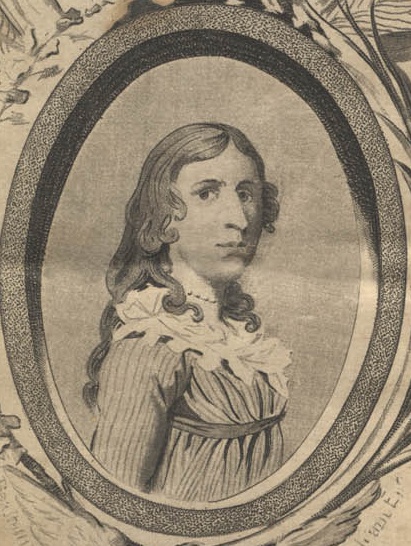
Engraved portrait of Deborah Sampson, female American Revolutionary War soldier.

Deborah Sampson wore men’s clothes and joined an Army unit in Massachusetts under the name “Robert Shirtliff” (also spelled in some sources as “Shirtliffe” or “Shurtleff”). She joined the Light Infantry Company of the 4th Massachusetts Regiment, under the command of Captain George Webb (1740–1825). This unit, consisting of 50 to 60 men, was first quartered in Bellingham, Massachusetts, and later mustered at Worcester with the rest of the regiment commanded by Colonel William Shepard. Light Infantry Companies were elite troops, specially picked because they were taller and stronger than average. Their job was to provide rapid flank coverage for advancing regiments, as well as rearguard and forward reconnaissance duties for units on the move. Because she joined an elite unit, Sampson’s disguise was more likely to succeed, since no one was likely to look for a woman among soldiers who were specially chosen for their above average size and superior physical ability.

Sampson fought in several skirmishes. During her first battle, on July 3, 1782, outside Tarrytown, New York, she took two musket balls in her thigh and a cut on her forehead. She begged her fellow soldiers to let her die and not take her to a doctor, but a soldier put her on his horse and took her to a hospital. The doctors treated her head wound, but she left the hospital before they could attend to her leg. Fearful that her identity would be discovered, she removed one of the balls herself with a penknife and sewing needle, but the other one was too deep for her to reach. Her leg never fully healed. 

Characters to Include: Deborah Sampson

Surrender at Yorktown

800px-Surrender_of_Lord_Cornwallis
Surrender of Lord Cornwallis by John Trumbull, depicts the British surrendering to Benjamin Lincoln, flanked by French (left) and American troops. Oil on canvas, 1820.

A series of battles left British General Cornwallis’s armies in retreat toward Yorktown, Virginia, where they expected to be rescued by a British fleet. The fleet showed up, but so did a larger French fleet, so the British fleet retreated out to sea after a brief battle, leaving Cornwallis trapped between the American and French armies on land and the French fleet at sea. Finally, on October 19, 1781, General Cornwallis surrendered his army of 8,000 British soldiers.

Characters to Include: Washington, Lafayette, Cornwallis

George Washington resigns as commander in chief

By the Treaty of Paris signed on September 3, 1783, Great Britain recognized the independence of the United States. Washington disbanded his army and gave an eloquent farewell address to his soldiers on November 2. On November 25, the British evacuated New York City, and Washington and the governor took possession. At Fraunces Tavern on December 4, Washington formally bade his officers farewell and he resigned his commission as commander-in-chief on December 23, 1783, to the Continental Congress in the Old Senate Chamber of the Maryland State House in Annapolis, Md. “I consider it an indispensable duty to close this last solemn act of my official life, by commending the interests of our dearest country to the protection of Almighty God, and those who have the superintendence of them, to his holy keeping.” Historian Gordon Wood concludes that the greatest act in his life was his resignation as commander of the armies.  King George III called Washington “the greatest character of the age” because of this.

Washington later submitted a formal account of the expenses that he had personally advanced the army over the eight-year conflict of about $450,000. It is said to have been detailed regarding small items and vague concerning large ones, and included the expenses incurred from Martha’s visits to his headquarters, as well as his compensation for service—none of which had been drawn during the war.

Characters to Include: Washington

Massachusetts Bay Comix

This lesson can be used with The United States: An Open Ended History, a free online textbook.  Adapted in part from open sources.

Use the following article to create a 2-3 page comic about the history of Massachusetts, the second English colony in America:

  1. Massachusetts: Church and State in the Land of the Wamanoag
You can go big and tell a general history of the colony, or you can focus in something more specific – relations with the Natives, the Puritan ideology, or the Witch Trials. 
Your comic should include at least 10 facts about the colony and its history.  It should also mention/show at least 2 important people named in the article.  Your comic does not have to be colored, and you will not be graded on the quality of your art, per se – but it should be neat and legible!
 
Extra credit for the best two comics in each class, which will be displayed in the classroom/on my website!