Understanding the difference between communism and capitalism, with Bulgaria as a lens. What is communism, and how has it shaped Bulgaria’s past and present?
Continue reading “The History of Communism in Bulgaria”
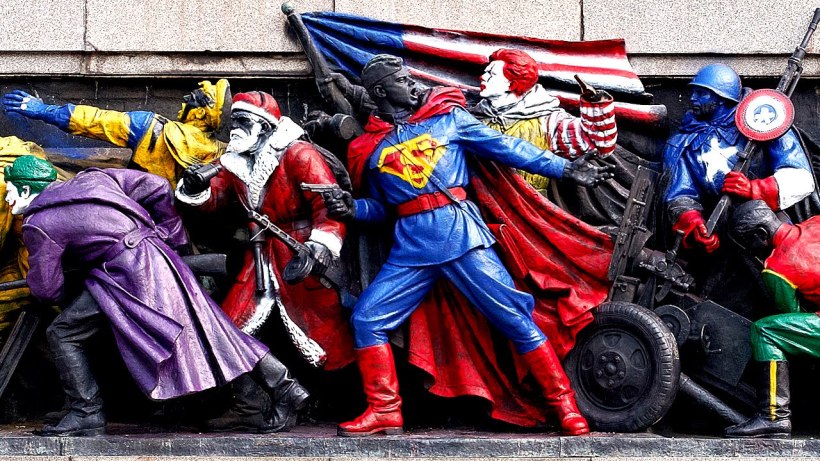
Understanding the difference between communism and capitalism, with Bulgaria as a lens. What is communism, and how has it shaped Bulgaria’s past and present?
Continue reading “The History of Communism in Bulgaria”

What is Eastern Orthodox Christianity, and how did it become such an integral part of Bulgaria’s national identity?
Continue reading “The Eastern Orthodox Faith”

Interested in developing high quality educational content for your nonprofit, industry, or cause? Thomas Kenning, the creator of Open Ended Social Studies, with 12 years and counting experience in the classroom, also works on contract. References from previous clients available upon request.
For inquiries, please contact me below.

Ms. Rita Ulrich, a Fulbright-Hays fellow, traveled to Bulgaria and Greece in 2017 to better understand the ongoing refugee crisis in Europe. She recently contributed her lessons – detailed text appropriate for the middle or high school classroom, complete with creative activities and guided reading questions. It’s everything you need to humanize this unfolding human tragedy for your students.Learn how you can submit your own work to Openendedsocialstudies.org.
What is brain drain, who wins and loses because this phenomenon, and how does it affect a nation like Bulgaria?
Continue reading “The Dangers of Brain Drain”

I recently took trip to Mexico’s Yucatan Peninsula. Forgoing the usual tourist center of Cancun and the Riviera Maya, I headed inland to Mérida. From this, a Maya city turned Spanish colonial center turned Mexican provincial capital, one of the oldest inhabited places in the Western Hemisphere, I undertook a short series of day trips to the great Maya ruins of the Yucatan, including Chichen Izta, Uxmal, and Ek’ Balam.
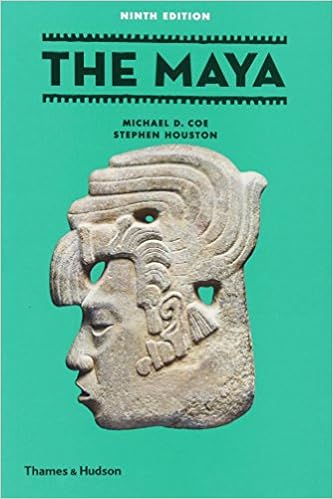 To maximize my time – to make the most sense of my all too brief visit to this incredible region – I did my homework before I left the States. Of particular use to me – and to anyone looking to learn more about the Maya and their Mesoamerican neighbors – is The Maya (People and Places) by Michael Coe. While certain passages were somewhat esoteric in their detailed account of the history of Maya archaeology, the book itself was eminently readable – a great resource for anyone looking to cut through the hype and 2012 sensationalism that soaks the usual Amazon search results.
Aimed at younger readers – but still rich and directly written, with lush illustrations – Ancient Maya by Barbara Somervill is a book that paints a nuanced portrait of this complex society. Suitable for a middle or high school library, and I can honestly say that as an educator I took a lot away from this book myself. It never speaks down to its audience, which is the sign that a book is truly accessible to all ages.
1491: New Revelations of the Americas Before Columbus by Charles C. Mann is a perennial favorite of mine. While its scope is far wider than the Maya – encompassing Teotihuacan, the Aztec, the Inca, and many more Pre-Columbian societies that deserve more attention from the general public, Mann’s masterpiece is a true revelation – an inspiration that started me down the path that eventually led to the creation of Openendedsocialstudies.org.
If you know of any other relevant books I should be looking at – especially if they might help to inform future travel and lessons here at Openendedsocialstudies – please leave a comment in the section below!

for use with The Material Culture of the Soviet Union: The Soviet Union dissolved in 1991, and with it all of the state-run industries that held a monopoly on the ordinary consumer and commercial products that make up the Museum of Industrial Culture in Moscow, Russia. The Soviet system of government was gone, for better or worse, and so too was the material culture that had defined Russian life for generations.
for use with the The Maya: Illuminated Offspring of the Makers lesson. Take a tour of the ruins of the Maya city of Ek’ Balam, in Mexico’s Yucatan Peninsula. This haunting marvel begs the question: what led to the collapse and dramatic restructuring of this ancient civilization?
for use with the The Maya: Illuminated Offspring of the Makers lesson. Take a tour of the ruins of Uxmal, one of the largest and best preserved cities of the Maya. Located in Mexico, on the Yucatan Peninsula, the ruins of Uxmal are comprised of the Pyramid of the Magician, the Nunnery Quadrangle, the ballcourt, the Governor’s Palace, and the Great Pyramid. Learn about the history and function of each of these impressive structures, as well as what they can tell us about the Maya world and culture.
for use with the The Gulf States: Cosmopolitan Crossroads lesson. What are the basic teachings of Islam, and what does it mean to be a Muslim?
for use with the The Andes, the Inca, the Spanish, and the Making of Modern South America lesson. The Inca were one of the great civilizations of the world, no matter how you measure it – in art, technology, wealth, military power, population, area controlled, or influence on world history.

Openendedsocialstudies has just launched a brand new unit for teaching middle or high school classrooms about the ancient Maya. Find free readings, guided questions, and lesson plan ideas on the following subjects:
One great way for students to develop a deeper understanding of a concept is to have them teach others.
Find more free lessons on the Maya at Openendsocialstudies.org.
There are also plenty of free lessons featuring other peoples from world history.


History isn’t only what you read in books or see on YouTube. It’s not just big men, and they’re not all from Europe, even if mine were…
History isn’t just famous people. It’s your family, too. In that spirit, this assignment asks you to document your own family history – what kind of interesting stories lie back a generation or more in your family tree?
Often times, young people don’t ask because they assume their elders are boring – that’s just dad, just grandma, and they’ve never done anything interesting. And their elders don’t share out of modesty, or because they assume that young people aren’t interested anyway.
When my own grandfather died, it was with tons of stories – of his young years as an orphan, as one of the first Americans into Nagasaki after the bomb, as a police officer during the 1960s in the racially divided and restive city of Gary, Indiana… And now I think of all of the tragic hours that we spent sitting in the same room, some football game that didn’t really matter blasting, drowning out any potential for conversation… When I was young, I didn’t think to ask, he didn’t think to share – and now that he is gone, all I know of any of this is the barest of sketches.
The goal here is to give you a reason to document your family before it is too late… To put it in the form of a book or something else (not an over-sized poster destined for the recycling bin) that can be tucked into a drawer or a closet – until you’re old enough to care yourself…
Your family history book will include three key components:
Family Tree – stretching back in history as far as you can go, including birth and death dates. This information should be presented graphically. Along one axis of your page, include a timeline marking out key events in US history as they roughly align with your family’s. That will look something like this.
Biographical Summary – Compose a brief biographical blurb for each person including information like: profession, military service, interesting facts, etc. These can be as short as a few complete sentences. Include pictures (or your own drawings) if available.
Sources for this project can include:
You should include a works cited page in your book.
Alternatively, you may create a website that meets all of the criteria outlined above. This need not be publicly searchable on the web.
Suggested questions if you’re having trouble interviewing someone and can’t quite get started… You should listen more than you speak, but here are some questions to get the ball rolling… Be authentic and natural, and the stories will come:
Ms. Rita Ulrich, a Fulbright-Hays fellow, traveled to Bulgaria and Greece in 2017 to better understand the ongoing refugee crisis in Europe. She recently contributed her lessons – detailed text appropriate for the middle or high school classroom, complete with creative activities and guided reading questions. It’s everything you need to humanize this unfolding human tragedy for your students.
There are also plenty of free lessons featuring other nations currently in the news.
Learn how you can submit your own work to Openendedsocialstudies.org.


 open ended social studies
You must be logged in to post a comment.