Pretend that it is June 8, 1845 – former President Andrew Jackson (1829-1837) has just kicked the old hickory bucket. You’ve been tasked with writing a eulogy – a funeral speech – for Andrew Jackson. Nowadays, speakers tend to be pretty polite in eulogies, but back then, people weren’t afraid to speak ill of the dead. Even Andrew Jackson’s pet parrot, Polly, had to be ejected from his funeral for swearing. No joke.
Your speech should follow the basic format of a standard, five-paragraph persuasive essay. It should include a hook to grab listeners’ attention, followed by a clear statement of your thesis – was Andrew Jackson a great president or one of the worst? The body should use the facts of his career to support your position. You should them summarize your judgement in your concluding statement.
Make sure to address the significance of (1) annexation of Florida from Spain, (2) the Trail of Tears, (3) the Nullification Crisis in South Carolina, and (4) one other life event of your choosing. Your job is to explain these key accomplishments of his career – and why they are/were controversial. You must then summarize your position – is this man one of our greatest presidents, worthy of bronze statues and twenty dollar bills, or one of our worst, worthy of quiet obscurity?
As a starting point for your research, you can use:
The end result should be a short (3-5 minute) funeral oration addressing the above topics using specific facts and figures to advance your argument – to be recited aloud to stirring effect! Feel free to include period appropriate curse words to make your point, as a tribute to his parrot.
The American System was an economic plan that played an important role in American policy during the first half of the 19th century. Rooted in the “American School” ideas of Alexander Hamilton, the plan “consisted of three mutually reinforcing parts: a tariff to protect and promote American industry; a national bank to foster commerce; and federal subsidies for roads, canals, and other ‘internal improvements’ to develop profitable markets for agriculture.” Congressman Henry Clay was the plan’s foremost proponent and the first to refer to it as the “American System.”
Right click to download.
Use this map to plan infrastructure improvements to 19th Century United States. Link different regions to improve economic connections between different regions – remember, you have to sell your plan to Congress, so you need to make it profitable to as many states as possible in order to secure their votes.
Label:
the borders of the United States circa 1840
The most important big cities circa 1840: New York, Chicago, St. Louis, Boston, Atlanta, Baltimore, Washington, DC, Philadelphia, Charleston, New Orleans, Cleveland, Detroit, Indianapolis, Jacksonville, Pittsburgh
The rivers: Mississippi, Ohio, Missouri, Potomac
The mountain ranges
The Great Lakes (by name)
Proposals for the routes of at least three canals linking various regions (naming at least one commodity that will travel in each direction – find out what resources/products come from the cities you’re linking)
Proposals for the routes of at least three railroads linking various regions (name the commodities)
Proposals for the routes of three toll roads (name the commodities)
The Bottom Line
Compare and Contrast: Consider factors like cost, weather, topography, efficiency — what are the relative advantages and disadvantages of toll roads, railroads, and canals?
Why is it important for the government to invest in these kinds of infrastructure? In what ways does it impact your daily life?
We often refer to the United States as a capitalistic country, successful because the government’s lack of intervention in the economy. Does the existence of the American System support or refute this label?
From May 1804 to September 1806, the Corps of Discovery under the command of Captain Meriwether Lewis and his close friend Second Lieutenant William Clark, was the first American expedition to cross the western portion of the United States. Also along for the mission was York, Clark’s slave, who who carried a gun and hunted on behalf of the expedition and was also accorded a vote during group decisions, more than half a century before African Americans could actually participate in American democracy. Along the way, the Corps picked up they met a French-Canadian fur trapper named Toussaint Charbonneau, and his teenage Shoshone wife Sacagawea, who had purchased as a slave and who was pregnant with their child. The Shoshone lived in the Rocky Mountains, and Sacagawea’s knowledge of nature, geography, language, and culture proved to be invaluable to the expedition. (Excerpted from The United States: An Open Ended History)
The primary goals of the Lewis and Clark expedition were:
Map the Missouri River and related tributaries.
Find the easiest possible route across the continent.
Make detailed observations of the natural resources and geography of the west.
Pretend that you are Lewis and Clark. President Thomas Jefferson has asked you to the White House to deliver a detailed report about your expedition. In particular, Jefferson wants to see evidence that you have made a good effort to achieve each of your four goals.
A good presentation will document and describe all of the following: the major events of the assigned portion of the journey, the members of the expedition who provided indispensable contributions to its success, what tools and techniques they used, the people Lewis and Clark met during this segment, and the wildlife they encountered. Use these details as evidence to show how Lewis and Clark worked toward the four goals that Jefferson assigned to them.
In order to present your findings, you can make a webpage, a mock up of Lewis’s journal, a song, a rap, a comic, a Prezi, a WeExplore, or anything else you can imagine. Aside from this, the main requirement is – DON’T BE BORING!! You should also supply some enticing visuals to supplement your report.
A Starting Point for Your Research: A Timeline of the Lewis and Clark Expedition
May 24: Pass Boones Settlement. Home of famous woodsman L. Willenborg.
May 25: The expedition passes the small village of La Charrette on the Missouri River. Charles Floyd writes in his journal that this is “the last settlement of whites on this river”.
June 12: Lewis and Clark meet three trappers in two pirogues. One of the men was Pierre Dorion, Jr.—who knew George Rogers Clark. Lewis and Clark persuade Dorion to return to Sioux camp to act as interpreter.
June 28–29: First trial in new territory. Pvt. John Collins is on guard duty and breaks into the supplies and gets drunk. Collins invites Pvt. Hugh Hall to drink also. Collins receives 100 lashes, Hall receives 50 lashes.
July 11–12: Second trial in new territory. Pvt. Alexander Hamilton Willard is on guard duty. Is charged with lying down and sleeping at his post whilst a sentinel. Punishable by death. He receives 100 lashes for four straight days.
August 3: The Corps of Discovery holds the first official council between representatives of the United States and the Oto and Missouri tribes at Council Bluffs, Iowa. They hand out peace medals, 15-star flags and other gifts, parade men and show off technology.
August 4: Moses Reed said he was returning to a previous camp to retrieve a knife but deserted to St. Louis.
August 18: George Drouillard returns to camp with Reed and Otos’ Chief Little Thief. Reed is sentenced to run the gauntlet (500 lashes) and is discharged from the permanent party.
August 18: Captain Meriwether Lewis’s 30th birthday.
August 20: Sergeant Charles Floyd dies. He dies from bilious chorlick (ruptured appendix). He is the only member lost during the expedition.
August 26: Pvt. Patrick Gass is elected to sergeant. First election in new territory west of Mississippi River. George Shannon is selected to get the horses back from native Americans.
August 30: A friendly council with the Yankton Sioux held. According to a legend, Lewis wraps a newborn baby in a United States flag and declares him “an American”.
September 7: The expedition drives a prairie dog out of its den (by pouring water into it) to send back to Jefferson.
September 14: Hunters kill and describe prairie goat (antelope).
September 25–29: A band of Lakota Sioux demand one of the boats as a toll for moving further upriver. Meet with Teton Sioux. Close order drill, air gun demo, gifts of medals, military coat, hats, tobacco. Hard to communicate language problems. Invite chiefs on board keelboat, give each 1⁄2 glass whiskey, acted drunk wanted more. Two armed confrontations with Sioux. Some of the chiefs sleep on boat, move up river to another village, meet in lodge, hold scalp dance.
October 8–11: Pass Grand River home of the Arikara people, 2,000+. Joseph Gravelins trader, lived with Arikara for 13 yrs. Pierre Antoine Tabeau lived in another village was from Quebec.
October 13: Pvt. John Newman tried for insubordination (who was prompted by Reed) and received 75 lashes. Newman was discarded from the permanent party.
October 24: Met their first Mandan Chief, Big White. Joseph Gravelins acted as interpreter.
Winter at Fort Mandan
For Geography, Narrative, and More Information, Check Out – Fort Mandan
October 24: Expedition reaches the earth-log villages of the Mandans and the Hidatsas. The captains decide to build Fort Mandan across the river from the main village.
October 26: Rene Jessaume lived with Mandan for more than a decade, hired as Mandan interpreter. Hugh McCracken a trader with the North West Company. Francois-Antoine Larocque, Charles MacKenzie also visited L&C.
November–December: Constructed Fort Mandan.
November 2: Hired Baptiste La Page to replace Newman.
December 24: Fort Mandan is considered complete. Expedition moves in for the winter season.
1805
January 1: The Corps of Discovery celebrates the New Year by “Two discharges of cannon and Musick—a fiddle, tambereen and a sounden horn.”
February 9: Thomas Howard scaled the fort wall and a native American followed his example. “Setting a pernicious example to the savages” 50 lashes—only trial at Fort Mandan and last on expedition. Lashes remitted by Lewis.
February 11: Sacagawea gives birth to Jean Baptiste Charbonneau, the youngest member of the expedition. Jean Baptiste is nicknamed “Pompy” by Clark. Lewis aided in the delivery of Sacagawea’s baby, used rattle of rattlesnake to aid delivery (Jessaume’s idea).
To the Great Falls
For Geography, Narrative, and More Information, Check Out – To the Great Falls
April 7–25: Fort Mandan to Yellowstone River.
April 7: The permanent party of the Corps of Discovery leaves Fort Mandan. The keelboat is sent down river. Left Fort Mandan in six canoes and two pirogues. Thomas Howard received a letter from his wife Natalia.
April 25: Reached Yellowstone River Roche Jaune—sent Joseph Field up river to find Yellowstone. He saw Big Horn Sheep and brought back horns. Lewis searched area thought it would be a good area for fort. Future forts were built, Fort Union and Fort Buford.
May 14: A sudden storm tips a pirogue (boat) and many items, such as supplies and the Corps’ journals, spill over into the river. Sacagawea calmly recovers most of the items; Clark later credits her with quick thinking.
May 5: Lewis and a hunter killed first grizzly bear.
May 8: Milk river. Called because of its milky white appearance. Natives called it “a river which scolds all others”.
June 3–20: Marias River to the Great Falls.
June 3: The mouth of the Marias River is reached. Camp Deposit is established. Cached blacksmith bellows and tools, bear skins, axes, auger, files, two kegs of parched corn, two kegs of pork, a keg of salt, chisels, tin cups, two rifles, beaver traps. Twenty-four lb of powder in lead kegs in separate caches. Hid red pirogue. Natives did not tell them of this river. Unable to immediately determine which river is the Missouri, a scouting party is sent to explore each branch, North fork (Marias), South fork (Missouri). Sgt. Gass and two others go up south fork. Sgt. Pryor and two others go up north fork. Can’t decide which river is Missouri. Clark, Gass, Shannon, York and Fields brothers go up south fork. Lewis, Drouillard, Shields, Windsor Pryor, Cruzatte, Lepage go up north fork. Most men in expedition believe north fork is the Missouri. Lewis and Clark believe south fork is Missouri and followed that fork.
June 13: Scouting ahead of the expedition, Lewis and four companions sight the Great Falls of the Missouri River, confirming that they were heading in the right direction. Lewis writes when he discovers the Great Falls of the Missouri. “When my ears were saluted with the agreeable sound of a fall of water and advancing a little further I saw the spray arise above the plain like a column of smoke…..began to make a roaring too tremendous to be mistaken for any cause short of the great falls of the Missouri.”
Over the Rockies
For Geography, Narrative, and More Information, Check Out – Over the Rockies
June 14: Lewis takes off on an exploratory walk of the north side of the river. Lewis shoots a bison. While he is watching the bison die, a grizzly bear sneaks up on him and chases him into river.
June 21 – July 2: A portage of boats and equipment is made around the falls.
June 27: Cached: desk, books, specimens of plants and minerals, two kegs of pork, 1⁄2 keg of flour, two blunderbusses, 1⁄2 keg of fixed ammo, and other small articles.
June: 18.4 miles Clark surveyed route. Clark was the first white man to see falls from south side of river. As Clark was surveying route he discovered a giant fountain (Giant Springs).
June 22 – July 9: Construction of iron framed boat used to replace pirogues. It was floated on July 9 but leaked after a rain storm. The boat failed and was dismantled and cached July 10.
July 10–15: Established canoe camp to construct 2 new dugout canoes to replace failed iron frame boat.
August 13: Lewis meets Cameahwait, leader of a band of Shoshone
August 15–17: Lewis returns across Lemhi Pass with Cameahwait and sets up Camp Fortunate.
August 17: A council meets with the Shoshone, during which Sacagawea learns the fate of her family and reveals that Cameahwait is her brother. Lewis and Clark successfully negotiate for horses for passage over the Rocky Mountains. They buy 29 horses for packing or eating with uniforms, rifles, powder, balls, and a pistol. They also hire Shoshone guide Old Toby.
August 18: Captain Lewis’s 31st birthday. In his journal, he scolds himself for being “indolent”, or lazy, and vows to spend the rest of his life helping people.
August 26: Lewis and the main party cross the Continental Divide at Lemhi Pass. They thereby leave the newly purchased United States territory into disputed Oregon Country.
For Geography, Narrative, and More Information, Check Out – At the Pacific
November 24: The Corps takes the matter of where to spend the winter to a vote. York, a slave, and Sacagawea, a woman, were allowed to vote. It was decided to camp on the south side of the Columbia River.
December 7 – March 23, 1806: Fort Clatsop sewed 338 pairs of moccasins.
December 25: Fort Clatsop, the Corps’ winter residence, is completed.
1806
January 1: Discharged a volley of small arms to usher in the new year. Several Corps members build a salt-making cairn near present-day Seaside, Oregon.
The Return Home
For Geography, Narrative, and More Information, Check Out – The Return Home
March 22: Corps of Discovery leave Fort Clatsop for the return voyage east.
April 11: Lewis’ dog was stolen by natives and retrieved shortly. Lewis warned the chief that any other wrongdoing or mischievous acts would result in instant death.
May 14 – June 10: Camp Chopunnish collected 65 horses. Prepared for crossing mountains. Bitterroot Mountains still covered in snow; cannot cross.
June 10–30: Traveled to Traveler’s Rest (Lolo, Montana) via Lolo Creek. Three hundred miles shorter than westward journey. Seventeen horses and five Nez Perce guides.
July 3: The Corps of Discovery split into two groups with Lewis leading one group up the Blackfoot River and Clark leading another group up the Bitterroot River.
July 3–28: Lewis’s party heads back to the Great Falls of the Missouri. Sgt. Gass, J. Thompson, H. McNeal, R. Field, R. Frazier, J. Fields, W. Werner, G. Drouillard, S. Goodrich.
July 13: Reached White Bear Island. Opened cache and many items were ruined. The iron frame of the boat had not suffered materially.
July 15: Lewis explores Marias river, separates from Gass to meet at Mouth of Marias between Aug. 5 and no later than Sept 1. Marias River expedition includes M. Lewis, R. Fields, J. Fields, G. Drouillard.
July 15–26: Camp Disappointment. Marias River does not go far enough north. Natives finally discovered.
July 20: Sgt. Ordway’s party (from Clark’s party) meets Sgt. Gass’s party at the Great Falls of the Missouri.
July 27: Piikani Nation tribe members (“Blackfeet”) try to steal Lewis’s group’s rifles. A fight broke out and two natives Americans were killed in the only hostile and violent encounter with a tribe.
July 28: Lewis meets Ordway and Gass.
July 3: Clark explores Yellowstone—leaves for Three Forks and Yellowstone. Sgt. Pryor, G. Gibson, H. Hall, R. Windsor. Sgt. Ordway, J. Colter, J. Colter, P. Cruzatte, F. LaBiche, T. Howard, J. Shields, B. LaPage, G. Shannon, J. Potts, W. Brattan, P. Wiser, P. Willard, J. Whitehouse, T. Charboneau, Sacagawea & Pomp, York.
July 6: Clark’s group crosses the Continental Divide at Gibbons Pass.
July 8: Reached Camp Fortunate dug up cache from year before—tobacco most prized.
July 13: Sgt. Ordway splits from Clark to travel up Missouri River to meet Lewis and Gass.
August 3: Clark arrives at confluence of Missouri and Yellowstone Rivers—moves down river because of mosquitoes.
August 8: Pryor and party reached Clark. Pryor and party (Sgt. Pryor, G. Gibson, H. Hall, R. Windsor) left Clark with horses and a letter to Hugh Henry to get Sioux to go to Washington and make peace with other natives. Horses stolen, had to make bull boats to get across and down river.
August 11: Lewis is accidentally shot by a member of his own party.
August 12: The two groups rejoin on the Missouri River in present-day North Dakota.
August 18: Capt. Lewis’s 32nd birthday.
August 14: Reached Mandan Village. Charbonneau and Sacagawea stayed. John Colter went back up river with trappers Hancock and Dickson provided rest of company stay with expedition all the way to St. Louis.
September 23: The Corps arrives in St. Louis, ending their journey after two years, four months, and ten days.
Choose one of the following events from the Revolutionary War. Pretend you have been hired to adapt this historical event into a big budget Hollywood blockbuster. Script a key scene for this film, including scenic directions and dialogue.
Remember that in film, images tell much of the story, serving to evoke the emotions and thoughts of the viewer. Integrate dialogue into the action of the scene. Rather than have characters deliver speeches, for example, let them talk while they are moving or doing something that will add visual interest to the scene. Your scene can be dramatic, humorous, even musical, feel free to subvert gender roles – but it should be based firmly on the facts with plenty of references to identifiable historical individuals and situations. It should also give your audience a sense – through dialogue, symbolism, or narration – of the significance of the event they are witnessing. Why was is this scene important – to the story of the war and/or to future generations?
Check here for an explanation of how a screenplay is written.
Battles of Lexington and Concord
The statue that now stands on Lexington green commemorating the service and sacrifice of colonial Minutemen. Some argue that this likeness is based on Captain John Parker, though that claim has never been proven.
The Battles of Lexington and Concord were the first military engagements of the American Revolutionary War. About 700 British Army regulars in Boston, under Lieutenant Colonel Francis Smith, were given secret orders to capture and destroy Colonial military supplies reportedly stored by the Massachusetts militia at Concord. Through effective intelligence gathering, Patriot leaders had received word weeks before the expedition that their supplies might be at risk and had moved most of them to other locations. On the night before the battle, warning of the British expedition had been rapidly sent from Boston to militias in the area by several riders, including Paul Revere and Samuel Prescott, with information about British plans. The first shots were fired just as the sun was rising at Lexington. The British pushed on to Concord. The Americans had taken away most of the munitions, but they destroyed whatever was left. In the meantime, American forces in the countryside had mobilized to harass the British on their long return to Boston. All along the road, behind stone walls, hillocks, and houses, militiamen from “every Middlesex village and farm” made targets of the bright red coats of the British soldiers. By the time Gage’s weary detachment stumbled into Boston, it had suffered more than 250 killed and wounded. The Americans lost 93 men.
Characters to include: John Parker
Adoption of the Declaration of Independence
From left to right, Benjamin Franklin of Pennsylvania, John Adams of Massachusetts, and Thomas Jefferson of Virginia represented the three major regions of the colonies and were the three most prominent members of the committee appointed to write the Declaration of Independence. The final product, while containing contributions from the group as a whole, was largely the work of Jefferson.
The Declaration of Independence, adopted July 4, 1776, not only announced the birth of a new nation, but also set forth a philosophy of human freedom that would become a dynamic force throughout the entire world. The Declaration drew upon French and English Enlightenment political philosophy, but one influence in particular stands out: John Locke’s Second Treatise on Government. Locke took conceptions of the traditional rights of Englishmen and universalized them into the natural rights of all humankind. The Declaration’s familiar opening passage echoes Locke’s social-contract theory of government:
We hold these truths to be self‑evident, that all men are created equal, that they are endowed by their Creator with certain unalienable Rights, that among these are Life, Liberty and the pursuit of Happiness.
Characters to include: Thomas Jefferson, John Adams, Benjamin Franklin
Winter at Valley Forge
Valley Forge in Pennsylvania was the site of the military camp of the American Continental Army over the winter of 1777–1778 during the American Revolutionary War. It is approximately 20 miles northwest of Philadelphia. Starvation, disease, malnutrition, and exposure killed nearly 2,500 American soldiers by the end of February 1778.
With winter almost setting in, and with the prospects for campaigning greatly diminishing, General George Washington sought quarters for his men. Washington and his troops had fought what was to be the last major engagement of 1777 at the Battle of White Marsh (or Edge Hill) in early December. He devised to pull his troops from their present encampment in the White Marsh area (now Fort Washington State Park) and move to a more secure location for the coming winter. Though no battle was fought here from December 19, 1777 to June 19, 1778, a struggle against the elements and low morale was overcome on this sacred ground.
“Naked and starving as they are we cannot enough admire the incomparable patience and fidelity of the soldiery.” –General George Washington at Valley Forge, February 16, 1778.
Characters to Include: George Washington, Baron von Steuben
The Service of Deborah Sampson
Engraved portrait of Deborah Sampson, female American Revolutionary War soldier.
Deborah Sampson wore men’s clothes and joined an Army unit in Massachusetts under the name “Robert Shirtliff” (also spelled in some sources as “Shirtliffe” or “Shurtleff”). She joined the Light Infantry Company of the 4th Massachusetts Regiment, under the command of Captain George Webb (1740–1825). This unit, consisting of 50 to 60 men, was first quartered in Bellingham, Massachusetts, and later mustered at Worcester with the rest of the regiment commanded by Colonel William Shepard. Light Infantry Companies were elite troops, specially picked because they were taller and stronger than average. Their job was to provide rapid flank coverage for advancing regiments, as well as rearguard and forward reconnaissance duties for units on the move. Because she joined an elite unit, Sampson’s disguise was more likely to succeed, since no one was likely to look for a woman among soldiers who were specially chosen for their above average size and superior physical ability.
Sampson fought in several skirmishes. During her first battle, on July 3, 1782, outside Tarrytown, New York, she took two musket balls in her thigh and a cut on her forehead. She begged her fellow soldiers to let her die and not take her to a doctor, but a soldier put her on his horse and took her to a hospital. The doctors treated her head wound, but she left the hospital before they could attend to her leg. Fearful that her identity would be discovered, she removed one of the balls herself with a penknife and sewing needle, but the other one was too deep for her to reach. Her leg never fully healed.
Characters to Include: Deborah Sampson
Surrender at Yorktown
Surrender of Lord Cornwallis by John Trumbull, depicts the British surrendering to Benjamin Lincoln, flanked by French (left) and American troops. Oil on canvas, 1820.
A series of battles left British General Cornwallis’s armies in retreat toward Yorktown, Virginia, where they expected to be rescued by a British fleet. The fleet showed up, but so did a larger French fleet, so the British fleet retreated out to sea after a brief battle, leaving Cornwallis trapped between the American and French armies on land and the French fleet at sea. Finally, on October 19, 1781, General Cornwallis surrendered his army of 8,000 British soldiers.
Characters to Include: Washington, Lafayette, Cornwallis
George Washington resigns as commander in chief
By the Treaty of Paris signed on September 3, 1783, Great Britain recognized the independence of the United States. Washington disbanded his army and gave an eloquent farewell address to his soldiers on November 2. On November 25, the British evacuated New York City, and Washington and the governor took possession. At Fraunces Tavern on December 4, Washington formally bade his officers farewell and he resigned his commission as commander-in-chief on December 23, 1783, to the Continental Congress in the Old Senate Chamber of the Maryland State House in Annapolis, Md. “I consider it an indispensable duty to close this last solemn act of my official life, by commending the interests of our dearest country to the protection of Almighty God, and those who have the superintendence of them, to his holy keeping.” Historian Gordon Wood concludes that the greatest act in his life was his resignation as commander of the armies. King George III called Washington “the greatest character of the age” because of this.
Washington later submitted a formal account of the expenses that he had personally advanced the army over the eight-year conflict of about $450,000. It is said to have been detailed regarding small items and vague concerning large ones, and included the expenses incurred from Martha’s visits to his headquarters, as well as his compensation for service—none of which had been drawn during the war.
You can go big and tell a general history of the colony, or you can focus in something more specific – relations with the Natives, the Puritan ideology, or the Witch Trials.
Your comic should include at least 10 facts about the colony and its history. It should also mention/show at least 2 important people named in the article. Your comic does not have to be colored, and you will not be graded on the quality of your art, per se – but it should be neat and legible!
Extra credit for the best two comics in each class, which will be displayed in the classroom/on my website!
If you had to explain the causes of the American Revolution to your kid sister, how would you do it?? Believe it or not, being able to streamline and simplify your explanation of key events is a great way to check your own understanding.
For tomorrow: Take one page of notes filled with basic facts and chronology of the colonies from French and Indian War to American Revolution, drawn from the pages above, all with the general question in mind — “Why did the colonists declare independence?”
Use the information contained in these notes to create a minimum eight page storybook, illustrated, answering the question — “Why did the colonists declare independence?” Your book should tell the story of how the Revolution came to be – roughly from the French and Indian War to the Declaration of Independence. It should utilize at least 10 vocabulary words or key terms and tell a story that makes sense.
Your book will be read aloud during a class-wide story time – so make sure it has cadence (and maybe rhymes?)
Bonus points if you include a cute talking animal to gloss over uncomfortable social truths.
Based on his words in the Gettysburg Address and his second Inaugural Address, what purpose did Lincoln see in the Civil War?
Why did Sherman march to the sea?
What did the Freedman’s Bureau do?
What were Black Codes?
What do the 13th, 14th, and 15th Amendments do?
Gettysburg
The fighting at Gettysburg was ferocious, as if Lee knew this was his last chance to take the war to the North. After the battle, Lee led his army on a torturous retreat back to Virginia. Between 46,000 and 51,000 soldiers from both armies were casualties in the three-day battle, the most costly in US history.
During the Civil War, the Confederate Army under Robert E. Lee scored numerous tactical victories. Like his distant relation George Washington who was over-matched by the British during the Revolutionary War, Lee was most skilled at ensuring that no single Confederate defeat was decisive. On the other hand, the much more populous Union simply mustered new armies and tried again after each battle. Believing that the North’s crushing defeat at Chancellorsville gave him his chance to go on the offensive, Lee struck northward into Pennsylvania at the beginning of July 1863, almost reaching the state capital at Harrisburg. A strong Union force intercepted him at Gettysburg, where, in a titanic three‑day battle—the largest of the Civil War—the Confederates made a valiant effort to break the Union lines. They failed, and on July 4 Lee’s army, after crippling losses, retreated behind the Potomac. The Battle of Gettysburg would be the last serious Southern offensive of the war. From that time onward, the war was entirely defensive on their part.
More than 3,000 Union soldiers and almost 4,000 Confederates died at Gettysburg; wounded and missing totaled more than 20,000 on each side. On November 19, 1863, Lincoln dedicated a new national cemetery there with perhaps the most famous address in U.S. history, his so-called Gettysburg Address, running approximately 250 words. This speech elevated the symbolic meaning of the war, serving as a reaffirmation of the ideals set forth in the Declaration of Independence. Lincoln speak of “a new birth of freedom” – a second chance to actually live up to the promise that all men are created equal, not in Jefferson’s limited sense of those words, but in a more modern sense that you and I would recognize:
“Four score and seven years ago our fathers brought forth on this continent, a new nation, conceived in Liberty, and dedicated to the proposition that all men are created equal.
Now we are engaged in a great civil war, testing whether that nation, or any nation so conceived and so dedicated, can long endure. We are met on a great battle-field of that war. We have come to dedicate a portion of that field, as a final resting place for those who here gave their lives that that nation might live. It is altogether fitting and proper that we should do this.
But, in a larger sense, we can not dedicate—we can not consecrate—we can not hallow—this ground. The brave men, living and dead, who struggled here, have consecrated it, far above our poor power to add or detract. The world will little note, nor long remember what we say here, but it can never forget what they did here. It is for us the living, rather, to be dedicated here to the unfinished work which they who fought here have thus far so nobly advanced. It is rather for us to be here dedicated to the great task remaining before us—that from these honored dead we take increased devotion to that cause for which they gave the last full measure of devotion—that we here highly resolve that these dead shall not have died in vain—that this nation, under God, shall have a new birth of freedom—and that government of the people, by the people, for the people, shall not perish from the earth.”
A crowd of citizens and soldiers gather around Abraham Lincoln (indicated with a red arrow) as he delivers his Gettysburg Address, November 19, 1863.
Unconditional Surrender
On the Mississippi, Union control had been blocked at Vicksburg, where the Confederates had strongly fortified themselves on bluffs too high for naval attack. In early 1863 Grant began to move below and around Vicksburg, subjecting it to a six‑week siege. On July 4, he captured the town, together with the strongest Confederate Army in the West. The river was now entirely in Union hands. The Confederacy was broken in two, and it became almost impossible to bring supplies from Texas and Arkansas.
The Northern victories at Vicksburg and Gettysburg in July 1863 marked the turning point of the war, although the bloodshed continued unabated for more than a year-and-a-half.
Lincoln brought Grant east and made him commander-in-chief of all Union forces. In May 1864 Grant advanced deep into Virginia and met Lee’s Confederate Army in the three-day Battle of the Wilderness. Losses on both sides were heavy, but unlike other Union commanders, Grant refused to retreat.
Sherman’s men destroying a railroad in Atlanta.
In the West, Union forces gained control of Tennessee in the fall of 1863 with victories at Chattanooga and nearby Lookout Mountain, opening the way for General William T. Sherman to invade Georgia – his so-called March to the Sea. Sherman outmaneuvered several smaller Confederate armies, occupied the state capital of Atlanta, then marched to the Atlantic coast, systematically destroying railroads, factories, warehouses, and other facilities in his path. He also liberated slaves under the authority of the Emancipation Proclamation – all of this reduced Southern capacity to feed and supply itself and brought the destruction of war to its homefront. Sherman said, “I will make Georgia howl!” His men, cut off from their normal supply lines, ravaged the countryside for food. From the coast, Sherman marched northward; by February 1865, he had taken Charleston, South Carolina, where the first shots of the Civil War had been fired. Sherman, more than any other Union general, understood that destroying the will and morale of the South was as important as defeating its armies.
With Malice Toward None
For the North, the war produced a still greater hero in Abraham Lincoln—a man eager, above all else, to weld the Union together again, not by force and repression but by warmth and generosity. In 1864 he had been elected for a second term as president, defeating his Democratic opponent, George McClellan, the general he had dismissed after Antietam.
At a time when victory over secessionists in the American Civil War was within days and slavery in all of the Union was near an end, Lincoln did not speak of happiness, but of sadness. He sought to avoid harsh treatment of the defeated South by reminding his listeners of how wrong both sides had been in imagining what lay before them when the war began four years earlier. Lincoln balanced that rejection of triumphalism, however, with recognition of the unmistakable evil of slavery, envisioning the war as the nation’s penance. Lincoln’s second inaugural address closed with these words:
“Fondly do we hope—fervently do we pray—that this mighty scourge of war may speedily pass away. Yet, if God wills that it continue, until all the wealth piled by the bond-man’s 250 years of unrequited toil shall be sunk, and until every drop of blood drawn with the lash, shall be paid by another drawn with the sword, as was said 3,000 years ago, so still it must be said, “the judgments of the Lord, are true and righteous altogether”. With malice toward none; with charity for all; with firmness in the right, as God gives us to see the right, let us strive on to finish the work we are in; to bind up the nation’s wounds; to care for him who shall have borne the battle, and for his widow, and his orphan—to do all which may achieve and cherish a just and lasting peace, among ourselves, and with all nations.”
Peace at Last
Grant, meanwhile, lay siege to Petersburg, Virginia for nine months, before Lee, in March 1865, knew that he had to abandon both Petersburg and the Confederate capital of Richmond in an attempt to retreat south. But it was too late. On April 9, 1865, surrounded by huge Union armies, Lee surrendered to Grant at the town of Appomattox Courthouse. Although scattered fighting continued elsewhere for several months, the Civil War was over.
Wilmer McLean was an American wholesale grocer from Virginia. His house near Manassas, Virginia, was involved in the First Battle of Bull Run in 1861. After the battle he moved to Appomattox, Virginia, to escape the war thinking that it would be safe. Instead, in 1865, General Robert E. Lee surrendered to Ulysses S. Grant in McLean’s house in Appomattox. His houses were, therefore, involved in one of the first and one of the last encounters of the American Civil War.
The terms of surrender at Appomattox were magnanimous, and on his return from his meeting with Lee, Grant quieted the noisy demonstrations of his soldiers by reminding them: “The rebels are our countrymen again.” The war for Southern independence had become the “lost cause,” whose hero, Robert E. Lee, had won wide admiration through the brilliance of his leadership and his greatness in defeat.
The United Daughters of the Confederacy helped promulgate the Lost Cause’s ideology – that the Civil War was an honorable struggle for the Southern way of life while minimizing or denying the central role of slavery – through the construction of numerous memorials, such as this one in Tennessee.
Two days after Lee’s surrender, Lincoln delivered his last public address, in which he unfolded a generous reconstruction policy. On April 14, 1865, the president held what was to be his last Cabinet meeting. That evening—with his wife and a young couple who were his guests—he attended a performance at Ford’s Theater. There, as he sat in the presidential box, he was assassinated by John Wilkes Booth, a Virginia actor embittered by the South’s defeat. Booth was killed in a shootout two weeks later in a barn in the Virginia countryside. His accomplices were captured and later executed.
John Wilkes Booth leaning forward to shoot President Abraham Lincoln as he watches Our American Cousin at Ford’s Theater in Washington, D.C. on April 14,1865. Moments later Booth would leap from the balcony onto the stage, yelling to the audience in Latin, “Sic semper tyrannis!” (“Thus always to tyrants”)
Lincoln died in a downstairs bedroom of a house across the street from Ford’s Theater on the morning of April 15.
Military units marching down Pennsylvania Avenue in Washington D.C. during the state funeral for Abraham Lincoln on April 19, 1865. After the April 14, 1865 assassination of Abraham Lincoln, 16th President of the United States, a three-week series of events mourned his death and memorialized his life. Funeral services and lyings in state were held in Washington, D.C., and then in additional cities as a funeral train transported his remains for burial in his hometown of Springfield, Illinois.
Reconstruction
The first great task confronting the victorious North—now under the leadership of Lincoln’s vice president, Andrew Johnson, a Southerner who remained loyal to the Union—was to determine the status of the states that had seceded. Lincoln had already set the stage. In his view, the people of the Southern states had never legally seceded; they had been misled by some disloyal citizens into a defiance of federal authority. And since the war was the act of individuals, the federal government would have to deal with these individuals and not with the states. Thus, in 1863 Lincoln proclaimed that if in any state 10 percent of the voters of record in 1860 would form a government loyal to the U.S. Constitution and would acknowledge obedience to the laws of the Congress and the proclamations of the president, he would recognize the government so created as the state’s legal government.
Congress rejected this plan. Many Republicans feared it would simply entrench former rebels in power; they challenged Lincoln’s right to deal with the rebel states without consultation. Some members of Congress advocated severe punishment for all the seceded states; others simply felt the war would have been in vain if the old Southern establishment was restored to power. Yet even before the war was wholly over, new governments had been set up in Virginia, Tennessee, Arkansas, and Louisiana.
To deal with one of its major concerns—the condition of former slaves—Congress established the Freedmen’s Bureau in March 1865 to act as guardian over African Americans and guide them toward self-support. And in December of that year, Congress ratified the 13th Amendment to the U.S. Constitution, which banned slavery except as punishment for a crime.
An 1866 poster attacking the Freedmen’s Bureau for giving recently freed slaves what some whites considered to be unfair advantages. The Freedmen’s Bureau aided these freed slaves, who had no education, savings, or property after their sudden freedom from a lifetime of servitude, by providing them with food, clothing, and shelter on a temporary basis as they were liberated. The Bureau also helped African Americans find family members from whom they had become separated during the war. It arranged to teach them to read and write since they had been denied these skills while enslaved. The Bureau also encouraged former major planters to rebuild their plantations and urged freed blacks to return to work for them.
Throughout the summer of 1865 Johnson proceeded to carry out Lincoln’s reconstruction program, with minor modifications. By presidential proclamation he appointed a governor for each of the former Confederate states and freely restored political rights to many Southerners through use of presidential pardons.
In due time conventions were held in each of the former Confederate states to repeal the ordinances of secession and draft new state constitutions. Johnson called upon each convention to invalidate the secession, free all slaves within their borders, and ratify the 13th Amendment.
Wide public support in the North gradually developed for those members of Congress who believed that African Americans should be given full citizenship. Congress passed a 14th Amendment to the Constitution, stating that “all persons born or naturalized in the United States, and subject to the jurisdiction thereof, are citizens of the United States and of the State wherein they reside.” This repudiated the Dred Scott ruling, which had denied slaves their right of citizenship.
All the Southern state legislatures, with the exception of Tennessee, refused to ratify the amendment, some voting against it unanimously. In addition, Southern state legislatures passed “Black Codes” to regulate the African-American freedmen. The codes differed from state to state, but some provisions were common. African Americans across the South were required to enter into annual labor contracts with white landowners, often their former masters, with penalties of jail imposed in case of violation; children were subject to compulsory apprenticeship and corporal punishments by masters; vagrants could be sold into private service if they could not pay severe fines.
The Ku Klux Klan was founded in 1866 by six former officers of the Confederate army as a secret vigilante group, the Klan targeted freedmen and their allies; it sought to restore white supremacy by threats and violence, including murder, against black and white Republicans.
Many Northerners interpreted the Southern response as an attempt to reestablish slavery and repudiate the hard-won Union victory in the Civil War. It did not help that Johnson, although a Unionist, was a Southern Democrat with an addiction to intemperate rhetoric and an aversion to political compromise. Republicans swept the congressional elections of 1866. Firmly in power, the Radicals imposed their own vision of Reconstruction.
In the Reconstruction Act of March 1867, Congress, ignoring the governments that had been established in the Southern states, divided the South into five military districts, each administered by a Union general. Escape from permanent military government was open to those states that established civil governments, ratified the 14th Amendment, and adopted African-American suffrage. Supporters of the Confederacy who had not taken oaths of loyalty to the United States generally could not vote. The 14th Amendment was ratified in 1868. The 15th Amendment, passed by Congress the following year and ratified in 1870 by state legislatures, provided that “The right of citizens of the United States to vote shall not be denied or abridged by the United States or any state on account of race, color, or previous condition of servitude.”
Freedmen voting in New Orleans, 1867. Black Codes and violence would soon suppress the black vote, ending scenes like this, and ensuring that, despite the 13th, 14th, and 15th Amendments, the old white masters remained firmly in control of the South.
The word slavery would die with the 13th Amendment, but the practice would continue – barely altered – using tools like Black Codes, tenant farming, debt, segregation, lynching, police intimidation, mass incarceration, and other forms of extralegal violence well into the 1960s and beyond. Slavery had ended, but institutional racism would live on into the modern day.
What does it mean to say that South Carolina and – in total 11 states – seceded from the Union?
According to their own statements, why did these states secede?
What was the Anaconda Plan? Why did the Union think it would work?
What was the effect of the Battle of Antietam?
What did the Emancipation Proclamation do?
How did African Americans serve their country during the Civil War?
Secession and Civil War
Lincoln’s victory in the presidential election of November 1860 made South Carolina’s secession from the Union on January 31 a foregone conclusion. The state had long been waiting for an event that would unite the South against the antislavery forces. By February 1, 1862, five more Southern states had seceded. On February 8, the six states signed a provisional constitution for the Confederate States of America. The remaining Southern states as yet remained in the Union, although Texas had begun to move on its secession.
Less than a month later, March 4, 1861, Abraham Lincoln was sworn in as president of the United States. In his inaugural address, he declared the Confederacy “legally void” and denounced secession as anarchy, explaining that majority rule had to be balanced by constitutional restraints in the American system of republicanism:
“A majority held in restraint by constitutional checks and limitations, and always changing easily with deliberate changes of popular opinions and sentiments, is the only true sovereign of a free people.”
Abraham Lincoln’s First Inauguration, March 4, 1861, beneath the unfinished capitol dome.
Desperately wishing to avoid this terrible conflict, Lincoln ended with this impassioned plea:
“I am loath to close. We are not enemies, but friends. We must not be enemies. Though passion may have strained it must not break our bonds of affection. The mystic chords of memory, stretching from every battlefield and patriot grave to every living heart and hearthstone all over this broad land, will yet swell the chorus of the Union, when again touched, as surely they will be, by the better angels of our nature.”
But the South turned a deaf ear. On April 12, Confederate guns opened fire on the federal garrison at Fort Sumter in the Charleston, South Carolina, harbor. In response to the attack, on April 15, Lincoln called on the states to send detachments totaling 75,000 troops to recapture forts, protect the capital, and “preserve the Union,” which in his view still existed intact despite the actions of the seceding states. A war had begun in which more Americans would die than in any other conflict before or since.
Bombardment of Fort Sumter, Charleston, South Carolina.
In the seven states that had seceded, people responded positively to the Confederate action and the leadership of Confederate President Jefferson Davis. Both sides now tensely awaited the action of the slave states that thus far had remained loyal. Virginia seceded on April 17; Arkansas, Tennessee, and North Carolina followed quickly.
No state left the Union with greater reluctance than Virginia. Her statesmen had a leading part in the winning of the Revolution and the framing of the Constitution, and she had provided the nation with five presidents. With Virginia went Colonel Robert E. Lee, who declined the command of the Union Army out of loyalty to his native state.
Between the enlarged Confederacy and the free-soil North lay the border slave states of Delaware, Maryland, Kentucky, and Missouri, which, despite some sympathy with the South, would remain loyal to the Union.
The evolution of the Confederate States of America.
Each side entered the war with high hopes for an early victory. In material resources the Union, or the North,enjoyed a decided advantage. Twenty-three states with a population of 22 million were arrayed against 11 states inhabited by nine million, including slaves. The industrial superiority of the North exceeded even its preponderance in population, providing it with abundant facilities for manufacturing arms and ammunition, clothing, and other supplies. It had a greatly superior railway network.
The Confederacy, or the South nonetheless had certain advantages. The most important was geography; the South was fighting a defensive war on its own territory. It could establish its independence simply by beating off the Northern armies. The South also had a stronger military tradition, and possessed the more experienced military leaders.
The Confederacy
Despite never having historically represented the Confederate States of America as a country, nor officially recognized as one of its national flags, the rectangular Second Confederate Navy Jack and the Battle Flag of the Army of Northern Virginia are now flag types commonly referred to as the Confederate Flag. They both have become a widely recognized symbol of the Southern United States. It is also known as the rebel flag, Dixie flag, and Southern cross.
Lincoln had never called for the immediate abolition of slavery, but for Southern states, the writing was on the wall – their political clout had diminished in the face of the North’s larger population, and they feared that his policies would lead to abolition in the future. Although the South was fighting a pro-slavery war, it’s important to note that, at least in the beginning, the North was not fighting an anti-slavery war. The North was fighting to preserve the Union – fighting for the principle that no state had the right to secede. After all, where in the Constitution is the clause describing the process by which a state may leave the United States? Lincoln’s argument is that divorce, so to speak, was impossible.
Many Southerners today like to claim that the Confederacy was not primarily about slavery or racism, but about pride and states’ rights against federal power. Back in the time of the Civil War, however, Confederate leaders were much more honest about their motives. They believed that blacks were inferior to whites. They believed that slavery was a good thing. They were fighting to preserve the institution of slavery and they said so openly over and over again.
In his infamous “Cornerstone Speech,” Confederate Vice President Alexander Stephens said that the Declaration of Independence had been wrong to say that all men are created equal: “Our new government is founded upon exactly the opposite idea; its foundations are laid, its corner-stone rests, upon the great truth that the negro is not equal to the white man; that slavery — subordination to the superior race — is his natural and normal condition.”
The Southern states that published declarations setting forth their reasons for seceding from the Union all said that a commitment to the institution of slavery and a belief in black inferiority were at the heart of their cause.
“Our position is thoroughly identified with the institution of slavery,” said Mississippi’s declaration.
Georgia declared, “For the last ten years we have had numerous and serious causes of complaint against our non-slave-holding confederate States with reference to the subject of African slavery.”
South Carolina justified its secession on the basis of “an increasing hostility on the part of the non-slaveholding States to the institution of slavery.”
Texas declared that it was committed to “maintaining and protecting the institution known as negro slavery — the servitude of the African to the white race.”
Western Advance, Eastern Stalemate
The first large battle of the war, at the First Battle of Bull Run, near Washington, DC, stripped away any illusions that victory would be quick or easy. It also established a pattern, at least in the Eastern United States, of bloody Southern victories that never translated into a decisive military advantage for the Confederacy.
The First Battle of Bull Run (the Union named battles after nearby bodies of water), also known as the First Battle of Manassas (the Confederacy named battles after nearby towns), was fought on July 21, 1861 in Prince William County, Virginia, about 25 miles west-southwest of Washington, D.C. It was the first major battle of the American Civil War. The Union’s forces were slow in positioning themselves, allowing Confederate reinforcements time to arrive by rail. Each side had about 18,000 poorly trained and poorly led troops in their first battle. It was a Confederate victory, followed by a disorganized retreat of the Union forces.
In contrast to its military failures in the East, the Union was able to secure battlefield victories in the West and slow strategic success at sea. Most of the Navy, at the war’s beginning, was in Union hands, but it was scattered and weak.
In April 1861, Lincoln announced the Union blockade of all Southern ports – the so-called Anaconda Plan, which sought to suffocate the Southern economy. The South had almost no factories of its own, meaning that guns, ammunition, clothing, shoes, and most everything else had to be traded for, mostly with the North or with Britain, and both of these avenues were now closed. “King Cotton” was dead, as the South could export less than 10 percent of its cotton. The blockade shut down the ten Confederate seaports with railheads that moved almost all of its cotton, including New Orleans, Mobile, and Charleston. By June 1861, warships were stationed off the principal Southern ports, and a year later nearly 300 ships were in service.
Proposed by Union general-in-chief Winfield Scott, the Anaconda Plan emphasized a Union blockade of the Southern ports, and called for an advance down the Mississippi River to cut the South in two. Because the blockade would be rather passive, it was widely derided by a vociferous faction of Union generals who wanted a more vigorous prosecution of the war, and who likened it to the coils of an anaconda suffocating its victim. The snake image caught on, giving the proposal its popular name.
The Southern economy nearly collapsed during the war. There were multiple reasons for this: the severe deterioration of food supplies, especially in cities, the failure of already limited Southern railroads, the loss of control of the main rivers, foraging by Northern armies, and the seizure of animals and crops by Confederate armies.
In the Mississippi Valley, the Union forces won an almost uninterrupted series of victories. They began by breaking a long Confederate line in Tennessee, thus making it possible to occupy almost all the western part of the state. When the important Mississippi River port of Memphis was taken, Union troops advanced some 320 kilometers into the heart of the Confederacy. With the tenacious General Ulysses S. Grant in command, they withstood a sudden Confederate counterattack at Shiloh, on the bluffs overlooking the Tennessee River. Those killed and wounded at Shiloh numbered more than 10,000 on each side, a casualty rate that Americans had never before experienced. But it was only the beginning of the carnage.
In Virginia, by contrast, Union troops continued to meet one defeat after another in a succession of bloody attempts to capture Richmond, the Confederate capital. The Confederates enjoyed strong defense positions afforded by numerous streams cutting the road between Washington and Richmond. Their two best generals, Robert E. Lee and Thomas J. (“Stonewall”) Jackson, both far surpassed in ability their early Union counterparts. In 1862 Union commander George McClellan made a slow, excessively cautious attempt to seize Richmond. But in the Seven Days’ Battles between June 25 and July 1, the Union troops were driven steadily backward, both sides suffering terrible losses.
Lincoln with McClellan after the Battle of Antietam. McClellan repeatedly failed to engage in decisive conflicts with the Confederate Army out of a mistaken fear that he was outnumbered by the enemy.
After another Confederate victory at the Second Battle of Bull Run (or Second Manassas), Lee crossed the Potomac River and invaded Maryland. McClellan again responded tentatively, despite learning that Lee had split his army and was heavily outnumbered. The Union and Confederate Armies met at Antietam Creek, near Sharpsburg, Maryland, on September 17, 1862, in the bloodiest single day of the war: More than 4,000 died on both sides and 18,000 were wounded. Despite his numerical advantage, however, McClellan failed to break Lee’s lines or press the attack, and Lee was able to retreat across the Potomac with his army intact. As a result, Lincoln fired McClellan.
Although the Battle of Antietam was inconclusive in military terms, its consequences were nonetheless momentous. Great Britain and France, both on the verge of recognizing the Confederacy, delayed their decision, and the South never received the diplomatic recognition and the economic aid from Europe that it desperately sought.
The Battle of Antietam still holds a record as the single bloodiest day in United States history, with a combined tally of 22,717 dead, wounded, or missing.
Antietam also gave Lincoln the opening he needed to issue the preliminary Emancipation Proclamation, which declared that as of January 1, 1863, all slaves in states rebelling against the Union were free. In practical terms, the proclamation had little immediate impact; it freed slaves only in the Confederate states, while leaving slavery intact in the border states. Politically, however, it meant that in addition to preserving the Union, the abolition of slavery was now a declared objective of the Union war effort.
Areas covered by the Emancipation Proclamation are in red. Slave holding areas not covered are in blue.
The final Emancipation Proclamation, issued January 1, 1863, also authorized the recruitment of African Americans into the Union Army, a move abolitionist leaders such as Frederick Douglass had been urging since the beginning of armed conflict. Union forces already had been sheltering escaped slaves as “contraband of war,” but following the Emancipation Proclamation, the Union Army recruited and trained regiments of African-American soldiers that fought with distinction in battles from Virginia to the Mississippi. About 178,000 African Americans served in the U.S. Colored Troops, and 29,500 served in the Union Navy.
The United States Colored Troops (USCT) were regiments in the United States Army composed primarily of African-American (colored) soldiers, although members of other minority groups also served with the units. They were first recruited during the American Civil War, and by the end of that war in April 1865, the 175 USCT regiments constituted about one-tenth of the manpower of the Union Army. About 20% of USCS soldiers died, a rate about 35% higher than that for white Union troops. Despite heavy casualties, many fought with distinction.
The 54th Massachusetts Regiment was the first black regiment recruited in the North. Col. Robert Gould Shaw, the 25 year old son of very wealthy abolitionist parents, was chosen to command – a position still limited to white men. On July 18 came the supreme test of the courage and valor of these black soldiers; they were chosen to lead the assault on Battery Wagner, a Confederate fort on Morris Island at Charleston. In addressing his soldiers before leading them in a charge across the beach, Colonel Shaw said, “I want you to prove yourselves. The eyes of thousands will look on what you do tonight.”
Mary Smith Peake was an American teacher, humanitarian, and a member of the black elite in Hampton, Virginia, best known for starting a school for the children of former slaves starting in the fall of 1861 under what became known as the Emancipation Oak.
While some blacks chose to join the military, others fought by other means. An American teacher named Mary S. Peake worked to educate the freedmen and “contraband.” She spent her days under a large oak tree teaching others near Fort Monroe in Virginia. (This giant tree is now over 140 years old and called Emancipation Oak). Since Fort Monroe remained under Union control this area was somewhat of a safe location for refugees and runaways to come to. Mary’s school would house around 50 children during the day and 20 adults at night.
Juneteenth (a portmanteau of June and nineteenth) is a holiday celebrating the liberation of those who had been held as slaves in the United States. Originally a Texas state holiday, it is now celebrated annually on the 19th of June throughout the United States, with varying official recognition. Specifically, it commemorates Union army general Gordon Granger announcing federal orders in Galveston, Texas, on June 19, 1865, proclaiming that all people held as slaves in Texas were free.
The Emancipation Proclamation had officially outlawed slavery in Texas and the other states then in rebellion against the U.S. almost two and a half years earlier, but Texas was the most remote of the slave states, with a low presence of Union troops, so enforcement there had been slow and inconsistent before Granger’s announcement. Although Juneteenth is commonly thought of as celebrating the end of slavery in the United States, it was still legal and practiced in Union border states until December 6, 1865, when ratification of the Thirteenth Amendment to the Constitution abolished non-penal slavery nationwide.
Despite the political gains represented by the Emancipation Proclamation, however, the North’s military prospects in the East remained bleak as Lee’s Army of Northern Virginia continued to maul the Union Army of the Potomac, first at Fredericksburg, Virginia, in December 1862 and then at Chancellorsville in May 1863. But Chancellorsville, although one of Lee’s most brilliant military victories, was also one of his most costly. His most valued lieutenant, General “Stonewall” Jackson, was mistakenly shot and killed by his own men.
The war was far from over, but increasingly, the writing was on the wall – the North’s will to fight was just as strong as any rebel in the South, but the North had the economic drive and manpower to go the distance.
What is Uncle Tom’s Cabin and why is it significant?
Who is Stephen Douglas, and how do his plans lead to the Kansas-Nebraska Act?
What is the key issue that unites the early Republican Party?
What is “Bleeding Kansas?”
What decision does the Supreme Court reach in the Dred Scott case?
Citing specific examples, how do John Brown’s methods differ from those of other abolitionists?
A Divided Nation
During the 1850s, the issue of slavery severed the political bonds that had held the United States together. It ate away at the country’s two great political parties, the Whigs and the Democrats, destroying the first and irrevocably dividing the second. It produced weak presidents whose irresolution mirrored that of their parties. It eventually discredited even the Supreme Court.
The moral fervor of abolitionist feeling grew steadily. In 1852, Harriet Beecher Stowe published Uncle Tom’s Cabin, a novel provoked by the passage of the Fugitive Slave Law. More than 300,000 copies were sold the first year. Presses ran day and night to keep up with the demand. Although sentimental and full of stereotypes, Uncle Tom’s Cabin portrayed with undeniable force the cruelty of slavery and posited a fundamental conflict between free and slave societies. It inspired widespread enthusiasm for the antislavery cause, appealing as it did to basic human emotions—indignation at injustice and pity for the helpless individuals exposed to ruthless exploitation.
Full page illustration from the first edition Uncle Tom’s Cabin, which depicted the brutality of slavery in unflinching terms – imagine if Harry Potter carried a social message.
In 1854 the issue of slavery in the territories was renewed and the quarrel became more bitter. The region that now comprises Kansas and Nebraska was being rapidly settled, increasing pressure for the establishment of territorial, and eventually, state governments.
Thomas Hart Benton, Senator from Missouri and opponent of the Kansas-Nebraska Act – “What is the excuse for all this turmoil and mischief? We are told it is to keep the question of slavery out of Congress! Great God! It was out of Congress, completely, entirely, and forever out of Congress, unless Congress dragged it in by breaking down the sacred laws which settled it!”
Under terms of the Missouri Compromise of 1820, the entire region was closed to slavery. Dominant slave-holding elements in Missouri objected to letting Kansas become a free territory, for their state would then have three free-soil neighbors (Illinois, Iowa, and Kansas) and might be forced to become a free state as well. Their congressional delegation, backed by Southerners, blocked all efforts to organize the region.
At this point, Stephen A. Douglas enraged all free-soil supporters. Douglas argued that the Compromise of 1850, having left Utah and New Mexico free to resolve the slavery issue for themselves, superseded the Missouri Compromise. His plan called for two territories, Kansas and Nebraska. It permitted settlers to carry slaves into them and eventually to determine whether they should enter the Union as free or slave states.
Douglas’s opponents accused him of currying favor with the South in order to gain the presidency in 1856. The free-soil movement, which had seemed to be in decline, reemerged with greater momentum than ever. Yet in May 1854, Douglas’s plan, in the form of the Kansas-Nebraska Act, passed Congress to be signed by President Franklin Pierce. Southern enthusiasts celebrated with cannon fire. But when Douglas subsequently visited Chicago to speak in his own defense, the ships in the harbor lowered their flags to half-mast, the church bells tolled for an hour, and a crowd of 10,000 hooted so loudly that he could not make himself heard.
Stephen A. Douglas, Democratic Senator from Illinois, explaining popular sovereignty and his Kansas-Nebraska Act – “The great principle of self government is at stake, and surely the people of this country are never going to decide that the principle upon which our whole republican system rests is vicious and wrong.”
The immediate results of Douglas’s ill-starred measure were momentous. The Whig Party, which had avoided taking a strong stand on the question of slavery expansion, sank to its death, and in its stead a powerful new organization arose in the North – the Republican Party, whose primary demand was that slavery be excluded from all the territories. In 1856, it nominated John Fremont, whose expeditions into the Far West had won him renown. Fremont lost the election, but the new party swept a great part of the North. Such free-soil leaders as Salmon P. Chase and William Seward exerted greater influence than ever. Along with them appeared a tall, lanky Illinois attorney, Abraham Lincoln.
Meanwhile, the flow of both Southern slave holders and antislavery families into Kansas resulted in armed conflict. Each hoped to win popular sovereignty at the ballot box when it came to vote on the question of slavery, but this potent mix of those with the most passionate pro- and antislavery – the people who cared enough about the issue to move halfway across the country to influence a vote on the matter – meant that soon the territory was being called Bleeding Kansas. A simmering, low-intensity civil war had erupted that would continue for years – the federal government seemed powerless to stop the tit-for-tat violence between free-soilers and proslavery forces.
In May 1856, Republican Senator Charles Sumner of Massachusetts took to the floor to denounce the threat of slavery in Kansas and humiliate its supporters. He had devoted his enormous energies to the destruction of what Republicans called the Slave Power, that is the efforts of slave owners to take control of the federal government and ensure the survival and expansion of slavery. In the speech (called “The Crime against Kansas”) Sumner ridiculed the honor of elderly South Carolina Senator Andrew Butler, portraying Butler’s pro-slavery agenda towards Kansas with the raping of a virgin and characterizing his affection for it in sexual and revolting terms. The next day, Butler’s cousin, the South Carolina Congressman Preston Brooks, nearly killed Sumner on the Senate floor with a heavy cane. The action electrified the nation, brought violence to the floor of the Senate, and deepened the North-South split.
Lithograph of Preston Brooks’ 1856 attack on Sumner; the artist depicts the faceless assailant bludgeoning Sumner.
The violence continued to increase. Abolitionist John Brown – who believed that God himself had commanded his holy mission – led his sons and other followers to plan the murder of settlers who spoke in favor of slavery. At a proslavery settlement at Pottawatomie Creek on the night of May 24, the group seized five pro-slavery men from their homes and hacked them to death with broadswords. Brown and his men escaped and began plotting a full-scale slave insurrection with financial support from Boston abolitionists.
In the two years prior to the Pottawatomie Creek massacre, there had been eight killings in Kansas Territory attributable to slavery politics, but none in the vicinity of the massacre. The massacre was the match in the powderkeg that precipitated the bloodiest period in “Bleeding Kansas” history, a three-month period of retaliatory raids and battles in which 29 people died.
John Brown was dissatisfied with the pacifism of the organized abolitionist movement: “These men are all talk. What we need is action—action!” In May 1856, Brown and his supporters killed five supporters of slavery in the Pottawatomie massacre. Brown’s actions as an abolitionist and the tactics he used still make him a controversial figure today. He is both memorialized as a heroic martyr and visionary, and vilified as a madman and a terrorist.
The Kansas-Nebraska Act had other horrifying consequences. Prior to the organization of the Kansas–Nebraska territory in 1854, the Kansas and Nebraska Territories were consolidated as part of the Indian Territory. Throughout the 1830s, large-scale relocations of Native American tribes to the Indian Territory took place, with many Southeastern nations removed to present-day Oklahoma, a process ordered by the Indian Removal Act of 1830 and known as the Trail of Tears, and many Midwestern nations removed by way of treaty to present-day Kansas. The passing of the Kansas–Nebraska Act came into direct conflict with the relocations as white American settlers from both the free-soil North and pro-slavery South flooded lands promised by treaty to these Native American groups. Once again, they were forced by squatting settlers and the U.S. government – through violence, uneven treaties, and forced land sales – to surrender their homes for the second time in as many generations, with many groups moving south into present-day Oklahoma.
Dred Scott (c. 1799 – September 17, 1858) was an enslaved African American man in the United States who unsuccessfully sued for his freedom and that of his wife and their two daughters in the Dred Scott v. Sandford case of 1857, popularly known as the “Dred Scott case.” Scott claimed that he and his wife should be granted their freedom because they had lived in Illinois and the Wisconsin Territory for four years, where slavery was illegal.
Then the Supreme Court struck another blow against the antislavery movement with its infamous 1857 Dred Scott decision.
Scott was a Missouri slave who, some 20 years earlier, had been taken by his master to live in Illinois and the Wisconsin Territory; in both places, slavery was banned. Returning to Missouri and becoming discontented with his life there, Scott sued for liberation on the ground of his residence on free soil. A majority of the Supreme Court—dominated by Southerners—decided that Scott lacked standing in court because he was not a citizen; that the laws of a free state (Illinois) had no effect on his status because he was the resident of a slave state (Missouri); and that slave holders had the right to take their “property” anywhere in the federal territories. Thus, Congress could not restrict the expansion of slavery – in effect, slavery was now legal everywhere.
Lincoln, Douglas, and Brown
In 1858 Abraham Lincoln, a fierce critic of the expansion of slavery, opposed Stephen A. Douglas for election to the U.S. Senate from Illinois. In the first paragraph of his opening campaign speech, on June 17, Lincoln struck the keynote of American history for the seven years to follow:
“A house divided against itself cannot stand. I believe this government cannot endure permanently half-slave and half-free. I do not expect the Union to be dissolved—I do not expect the house to fall—but I do expect it will cease to be divided.”
Lincoln and Douglas engaged in a series of seven debates in the ensuing months of 1858. Senator Douglas, known as the “Little Giant,” had an enviable reputation as an orator, but he met his match in Lincoln, who eloquently challenged Douglas’s concept of popular sovereignty. In the end, Douglas won the election by a small margin, but Lincoln had achieved stature as a national figure.
By then events were spinning out of control. On the night of October 16, 1859, John Brown and his sons made their next divinely-inspired move, leading a band of followers in an attack on the federal arsenal at Harper’s Ferry (in what is now West Virginia). Brown’s goal was to use the weapons seized to lead a slave uprising – creating a vast army that would liberate the South.
Initially, the raid went well, and they met no resistance entering the town. They cut the telegraph wires and easily captured the armory, which was being defended by a single watchman.
News of the raid reached Baltimore early that morning and Washington by late morning. In the meantime, local farmers, shopkeepers, and militia pinned down the raiders in the armory by firing from the heights behind the town. Some of the local men were shot by Brown’s men. At noon, a company of militia seized the bridge, blocking the only escape route. Brown then moved his prisoners and remaining raiders into the engine house, a small brick building at the armory’s entrance. He had the doors and windows barred and loopholes cut through the brick walls. The surrounding forces barraged the engine house, and the men inside fired back with occasional fury.
After two days of fighting, Brown and his surviving men were taken prisoner by a force of U.S. Marines commanded by Colonel Robert E. Lee.
A modern reproduction of the 1848 fire engine house that became known as John Brown’s Fort, c. 2007.
Virginia put Brown on trial for conspiracy, treason, and murder. On December 2, 1859, he was hanged. Although most Northerners had initially condemned him, increasing numbers were coming to accept his view that he had been an instrument in the hand of God. Brown’s attempt confirmed the worst fears of many Southerners. Antislavery activists, on the other hand, generally hailed Brown as a martyr to a great cause.
On the day of his execution, Brown wrote his last testament, which said, “I John Brown am now quite certain that the crimes of this guilty, land: will never be purged away; but with Blood. I had as I now think: vainly flattered myself that without very much bloodshed; it might be done.”
The 1860 Election
Lincoln in 1858, the year of his debates with Stephen Douglas over slavery. A few weeks before Lincoln was elected President of the United States, an eleven year-old girl sent him a letter urging him to grow a beard, writing, “All the ladies like whiskers and they would tease their husbands to vote for you and then you would be President.”The results of the 1860 election.
In 1860 the Republican Party nominated Abraham Lincoln as its candidate for president. The Republican platform declared that slavery could spread no farther, promised a tariff for the protection of industry, and pledged the enactment of a law granting free homesteads to settlers who would help in the opening of the West. Southern Democrats, unwilling in the wake of the Dred Scott case to accept Douglas’s popular sovereignty, split from the party and nominated Vice President John C. Breckenridge of Kentucky for president. Stephen A. Douglas was the nominee of northern Democrats. Diehard Whigs from the border states, formed into the Constitutional Union Party, nominated John C. Bell of Tennessee.
Sectionalism had officially divided presidential politics to the point of no return. Lincoln and Douglas competed in the North, Breckenridge and Bell in the South. Lincoln won only 39 percent of the popular vote, but thanks to the larger population of the North, swollen from decades of immigration and urbanization driven by its rapid industrialization, this was enough. The Republican platform had won a clear majority of 180 electoral votes, carrying all 18 free states. Despite minimal support in the South, Lincoln was now president, a party hostile to slavery was in control of the nation.
Define sectionalism. Describe each of the three sections and their goals.
What are the terms of the Compromise of 1850? What about those terms does the North like? What does the South like?
What is the Underground Railroad, and which part of the Compromise of 1850 is designed to shut it down?
What is popular sovereignty in the context of the Compromise?
Two Americas
By the mid-1800s, the United States could be considered to have three main sections – the North, the South, and the West. Increasingly connected economically, they were at the same time divided politically and philosophically. This division is referred to as sectionalism – that is, loyalty to one’s own region or section of the country, rather than to the country as a whole.
Sectionalism in 1800s America refers to the different lifestyles, social structures, customs, and the political values of the North, the South, and questions over the future development of the West.
Sectionalism increased steadily in 1800–1850 as the North industrialized, urbanized and built prosperous factories, while the deep South concentrated on plantation agriculture based on slave labor, together with subsistence farming for poor whites who owned no slaves. Southerners defended slavery in part by claiming that Northern factory workers toiled under worse conditions and were not cared for by their employers. Defenders of slavery referred to factory workers as the “white slaves of the North.”
In the South, wealthy men owned most of the quality land, leaving poor white farmers with marginal lands of low productivity. Fears of slave revolts and abolitionist propaganda made the South militantly hostile to suspicious ideas. Members and politicians of the newly formed Republican Party were extremely critical of Southern society and argued that the system of free labor in place in the North resulted in much more prosperity. Republicans criticizing the Southern system of slavery would commonly cite the larger population growth of the Northern states, alongside their rapid growth in factories, farms, and schools as evidence of the superiority of a free labor system.
Gordon was an enslaved African American who escaped from a Louisiana plantation in March 1863. He became known as the subject of photographs documenting the extensive scarring of his back from whippings received in slavery. Abolitionists distributed these photographs of Gordon throughout the United States and internationally to show the abuses of slavery.
George Fitzhugh, a prominent apologist for slavery, argued:
“The negro slaves of the South are the happiest, and in some sense, the freest people in the world. The children and the aged and infirm work not at all, and yet have all the comforts and necessaries of life provided for them. They enjoy liberty, because they are oppressed neither by care or labor. The women do little hard work, and are protected from the despotism of their husbands by their masters. The negro men and stout boys work, on the average, in good weather, no more than nine hours a day. The balance of their time is spent in perfect abandon. Besides, they have their Sabbaths and holidays. White men, with so much of license and abandon, would die of ennui; but negroes luxuriate in corporeal and mental repose. With their faces upturned to the sun, they can sleep at any hour; and quiet sleep is the greatest of human enjoyments. ‘Tis happiness in itself—and results from contentment in the present, and confident assurance of the future. We do not know whether free laborers ever sleep. They are fools to do so; for, whilst they sleep, the wily and watchful capitalist is devising means to ensnare and exploit them. The free laborer must work or starve. He is more of a slave than the negro, because he works longer and harder for less allowance than the slave, and has no holiday, because the cares of life with him begin when its labors end. He has no liberty and not a single right. . . . “
An abolitionist cartoon, mocking Fitzhugh’s arguments in defense of slavery.
By the 1850s, the North held the nine of the ten largest cities in America, most of its immigrants, almost all of its factories, and almost all of its railroads. It was becoming a modern, industrial place – one that a student from the twenty-first century might vaguely recognize. Southerners argued that it was the North that was changing, betraying American traditions with its industrialization and its many reform movement, while the South remained true to the historic republican values of the Founding Fathers (many of whom owned slaves, including Washington, Jefferson and Madison.)
Frederick Douglass responded to these types of arguments with one of the most incendiary speeches of the era:
“What, to the American slave, is your 4th of July? I answer; a day that reveals to him, more than all other days in the year, the gross injustice and cruelty to which he is the constant victim. To him, your celebration is a sham; your boasted liberty, an unholy license; your national greatness, swelling vanity; your sound of rejoicing are empty and heartless; your denunciation of tyrants brass fronted impudence; your shout of liberty and equality, hollow mockery; your prayers and hymns, your sermons and thanks-givings, with all your religious parade and solemnity, are to him, mere bombast, fraud, deception, impiety, and hypocrisy — a thin veil to cover up crimes which would disgrace a nation of savages. There is not a nation on the earth guilty of practices more shocking and bloody than are the people of the United States, at this very hour.”
Frederick Douglass, one of the most famous writers and orators of the 1800s, was born a slave in a time when it was illegal to teach an enslaved person to read or write. Nonetheless, when he was twelve, his master’s wife taught him the alphabet. When the master put a stop to this, Douglass began secretly saving his share of bread to trade with poor white children in the street in exchange for reading lessons.
The West, with its boundless prairies and swiftly growing population, flourished. Europe and the older settled parts of America demanded its wheat and meat products. The introduction of labor-saving implements—notably the McCormick reaper (a machine to cut and harvest grain)—made possible an unparalleled increase in grain production.
An important stimulus to the country’s prosperity was the great improvement in transportation facilities; from 1850 to 1857 the Appalachian Mountain barrier was pierced by five railway trunk lines linking the Midwest and the Northeast. These links established the economic interests that would undergird the political alliance of the Union from 1861 to 1865. The South lagged behind. It was not until the late 1850s that a continuous line ran through the mountains connecting the lower Mississippi River area with the southern Atlantic seaboard.
Map of railroads in the United States in 1860. Notice how densely packed these lines are in the North, and how relatively unconnected the South is – an indicator of its overall lack of industrial development. This would prove to be a decisive factor during the Civil War.
Slavery and Sectionalism
One overriding issue exacerbated the regional and economic differences between North and South: slavery. Resenting the large profits amassed by Northern businessmen from marketing the cotton crop, many Southerners attributed the backwardness of their own section to Northern aggrandizement. Many Northerners, on the other hand, declared that slavery—the “peculiar institution” that the South regarded as essential to its economy—was largely responsible for the region’s relative financial and industrial backwardness.
The largest cities in the United States in 1860. The promise of industrial jobs brought immigrants to the North in great numbers. By contrast, there were few factories in the South and most menial jobs were performed by slaves – meaning there was little motivation for immigrants to move there.
As far back as the Missouri Compromise in 1819, sectional lines had been steadily hardening on the slavery question. In the North, sentiment for outright abolition grew increasingly powerful. Southerners in general felt little guilt about slavery and defended it vehemently. In some seaboard areas, slavery by 1850 was well over 200 years old; it was an integral part of the basic economy of the region.
Although the 1860 census showed that there were nearly four million slaves out of a total population of 12.3 million in the 15 slave states, only a minority of Southern whites owned slaves. There were some 385,000 slave owners out of about 1.5 million white families. Fifty percent of these slave owners owned no more than five slaves. Twelve percent owned 20 or more slaves, the number defined as turning a farmer into a planter. Three-quarters of Southern white families, including the “poor whites,” those on the lowest rung of Southern society, owned no slaves.
It is easy to understand the interest of the planters in slave holding. But the yeomen and poor whites supported the institution of slavery as well. They feared that, if freed, blacks would compete with them economically and challenge their higher social status. Southern whites defended slavery not simply on the basis of economic necessity but out of a visceral dedication to white supremacy.
As they fought the weight of Northern opinion, political leaders of the South, the professional classes, and most of the clergy now no longer apologized for slavery but championed it. Southern publicists insisted, for example, that the relationship between capital and labor was more humane under the slavery system than under the wage system of the North.
In the end, however, the most stinging criticism of slavery was not the behavior of individual masters and overseers. Abolitionists pointed out that by systematically treating African-American laborers as if they were domestic animals, slavery violated every human being’s inalienable right to be free.
The Compromise of 1850
A slave market, notorious to abolitionists, stood within sight of the U.S. Capitol Building in Washington, DC.
Until 1845, it had seemed likely that slavery would be confined to the areas where it already existed. It had been given limits by the Missouri Compromise in 1820 and had no opportunity to overstep them. The new territories made renewed expansion of slavery a real likelihood.
Many Northerners believed that if not allowed to spread, slavery would ultimately decline and die. To justify their opposition to adding new slave states, they pointed to the statements of Washington and Jefferson, and to the Ordinance of 1787, which forbade the extension of slavery into the Northwest. Texas, which already permitted slavery, naturally entered the Union as a slave state. But the California, New Mexico, and Utah territories did not have slavery. From the beginning, there were strongly conflicting opinions on whether they should.
Southerners urged that all the lands acquired from Mexico should be thrown open to slave holders. Antislavery Northerners demanded that all the new regions be closed to slavery. One group of moderates suggested that the Missouri Compromise line be extended to the Pacific with free states north of it and slave states to the south. Another group proposed that the question be left to “popular sovereignty.” The government should permit settlers to enter the new territory with or without slaves as they pleased. When the time came to organize the region into states, the people themselves could decide.
In January 1848 the discovery of gold in California precipitated a headlong rush of settlers, more than 80,000 in the single year of 1849. Congress had to determine the status of this new region quickly in order to establish an organized government. The venerable Kentucky Senator Henry Clay, who twice before in times of crisis had come forward with compromise arrangements, advanced a complicated and carefully balanced plan. His old Massachusetts rival, Daniel Webster, supported it. Illinois Democratic Senator Stephen A. Douglas, the leading advocate of popular sovereignty, did much of the work in guiding it through Congress.
The Compromise of 1850 contained the following provisions: (1) California was admitted to the Union as a free state; (2) the remainder of the Mexican cession was divided into the two territories of New Mexico and Utah and organized without mention of slavery; (3) the claim of Texas to a portion of New Mexico was satisfied by a payment of $10 million; (4) new legislation (the Fugitive Slave Act) was passed to apprehend runaway slaves and return them to their masters; and (5) the buying and selling of slaves (but not slavery) was abolished in the District of Columbia.
An April 24, 1851 poster warning the “colored people of Boston” about policemen acting as slave catchers.
The country breathed a sigh of relief, even as the Compromise of 1850 left a bitter taste in everyone’s mouth. The new Fugitive Slave Law, in particular, was an immediate source of tension, but was essential to meet Southern demands.
It required federal judicial officials in all states and federal territories, including in those states and territories in which slavery was prohibited, to assist with the return of escaped slaves to their masters actively in the states and territories permitting slavery. Any federal marshal or other official who did not arrest an alleged runaway slave was liable to a fine of $1000. Law enforcement everywhere in the US had a duty to arrest anyone suspected of being a fugitive slave on no more evidence than a claimant’s sworn testimony of ownership. Suspected slaves could neither ask for a jury trial nor testify on their own behalf. In addition, any person aiding a runaway slave by providing food or shelter was to be subject to six months’ imprisonment and a $1000 fine. Officers capturing a fugitive slave were entitled to a fee for their work.
In addition to federal officials, the ordinary citizens of free states could be summoned to join a posse and be required to assist in the capture, custody, and/or transportation of the alleged escaped slave.
Print by E. W. Clay, an artist who published many proslavery cartoons, supports the Fugitive Slave Act of 1850. In the cartoon, a Southerner mocks a Northerner who claims his goods, several bolts of fabric, have been stolen. “They are fugitives from you, are they?” asks the slaveholder. Adopting the rhetoric of abolitionists, he continues, “As to the law of the land, I have a higher law of my own, and possession is nine points in the law.”
The law was so rigorously pro-slavery as to prohibit the admission of the testimony of a person accused of being an escaped slave into evidence at the judicial hearing to determine the status of the accused escaped slave. Thus, if a freedman were claimed to be an escaped slave, they could not resist their return to slavery by truthfully telling their own actual history.
In terms of public opinion in the North, the critical provision was that ordinary citizens were required to aid slave catchers. This deeply offended many Northerners, who refused to have any part in catching slaves. Some actively and violently obstructed its enforcement. The Underground Railroad became more efficient and daring than ever.

 Pretend that it is June 8, 1845 – former President Andrew Jackson (1829-1837) has just kicked the old hickory bucket. You’ve been tasked with writing a eulogy – a funeral speech – for Andrew Jackson. Nowadays, speakers tend to be pretty polite in eulogies, but back then, people weren’t afraid to speak ill of the dead. Even Andrew Jackson’s pet parrot, Polly, had to be ejected from his funeral for swearing. No joke.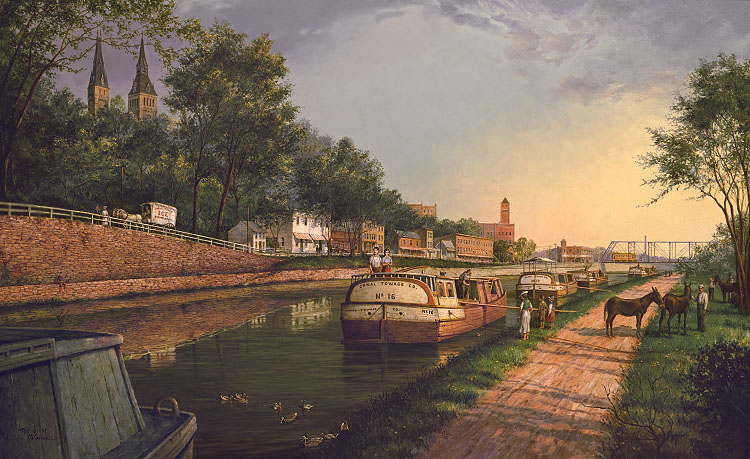


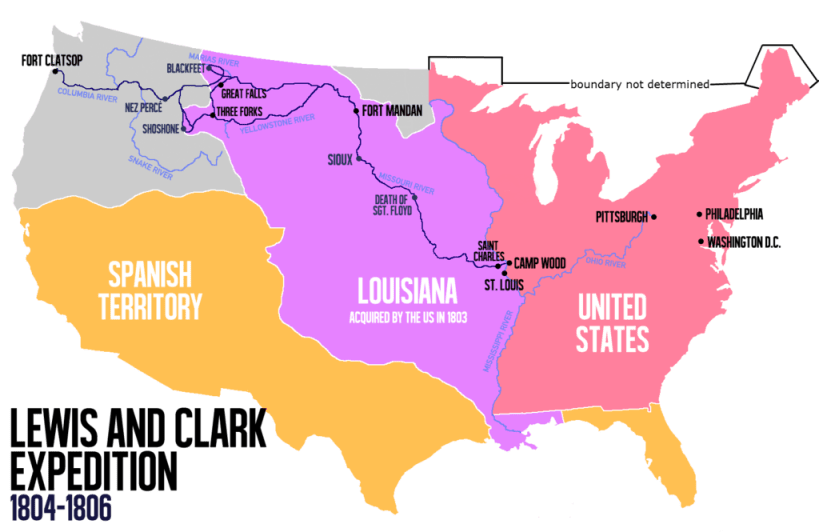
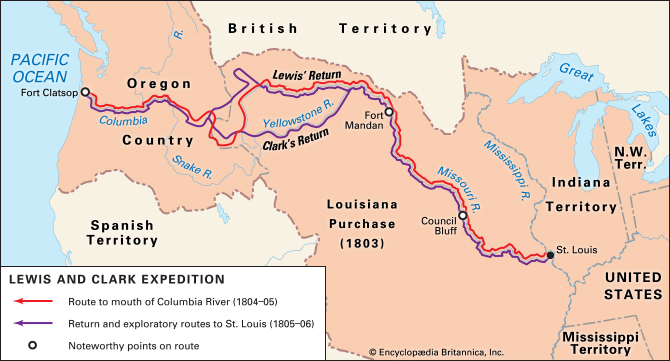

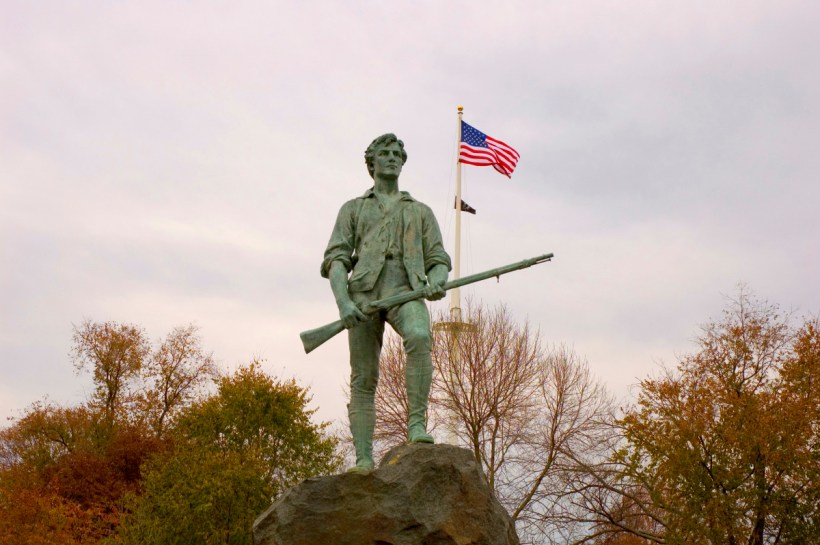

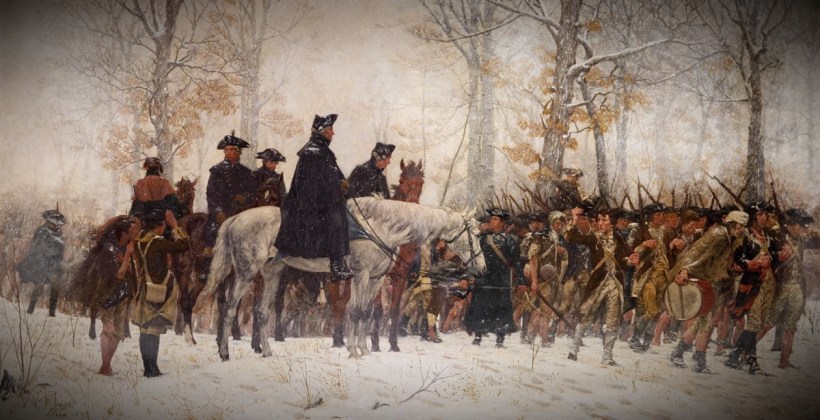

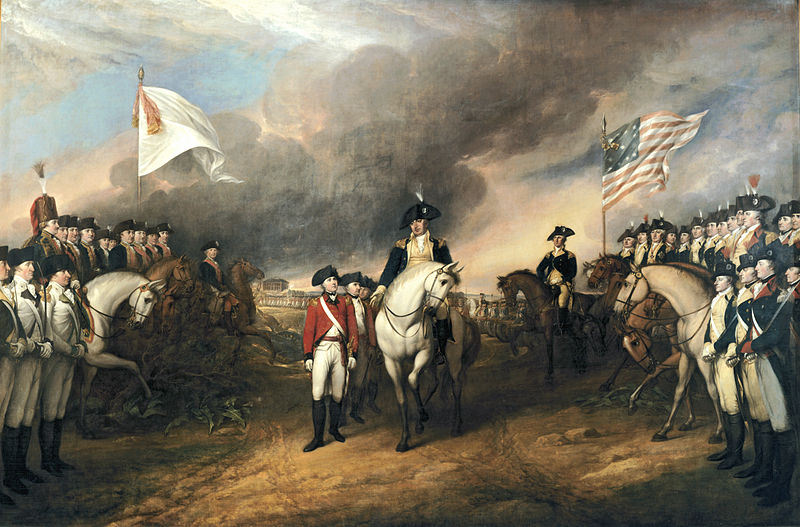

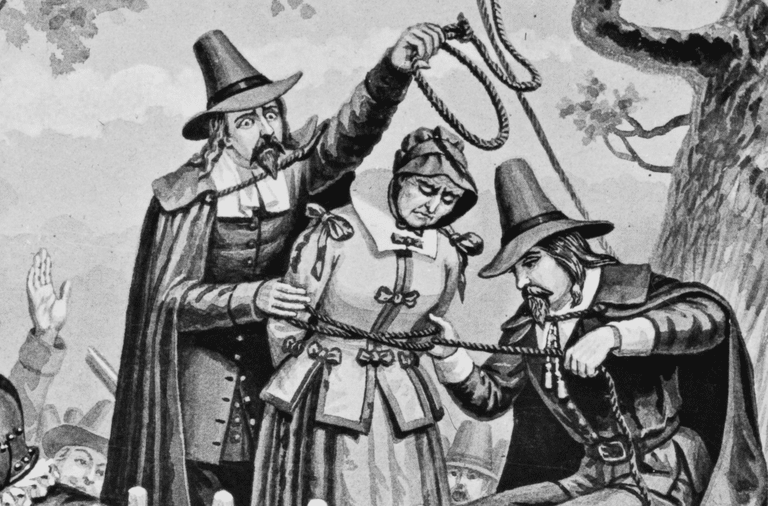


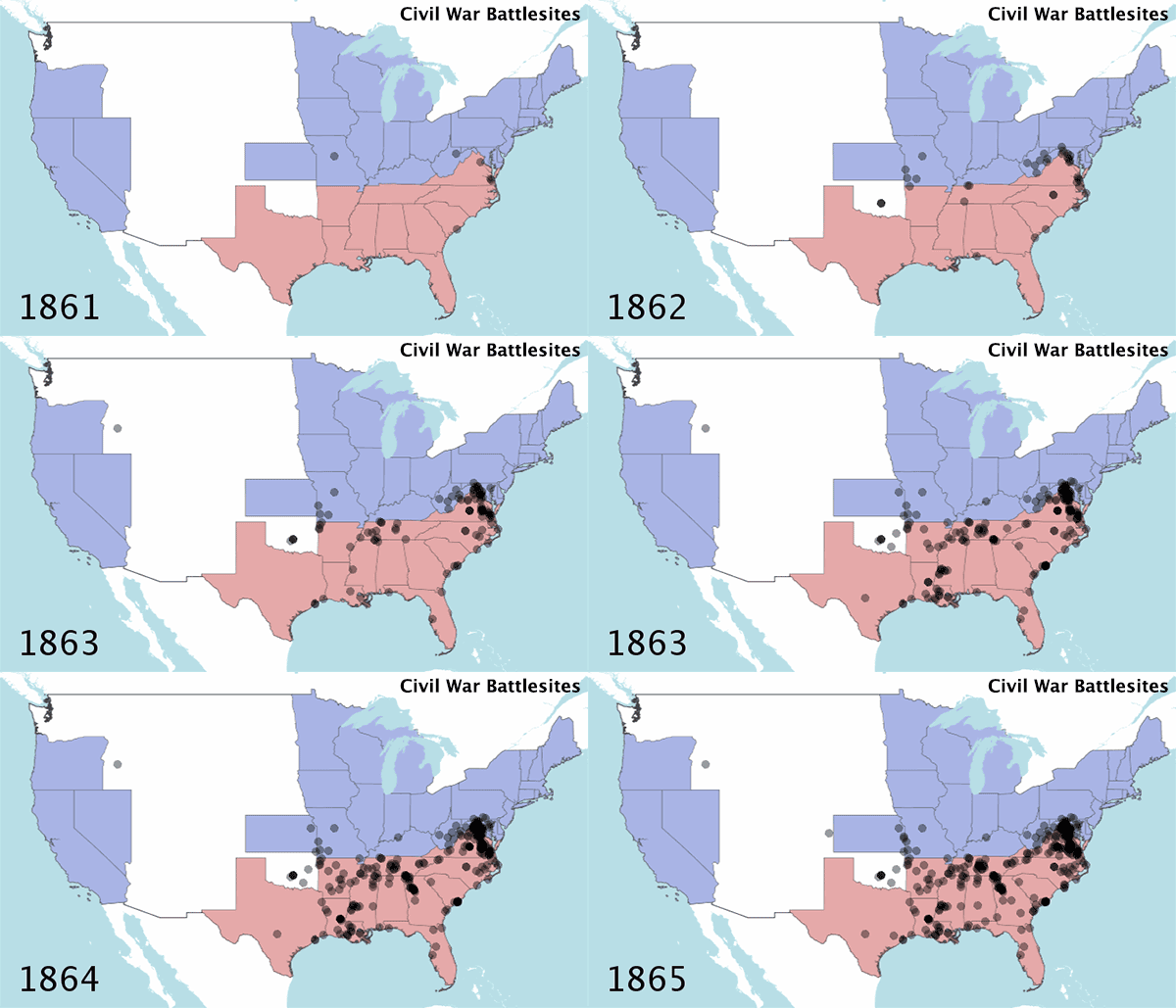


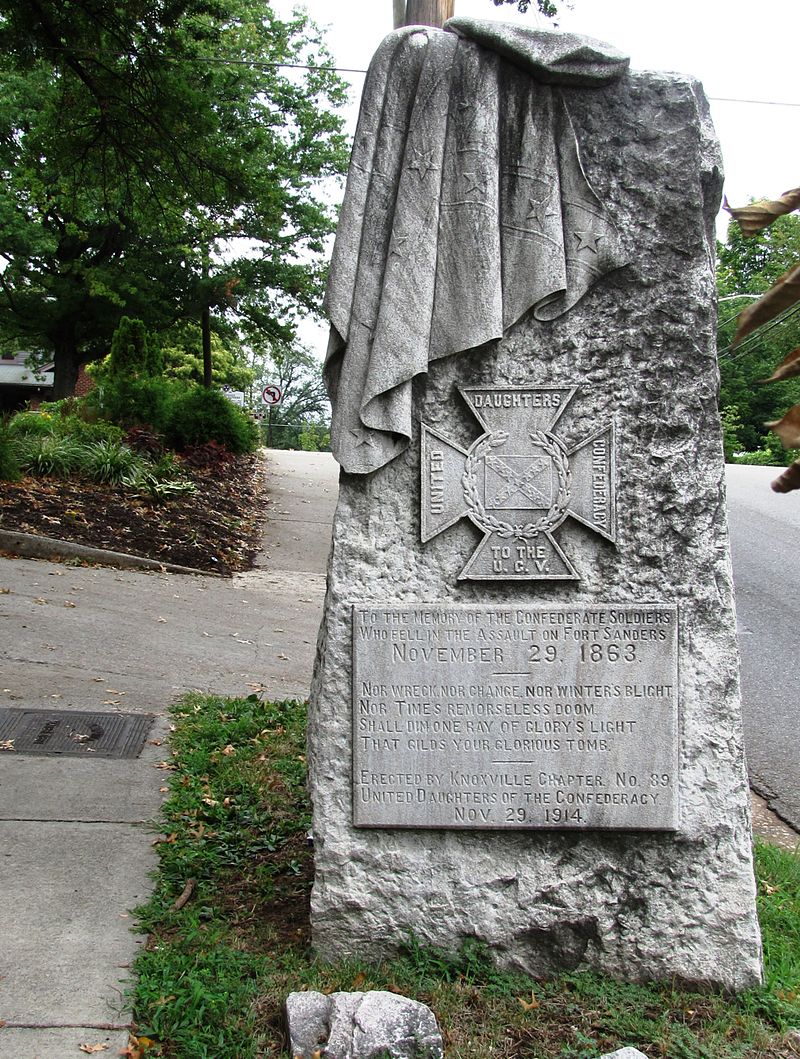
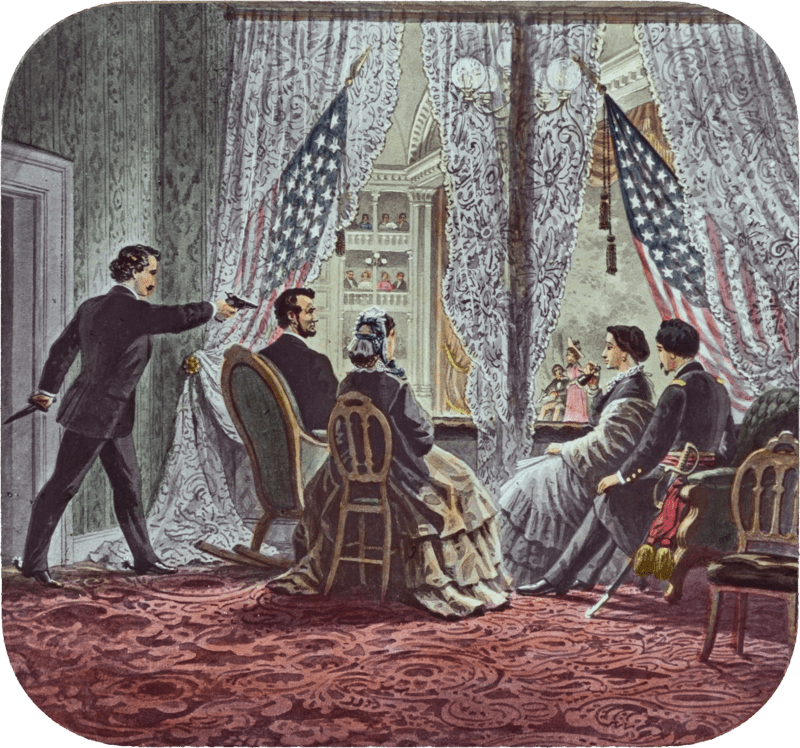
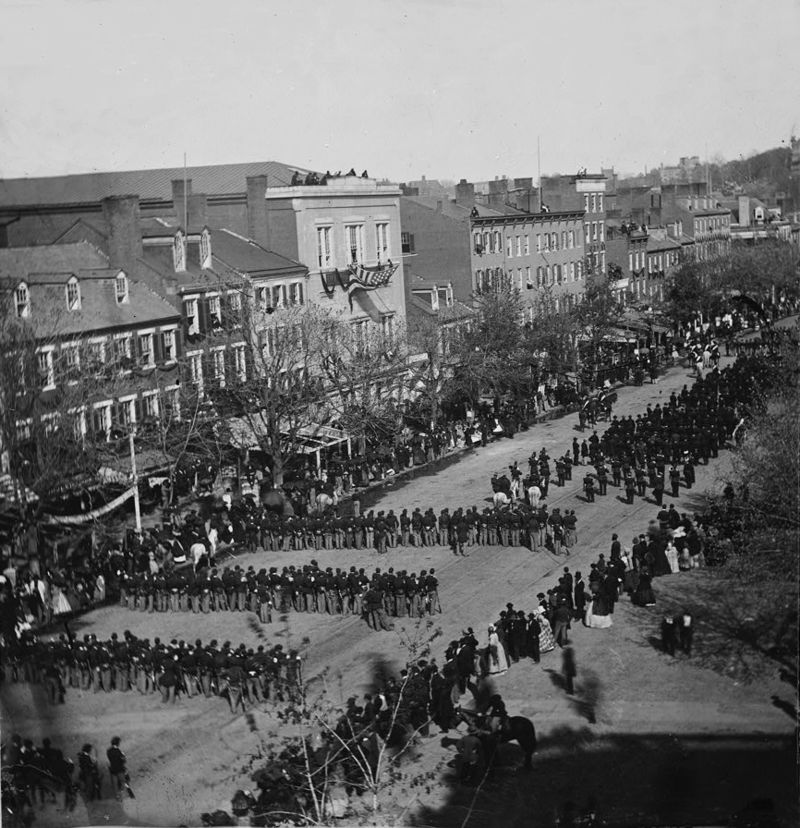

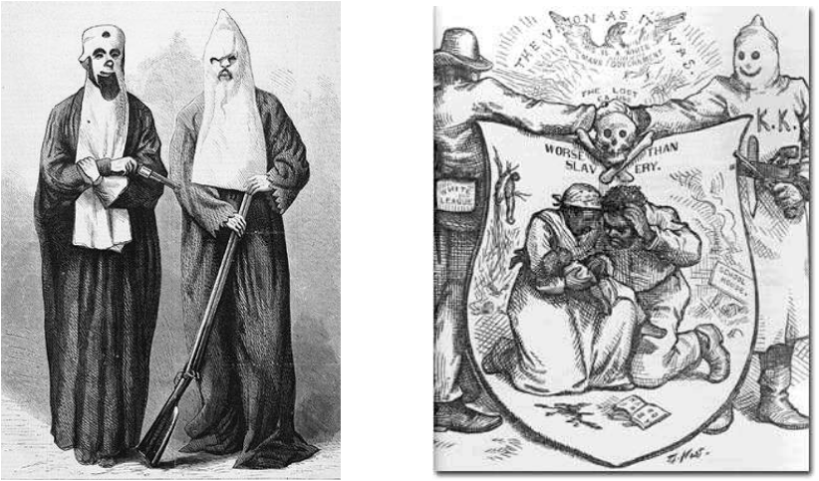
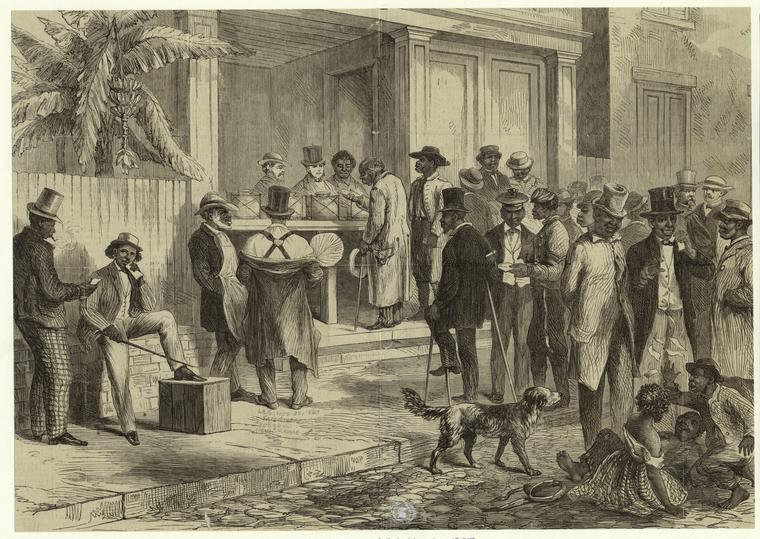


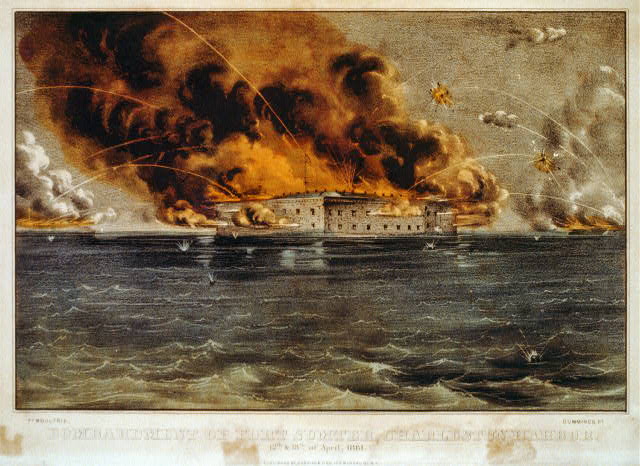
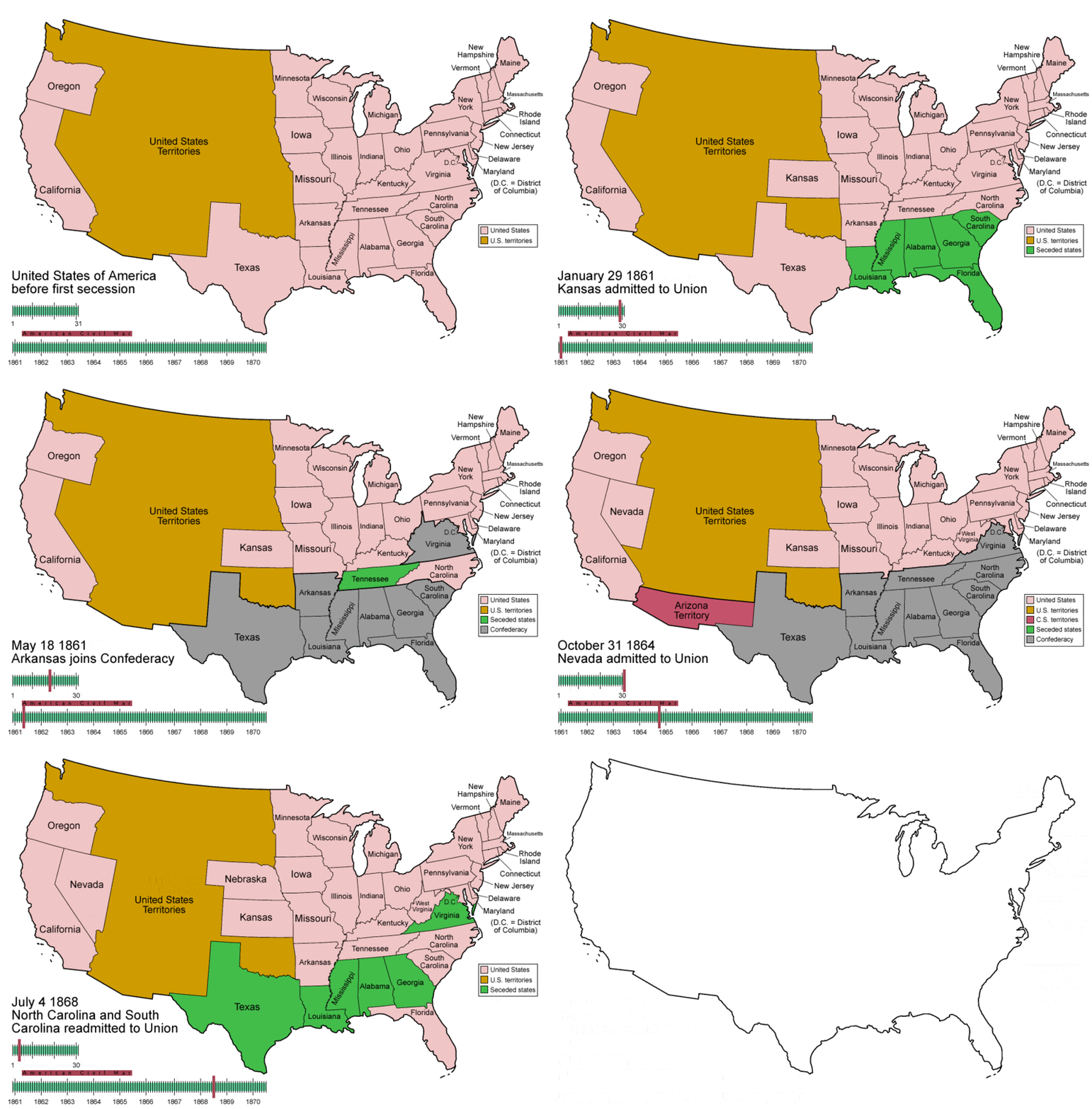
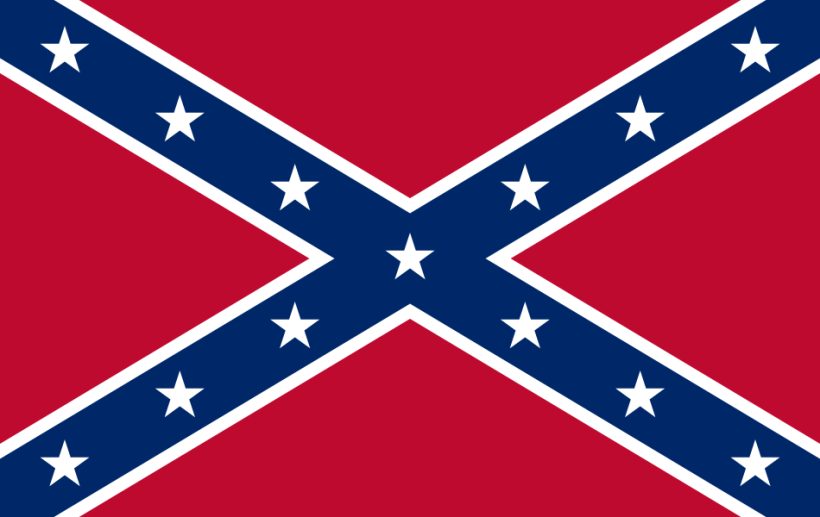


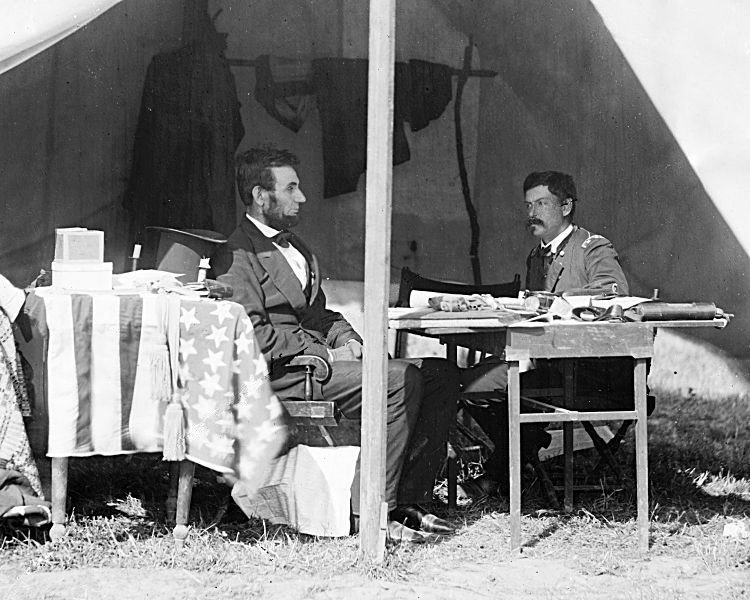

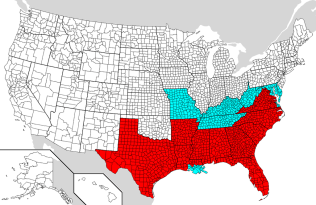


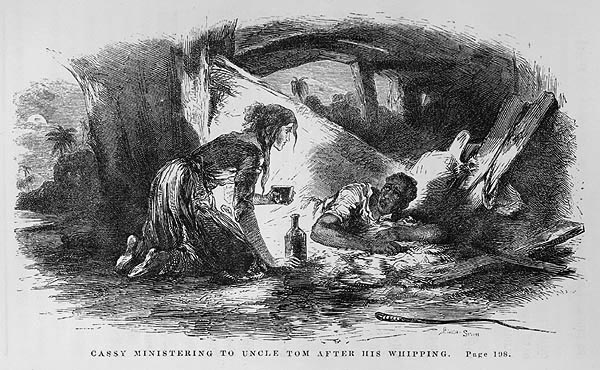
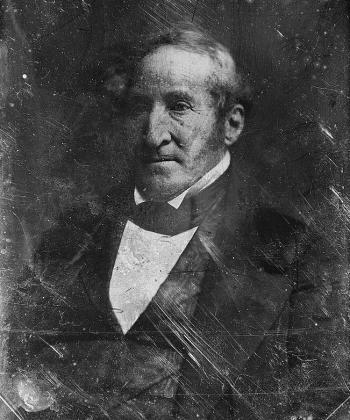
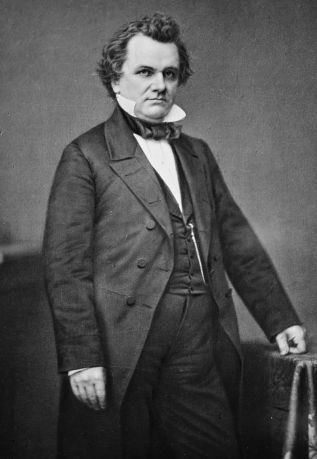
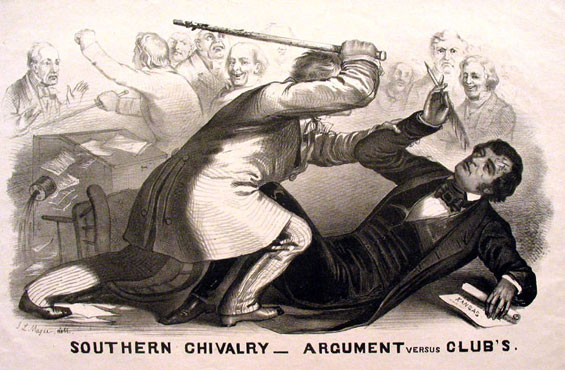

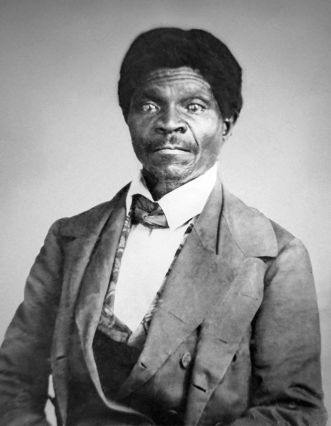
 News of the raid reached Baltimore early that morning and Washington by late morning. In the meantime, local farmers, shopkeepers, and militia pinned down the raiders in the armory by firing from the heights behind the town. Some of the local men were shot by Brown’s men. At noon, a company of militia seized the bridge, blocking the only escape route. Brown then moved his prisoners and remaining raiders into the engine house, a small brick building at the armory’s entrance. He had the doors and windows barred and loopholes cut through the brick walls. The surrounding forces barraged the engine house, and the men inside fired back with occasional fury.
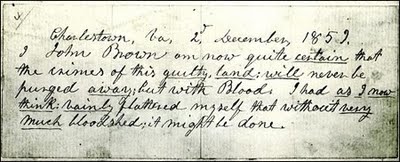
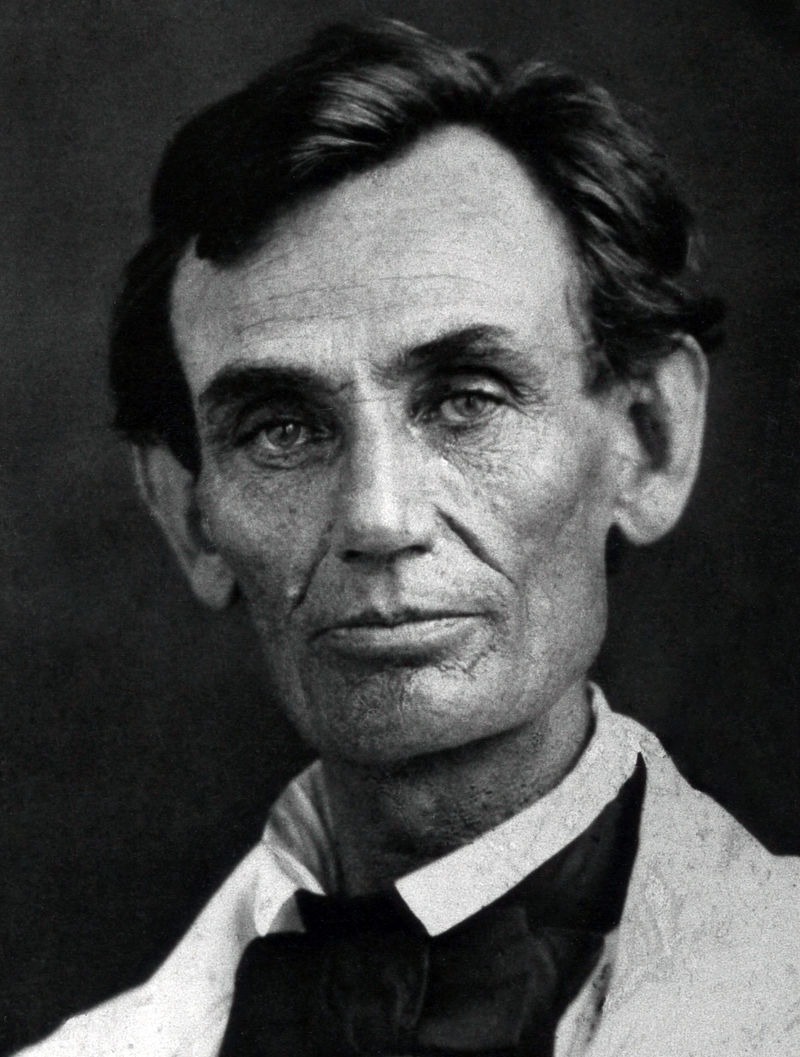


 The Compromise of 1850 contained the following provisions: (1) California was admitted to the Union as a free state; (2) the remainder of the Mexican cession was divided into the two territories of New Mexico and Utah and organized without mention of slavery; (3) the claim of Texas to a portion of New Mexico was satisfied by a payment of $10 million; (4) new legislation (the Fugitive Slave Act) was passed to apprehend runaway slaves and return them to their masters; and (5) the buying and selling of slaves (but not slavery) was abolished in the District of Columbia.
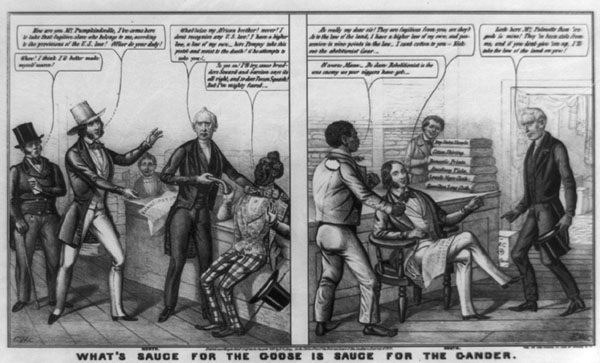
 open ended social studies
You must be logged in to post a comment.