May 6, 2018: On the Eve of Putin’s Fourth Term

Moscow is like one big monument to the past.  It is full of hammers and sickles, and grand, imposing Soviet-era statues.  The so-called Seven Sisters – Stalin-era skyscrapers that were supposed to make Moscow look like the capital of a modern superpower – now look dated.  They haunt the city’s skyline like testaments to a world that might have been…  Imagine what the world would have been like had the USSR poured its resources into further developing that unique form of architecture, instead of a generation or so of nuclear and missile development…  Instead of a generation of backing satellite regimes and leftist revolutionaries the world over.

With reference to all of that Cold War stuff, I could write the same things about my own country…  What if the United States had declined to pursue those same provocative actions?  What if instead we had looked inward and gotten serious about, say, a War on Poverty?

Well, the world would be a different place in so many ways…  Not the least of which is that this mini-Cold War we are now reliving – typified by election hacking and assassinations by nerve toxins – would likely be the stuff of fiction instead of fact.

And Vladimir Putin, whose fourth inauguration is tomorrow, would probably be an anonymous government functionary in some modified, but still socialist USSR.

It is a strange coincidence that I am in Moscow for this moment.  I’m here to commemorate Victory Day – May 9 – the anniversary of the surrender of Nazi Germany to the Allied Powers at the end of World War II.  What we used to call V-E Day.  The last moment where the United States and Russia could plausibly claim to be standing shoulder-to-shoulder on anything.

On May 6, as I was landing at Moscow’s Domodedovo airport, more than a thousand anti-Putin demonstrators were arrested for protesting against Putin’s impending inauguration.  They see him as corrupt – as a man who has held on to office in part by preventing free and open elections in his own country.  By encouraging the same thing in mine.

Putin is a man who has learned from history.

Competition, not collaboration, was the story of the Twentieth Century.  And that winners don’t need to play fair, because they can retell the story of their triumph anyway they please.

More missiles mean more security.

More guns mean more safety.

Poverty isn’t a social problem, it is a personal one.

Why am I in Russia this week?

Because I’m trying to remember that fleeting moment when collaboration was necessary for survival – when both Russia and the United States found themselves with their back to each other, fighting for their very existence.

I wonder how dire things must get in our present before we can see each other in that light once more.

More funky, dated skyscrapers more 1945 and all of the missed potential it carried…  Less missiles, less stolen elections, less climate change, less 2018.

Live from Moscow

May 9 marks the 73rd anniversary of Victory Day, the surrender of Nazi Germany to the Allied powers.  A mere footnote in much of the West, it is a grand national holiday in modern Russia.

All next week, Open Ended Social Studies founder Thomas Kenning will be coming to you live from Moscow.

Check this page for daily posts covering the festivities.

Follow Openendedsocialstudies on Instagram to get the whole picture.

Teach your students about who beat the Nazis and how.

Upcoming Research Expeditions

Openendedsocialstudies.org is pleased to announce that Thomas Kenning, founder and chief creative officer, will be undertaking several research expeditions in the coming months, all with the aim of producing new content and resources for this site.

In May, Mr. Kenning will be traveling to Moscow to participate in the annual Victory Day celebration. While there, he will be gathering information for further lessons in our proposed open source Russia textbook.

In June, Mr. Kenning will be in residence in the Philippines, developing a new curriculum unit on this fascinating syncretic culture.

Also in June, Mr. Kenning has scheduled a working trip to Tokyo with the aim of realizing long gestating plans for several lessons on the history and culture of Japan.

Finally, in July, Mr. Kenning returns to Cuba to complete work on new lessons documenting that nation’s colonial past.

Summer is traditionally the season that sees the most research and development at Openendedsocialstudies.org, and this is turning out to be one of our most exciting seasons yet!


Want to be a better person? Travel can make it happen.

Mark Twain once wrote, “Travel is fatal to prejudice, bigotry, and narrow-mindedness, and many of our people need it sorely on these accounts.”

That is pretty much the sentiment upon which this entire site was founded, but did you know that there is science to back up that wonderful idea?

Check out some of ways in which travel can open up your world and sharpen your mind.

Travel really can make you a better person – why not use it to teach right in your own classroom with some of these great lesson ideas from Openendedsocialstudies?

  • Live From Moscow, 2018:
  • New Horizons in Peru and Bolivia, Travel Writing:
    • Adventure Blog.
    • A Guided Tour of Bolivia, 2016 – Explore the streets of La Paz and El Alto, scramble through the 500 year-old silver mines of Potosi, or race across the barren salt flats of Uyuni.  Supplementary photos and information on Bolivia, past and present.
    • A Guided Tour of Peru, 2016 – Explore the streets of Cusco and Lima, scramble through Inca ruins from Machu Picchu on down, take a slow boat up the Amazon River from Iquitos, and an even slower boat across Lake Titicaca to the floating man-made islands of the Uros.  Supplementary photos and information on Peru, past and present.
  • TEACH in Bahrain, Qatar, and the United Arab Emirates, Travel Writing:
    • Adventure Blog.
    • A Guided Tour of the Gulf States is a curated photo essay.  Stroll the streets of Manama and Doha, ride to the top of the Burj Khalifa in Dubai, witness the grandeur of Islamic architecture at the Sheikh Zayed Mosque before spending the evening dune bashing with high-paying tourists in the sands of Abu Dhabi.
  • An American in Cuba, Travel Writing:
  • A Guided Tour of Maya Mexico, 2017 – Explore the ruins of Ek’ Balam, Uxmal, and Chichen Itza, scramble through streets of colonial Merida, and sample the cuisine and culture of Mexico’s Yucatan Peninsula.  Supplementary photos and information on the Yucatan, past and present.
  • Scenes from Cambodia, 2014 – supplementary photos to enhance a sense of place.
  • Scenes from China, 2015 – supplementary photos to enhance a sense of place.
  • Scenes from Nicaragua, 2015 – supplementary photos to enhance a sense of place.
  • A Guided Tour of Moscow, 2017 – Explore Red Square and Gorky Park, race through the Moscow Metro, and participate in the 2017 Victory Day celebrations commemorating the end of World War II.  Supplementary photos and information about Moscow, Russia.
  • Scenes from South Korea, 2015 – From the glistening towers of Seoul to the DMZ, from the bustle of downtown to the sanctuary of its Buddhist monasteries – supplementary photos to enhance a sense of place.


The Youth are the Conscience of the Nation

Here’s a perennial question facing the idealistic youth of any nation: What would you do if you found yourself surrounded by a violent, unjust system?  What if your society was rife with rampant inequality?  What if you were a beneficiary of this system – if your privilege came at the cost of others’ suffering?

Bartolomé de Las Casas found himself living in such a society – conquest-era colonial Spain – and he risked everything to speak out.

Would you have done the same?

Would you do the same today?

Ask your students —

Bartolomé de Las Casas and the Atrocities of the Spanish Conquistadors (Free online text suited for middle or high school classroom use, guided reading questions, and suggested activities): What would you do if you found yourself surrounded by a violent, unjust system?  In the early Spanish conquest of the Americas, Bartolomé de Las Casas spoke out.

Awards for “The Dubai Mall” Lesson at Openendedsocialstudies.org

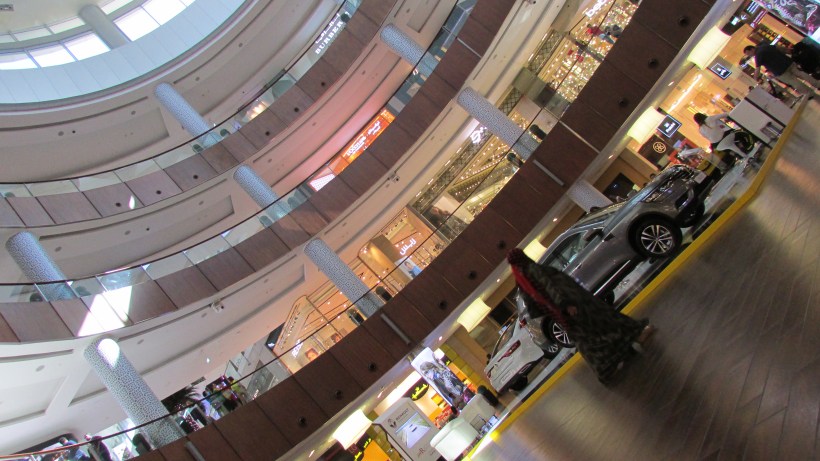
The University of Arizona Center for Middle Eastern Studies has recognized the Openendedsocialstudies lesson The Dubai Mall, Sharia Law, and Social Norms as part of its annual lesson plan competition.  The lesson is adaptable for use in both middle school and high school classrooms, and uses the rules and code of conduct posted at this fabulous mall’s entrance to introduce students to norms of the Arab world.

How and why do social norms and laws in Muslim majority countries differ from those in countries like the United States?  Would students still want to visit greatest mall in the world if it meant following a different set of rules than they’re used to?

Check out our ever growing (and always free!) set of lessons, resources, and activities covering the Middle East.


Charles C. Mann on the European Conquest of the Americas

“Cultures are like books, the anthropologist Claude Lévi-Strauss once remarked, each a volume in the great library of humankind. In the sixteenth century, more books were burned than ever before or since. How many Homers vanished? How many Hesiods? What great works of painting, sculpture, architecture, and music vanished or never were created? Languages, prayers, dreams, habits, and hopes—all gone. And not just once, but over and over again. In our antibiotic era, how can we imagine what it means to have entire ways of life hiss away like steam? How can one assay the total impact of the unprecedented calamity that gave rise to the world we live in? It seems important to try.” – Charles C. Mann, author of 1491.

Openendsocialstudies.org is bringing the remnants of these vibrant cultures to life in your classroom – check out our library of free readings, lessons, and activities on precolumbian American civilizations.


Content Development Services

Interested in developing high quality educational content for your nonprofit, industry, or cause?  Thomas Kenning, the creator of Open Ended Social Studies, with 12 years and counting experience in the classroom, also works on contract.  References from previous clients available upon request.

For inquiries, please contact me below.

Go back

Your message has been sent

Warning
Warning
Warning
Warning

Warning.

Great Reading on the Ancient Maya


I recently took trip to Mexico’s Yucatan Peninsula.  Forgoing the usual tourist center of Cancun and the Riviera Maya, I headed inland to Mérida.  From this, a Maya city turned Spanish colonial center turned Mexican provincial capital, one of the oldest inhabited places in the Western Hemisphere, I undertook a short series of day trips to the great Maya ruins of the Yucatan, including Chichen Izta, Uxmal, and Ek’ Balam

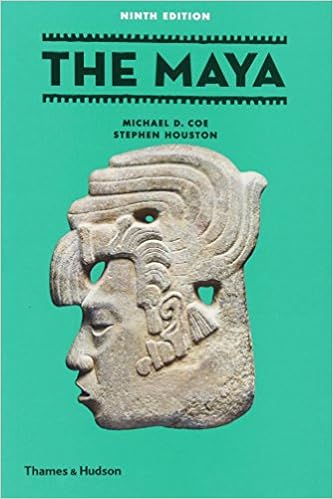
To maximize my time – to make the most sense of my all too brief visit to this incredible region – I did my homework before I left the States.  Of particular use to me – and to anyone looking to learn more about the Maya and their Mesoamerican neighbors – is The Maya (People and Places) by Michael Coe.  While certain passages were somewhat esoteric in their detailed account of the history of Maya archaeology, the book itself was eminently readable – a great resource for anyone looking to cut through the hype and 2012 sensationalism that soaks the usual Amazon search results.

Aimed at younger readers – but still rich and directly written, with lush illustrations – Ancient Maya by Barbara Somervill is a book that paints a nuanced portrait of this complex society.  Suitable for a middle or high school library, and I can honestly say that as an educator I took a lot away from this book myself.  It never speaks down to its audience, which is the sign that a book is truly accessible to all ages.

1491: New Revelations of the Americas Before Columbus by Charles C. Mann is a perennial favorite of mine.  While its scope is far wider than the Maya – encompassing Teotihuacan, the Aztec, the Inca, and many more Pre-Columbian societies that deserve more attention from the general public, Mann’s masterpiece is a true revelation – an inspiration that started me down the path that eventually led to the creation of Openendedsocialstudies.org.

If you know of any other relevant books I should be looking at – especially if they might help to inform future travel and lessons here at Openendedsocialstudies – please leave a comment in the section below!

Educational and Documentary Films


The Museum of Industrial Culture – Moscow, Russia

for use with The Material Culture of the Soviet Union: The Soviet Union dissolved in 1991, and with it all of the state-run industries that held a monopoly on the ordinary consumer and commercial products that make up the Museum of Industrial Culture in Moscow, Russia. The Soviet system of government was gone, for better or worse, and so too was the material culture that had defined Russian life for generations.


The Maya: Collapse at Ek Balam

for use with the The Maya: Illuminated Offspring of the Makers lesson.  Take a tour of the ruins of the Maya city of Ek’ Balam, in Mexico’s Yucatan Peninsula. This haunting marvel begs the question: what led to the collapse and dramatic restructuring of this ancient civilization?


Uxmal: Thrice-Built City of the Maya

for use with the The Maya: Illuminated Offspring of the Makers lesson. Take a tour of the ruins of Uxmal, one of the largest and best preserved cities of the Maya. Located in Mexico, on the Yucatan Peninsula, the ruins of Uxmal are comprised of the Pyramid of the Magician, the Nunnery Quadrangle, the ballcourt, the Governor’s Palace, and the Great Pyramid. Learn about the history and function of each of these impressive structures, as well as what they can tell us about the Maya world and culture.


What Happens in a Mosque?

for use with the The Gulf States: Cosmopolitan Crossroads lesson.  What are the basic teachings of Islam, and what does it mean to be a Muslim?


The Inca: Andean Civilization in the Realm of the Four Parts

for use with the The Andes, the Inca, the Spanish, and the Making of Modern South America lesson. The Inca were one of the great civilizations of the world, no matter how you measure it – in art, technology, wealth, military power, population, area controlled, or influence on world history.